
As dog parents ourselves, we are always on the lookout for ways to enhance the comfort and well-being of our furry friend, and choosing the right dog bed is always one of the first things on the list to consider. The debate between orthopedic foam and memory foam dog beds is ongoing, but understanding the differences can help you make the best choice for your pets needs. This post delves into the nuances of each type, and also covers some key factors to look into if you’re on the fence between an orthopedic or memory foam dog bed.
While the terms “orthopedic foam” and “memory foam” are often used interchangeably, there are a some key distinctions between the two:
Initially developed by NASA, memory foam is a material made out of polyurethane that has become popular in both human and pet bedding due to its ability to conform to the body in response to heat and pressure. For dogs, this means a bed that molds to the shape of their body, providing a unique level of support that can significantly enhance sleep quality. Memory foam beds are particularly beneficial for dogs with arthritis or other joint issues, as they help distribute weight evenly and reduce pressure points.
Orthopedic foam beds refers to any mattress materials–including memory foam–that are designed to offer enhanced support and cushioning to support a persons (or pet’s) bones and joints. The term “orthopedic” isnt regulated in the pet product industry, meaning the quality and type of foam can vary widely between products. This is why it’s important to always double check that the mattress material for an orthopedic dog bed is actually backed by a certification like CertiPUR-US®–especially if the bed is marketed as a “true” orthopedic dog bed. Generally, true orthopedic beds will provide excellent support for dogs with arthritis, hip dysplasia, back or muscle problems, joint problems, or soft tissue injuries.
Are you staring at your furry friend limping after nap time and wondering if their bed might be the culprit? You’re not alone! As pet parents we want nothing but the best for our four-legged family members and that includes giving them a comfy place to rest their paws. But with so many fancy terms thrown around in the pet bedding world, it’s easy to feel overwhelmed. Today, we’re diving deep into orthopedic dog beds to answer the burning question are orthopedic beds good for dogs? (Spoiler alert yes, but there’s more to it!)
What Makes a Dog Bed “Orthopedic” Anyway?
Let’s get real for a second. The term “orthopedic” isn’t actually regulated in the pet industry. Yep, you read that right! Dr. Danielle Page, a veterinarian from Raleigh, explains that much like the term “holistic,” the word “orthopedic” can sometimes be nothing more than clever marketing.
But that doesn’t mean all orthopedic beds are created equal! A true orthopedic dog bed should feature
- High-density memory foam (at least 3-7 inches thick)
- Material that conforms to your dog’s body
- Even weight distribution to relieve pressure points
- Durability that maintains support over time
Unlike standard dog beds stuffed with polyfill, cotton, or wool batting, genuine orthopedic beds use materials similar to human-grade memory foam mattresses. This special foam has both elasticity and viscosity, allowing it to mold to your pup’s unique shape and return to form when they get up.
Who Really Needs an Orthopedic Dog Bed?
While any dog can enjoy the comfort of a quality orthopedic bed, certain pups will benefit significantly more. According to our research, orthopedic beds are especially beneficial for:
- Senior dogs with stiff joints and reduced mobility
- Dogs with arthritis or joint pain
- Pups with hip or elbow dysplasia
- Large breeds prone to joint issues (like German Shepherds and Great Danes)
- Dogs recovering from surgery or injury
- Thin dogs with little natural “padding”
- Obese dogs who put extra pressure on their joints
Dr Jamie Whittenburg, director of Kingsgate Animal Hospital, recommends orthopedic beds as part of a comprehensive comfort plan for dogs with joint issues. While an orthopedic bed isn’t a magical cure-all, it can definitely improve your dog’s quality of life when combined with proper veterinary care.
The Scientific Scoop: Do They Actually Work?
I’ll be honest – scientific research specifically on orthopedic dog beds is pretty limited. However, there’s one standout clinical trial conducted by the University of Pennsylvania on the Big Barker bed. This study showed impressive results, with large dogs suffering from arthritis experiencing improved mobility, reduced joint pain, and even increased energy levels!
Most of the other research we have comes from human studies on orthopedic mattresses, but the principles apply to our furry friends too. Memory foam distributes weight evenly, which helps prevent pressure points that can cause pain and discomfort.
Features to Look For in a Quality Orthopedic Dog Bed
Not all “orthopedic” labeled beds deliver on their promises. Here’s what to look for when shopping for a genuine orthopedic bed that will actually help your pup:
| Feature | Function | Why It Matters |
|---|---|---|
| High-Density Foam (3-7+ inches) | Provides firm, even support | Prevents bottoming out, crucial for larger dogs |
| Memory Foam | Conforms to body shape | Relieves pressure points on joints |
| Waterproof/Resistant Liner | Protects foam from accidents | Essential for senior dogs with incontinence |
| Removable, Washable Cover | Allows for easy cleaning | Maintains hygiene and extends bed life |
| Non-Slip Base | Keeps bed stable | Prevents sliding that could cause injury |
| Bolstered Sides (optional) | Offers head and neck support | Great for dogs that like to lean or rest against something |
| Low Entry Point | Easier access | Important for dogs with mobility issues |
Best Orthopedic Dog Beds Worth Considering in 2025
After reviewing multiple expert sources and customer reviews, these orthopedic beds consistently rank at the top:
-
Bully Beds Orthopedic Memory Foam Bed – Best overall with 7-inch thick memory foam and a 20-year guarantee against flattening.
-
PetFusion Ultimate Memory Foam Lounge – Excellent for puppies through seniors with 4-inch memory foam and supportive bolsters.
-
Big Barker Orthopedic Dog Bed – The only clinically proven bed to improve mobility in large dogs with joint issues.
-
The Dog’s Bed Orthopedic – Best budget-friendly option that doesn’t compromise on quality.
-
Bully Beds Chew Resistant Bed – Perfect for dogs who like to nibble or dig at their sleeping space.
For senior pups specifically, the Bully Beds Infrared Dog Bed stands out with its FDA-approved infrared technology that increases blood circulation and reduces discomfort.
Are Orthopedic Dog Beds Worth the Price?
Let’s talk money, because these beds ain’t cheap! Top-quality orthopedic dog beds can range anywhere from $60 to well over $300 depending on size and features. Is the investment worth it?
In our opinion, yes—and here’s why:
- They typically last much longer than standard beds (many come with 5-10 year warranties)
- They can reduce pain and improve mobility for dogs with joint issues
- They may prevent future joint problems in predisposed breeds
- They provide better sleep quality for your pup (and a well-rested dog is a happier dog!)
Dr. Page personally attests to the benefits, sharing that her 12-year-old arthritic Brittany Spaniel loves his orthopedic bed. As she puts it, “anything I can do to reduce his pain is a win for me.”
Signs Your Dog Needs an Orthopedic Bed
Not sure if your furry friend would benefit from an upgrade? Watch for these telltale signs:
- Difficulty getting comfortable or constantly repositioning during rest
- Stiffness or limping after waking up
- Avoiding their current bed in favor of harder or softer surfaces
- Visible joint swelling or discomfort
- Decreased activity or reluctance to jump/climb
Beyond the Bed: Comprehensive Joint Care
While a quality orthopedic bed is a great start, it shouldn’t be your only strategy for supporting your dog’s joint health. For maximum benefit, consider these additional approaches:
- Regular vet check-ups to monitor joint health
- Appropriate exercise to maintain muscle strength without overexertion
- Weight management to reduce pressure on joints
- Joint supplements like glucosamine and chondroitin (with vet approval)
- Physical therapy or hydrotherapy for dogs with significant mobility issues
The Bottom Line: Your Dog Deserves Better Sleep
So, are orthopedic beds good for dogs? The short answer is absolutely YES! For senior dogs, large breeds, and pups with existing joint issues, a high-quality orthopedic bed isn’t just a luxury—it’s practically a necessity for their comfort and wellbeing.
Even for younger, healthier dogs, an orthopedic bed can be a worthwhile preventative measure that may help ward off future joint problems. Think of it as an investment in your dog’s long-term health and happiness.
Remember, though, that the “orthopedic” label alone doesn’t guarantee quality. Look for beds with genuine memory foam that’s thick enough to support your dog’s weight without compressing to the floor.
We’ve seen countless pet parents amazed by the difference a proper orthopedic bed makes in their dog’s mobility and energy levels. As one reviewer put it, “My 9-year-old Lab used to struggle to get up in the morning, but since getting his new orthopedic bed, he’s acting like a puppy again!”
Your furry best friend gives you unconditional love every day—don’t they deserve the very best sleep possible in return?
FAQs About Orthopedic Dog Beds
How often should I replace my dog’s orthopedic bed?
Quality orthopedic beds typically last 5-7 years before the foam begins to lose its supportive properties. However, if you notice significant flattening or indentations that don’t bounce back, it’s time for a replacement.
Can puppies use orthopedic beds?
Absolutely! While puppies don’t typically need orthopedic support, starting them on a quality bed early can be beneficial, especially for breeds prone to joint issues. Just be prepared for potential chewing during the teething phase!
How do I clean an orthopedic memory foam dog bed?
Most orthopedic beds come with removable, machine-washable covers. The foam itself usually can’t be washed, which is why a waterproof liner is essential. Follow the manufacturer’s cleaning instructions carefully to maintain the bed’s integrity.
Are cooling orthopedic beds better for dogs that overheat?
For dogs that tend to run hot, cooling orthopedic beds that incorporate gel-infused foam or phase-change materials can provide joint support while helping regulate temperature—a win-win for comfort!
My dog doesn’t seem to like their new orthopedic bed. What should I do?
Some dogs need time to adjust to a new bed, especially if they’re used to a softer surface. Try placing familiar blankets with their scent on the new bed, rewarding them for using it, and gradually transitioning. If they still resist after a few weeks, the bed might be too firm for their preference.
Has your dog tried an orthopedic bed? We’d love to hear about your experiences in the comments below!
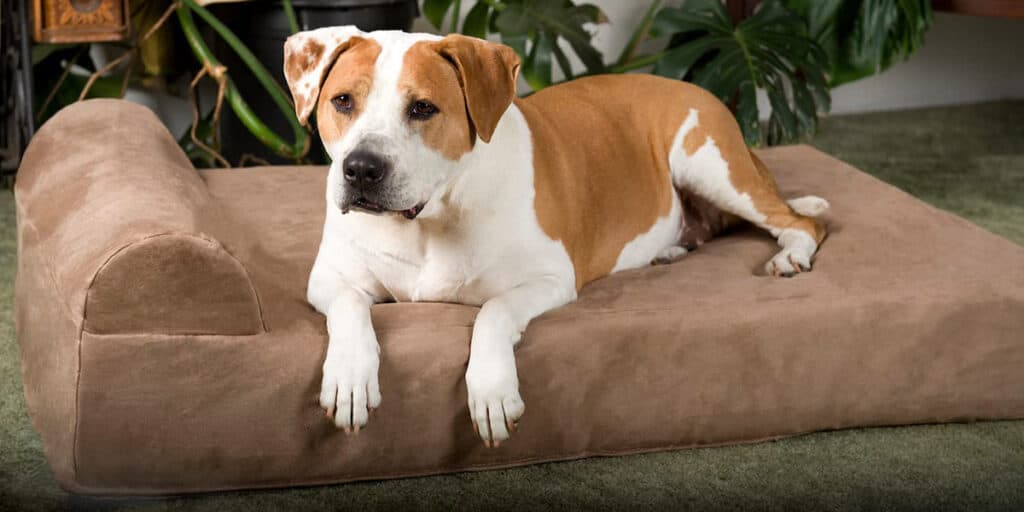
Choosing between a memory foam or orthopedic foam dog bed
When selecting between an orthopedic or memory foam dog bed, the primary consideration to factor is your dog’s age and health needs. Older dogs (or dogs that are prone to having joint issues) may benefit more from the added cushion and support of a well-made orthopedic bed made from true memory foam, since these beds tend to offer a sturdier, no-sag build and may also have additional features like bolstered sides to further enhance comfort.
Some other factors to consider when choosing the right bed for your dog include:
Type of sleeper
It’s also worthwhile to see what type of sleeper your dog tends to be, whether that is a “curler” where they like to be securely surrounded within their bed, a “burrower” where they like to dig into their bed to make a cozy nest, a “sprawler” where they like to spread out in all directions, or a “leaner” where they prefer the support and security of a bolster-style dog bed.