
Picture this: you’re on the couch, cracking open a bowl of pistachios, when two hopeful puppy eyes lock onto your every move. Before you toss one over, pause. The question can dogs eat pistachios has a trickier answer than most snacks — and it’s worth knowing before your dog beats you to the bowl.
Are Pistachio Nuts OK for Dogs?
Short answer: not really. Pistachios are not toxic to dogs the way a few other nuts are, so one stolen nut won’t spell disaster. But they aren’t a good idea either. They’re high in fat and calories, usually salted, and their shells are a real hazard. So, are pistachios bad for dogs? They’re not poison — but they’re not a treat you should hand out on purpose.
Toxic or Just Risky? The Important Distinction
Here’s where a lot of people get tripped up. “Not toxic” and “safe” are two very different things.
Some nuts are truly dangerous — macadamia nuts are toxic to dogs even in small amounts, and they can cause weakness, tremors, and fever. Pistachios don’t work like that. There’s no poison that kicks in from a single bite.
The trouble comes from what pistachios are: fatty, salty, and wrapped in a hard shell. So a pistachio is less “keep it away at all costs” and more “why risk it when the downsides pile up so easily?” Think of it as low-reward, medium-risk.
The Real Risks of Pistachios for Dogs
If they’re not poisonous, what’s the fuss about? It turns out pistachios bring a small stack of problems, and they add up fast when your dog eats more than a nibble. Here are the big ones, from most common to most sneaky.
High Fat Content & Pancreatitis Risk
Pistachios are little fat bombs. That’s great for us and rough for dogs. When a dog eats too much fat, the extra calories don’t just pad the waistline — they can overwhelm the pancreas.
Two things can happen:
- Weight gain and obesity if pistachios become a regular habit. Nuts are calorie-dense, so they add up quietly.
- Pancreatitis in dogs, which is inflammation of the pancreas. This one is serious. It can be painful, come on quickly, and in bad cases turn life-threatening.
The tricky part? Some dogs are extra sensitive to fat, so even a few nuts can spark a flare-up. There’s no magic “safe” amount that works for every dog. If your pup has had tummy trouble before, the high fat content in pistachios is a solid reason to skip them entirely.
Salt, Seasonings & Sodium Poisoning
Most pistachios on store shelves are salted or flavored — and that’s a second problem stacked on the first.
A little salt won’t hurt, but salt is unhealthy for dogs in the amounts found on snack nuts. Too much can lead to:
- Extra thirst and lots of bathroom trips
- Dehydration
- Sodium ion poisoning in dogs in severe cases (rare, but real)
Then there are the fancy flavors. Garlic and onion seasonings are toxic to dogs — genuinely, not just “a bit much.” They can damage red blood cells over time. So a garlic-herb or chili-lime pistachio is a double no. If you ever weigh giving one, only plain, unsalted pistachios are even in the conversation.
Pistachio Shells: Choking & Intestinal Blockage
Ask any vet and they’ll tell you the shell is often scarier than the nut.
Dogs don’t nibble politely — they gulp. A whole pistachio, shell and all, is a pistachio shell choking hazard waiting to happen, especially for small breeds. And even if it goes down, it may not come back out easily.
Here’s why shells cause trouble:
- Choking, if a shell lodges in the throat
- Intestinal blockage from shells, which can need surgery to fix
- Cracked or damaged teeth from crunching something that hard
Shells are also where mold likes to grow (more on that next). Bottom line: never let your dog near the shells, and toss them in a bin your clever pup can’t raid. A stray shell on the floor is an easy target for a curious nose.
Aflatoxin & Mold Contamination
This one flies under the radar. Pistachios can grow a mold that produces aflatoxin — and dogs are especially sensitive to it.
According to the U.S. Food and Drug Administration, aflatoxins are toxins made by mold that can grow on crops like corn, grains, and nuts. The unsettling part: aflatoxin from mold on nuts can be present even when there’s no visible fuzz and nothing smells off.
Eating moldy pistachios can lead to aflatoxin poisoning in dogs, which targets the liver. Watch for:
- Sluggishness and weakness
- Vomiting and loss of appetite
- Jaundice (a yellow tint to the gums or eyes)
- Unexplained bruising
It’s not common from a single nut, but it’s a real reason stale or old pistachios are a hard pass.
Urushiol & Allergic Reactions
One last curveball. Pistachios contain urushiol — the same irritating compound found in poison ivy. In some dogs it can spark an allergy-like reaction, with itching or an upset stomach.
Separately, some dogs are simply nut-sensitive. Dogs with nut allergies may react with itching, swelling, or, rarely, trouble breathing. If your dog has never tried pistachios, that’s one more reason not to make them the guinea pig.
How Many Pistachios Are Too Many?
Let’s be real — you probably want a number. There isn’t a perfect one, because fat sensitivity varies from dog to dog. But if a pistachio or two has already been swiped, a rough guide by size helps you gauge the worry level.
Here’s a general reference for a plain, unsalted, shelled nut — as an accident guide, not a serving suggestion:
| Dog size | Weight | Rough “won’t likely harm” amount |
|---|---|---|
| Extra-small | 2–20 lb | 1 pistachio |
| Small | 21–30 lb | 1–2 pistachios |
| Medium | 31–50 lb | 2–3 pistachios |
| Large | 51–90 lb | 3–4 pistachios |
| Extra-large | 91+ lb | a small handful, max |
A couple of ground rules on how many pistachios a dog can eat:
- These are ceilings for a rare oops — not a green light for daily treats.
- When it becomes an emergency: a whole bowl, any shells swallowed, or any salted or flavored batch. In those cases, don’t wait — call your vet.
Symptoms After a Dog Eats Pistachios (and When They Appear)
So your dog got into the stash. What now? Most of the time, a small amount passes with no drama. But it helps to know what to watch for — and roughly when.
Symptoms usually build in stages:
- Mild (within a few hours): gas, bloating, or mild digestive upset in dogs
- Moderate (6–24 hours): vomiting, diarrhea, and loss of appetite
- Emergency (12–48 hours): severe belly pain, repeated vomiting, extreme tiredness, or collapse
That last group can point to signs of acute pancreatitis or a blockage, and both need fast care. Timing isn’t exact — a fatty reaction can hit sooner, while aflatoxin trouble may take longer. The rule of thumb: the more your dog ate, the sooner and closer you should watch.
What to Do If Your Dog Eats Pistachios
First, don’t panic. A single plain nut rarely causes a crisis. But a calm, smart response makes all the difference — especially if shells, salt, or a big handful were involved. Here’s the game plan, from your living room to the vet’s office.
Immediate Steps at Home
Move through these in order:
- Take the bag away so your dog can’t grab seconds.
- Figure out the details: how many, with or without shells, plain or salted or flavored?
- Check the mouth and throat for a stuck shell if your dog is pawing or coughing.
- Watch closely for the symptoms above over the next day or two.
- Call your vet if anything seems off — or right away if shells were swallowed or a large amount vanished.
Don’t try to make your dog vomit unless a vet tells you to. And if you’re unsure at all, it’s always fine to consult a veterinarian immediately. Better a quick phone call than a long night of worry.
What the Vet Will Do (Diagnosis & Treatment)
Wondering what happens if you head in? Here’s the usual playbook, so it feels less like a mystery.
For a suspected fatty reaction or pancreatitis, the vet may:
- Ask how much was eaten and when
- Run blood work to check pancreas and liver values
- Use an ultrasound or X-ray to look for inflammation or a blockage
Treatment depends on what they find. A mild upset might just need fluids, anti-nausea meds, and a bland diet for a day or two. Signs of acute pancreatitis can mean a hospital stay with IV fluids and pain relief. A shell stuck in the gut may need imaging and, in rare cases, surgery. If salt was the issue, they’ll manage hydration carefully. None of this is meant to scare you — it’s exactly why a call to your vet or a nearby emergency veterinary clinic is worth it when the amount was large.
Heimlich Maneuver for a Choking Dog
If a shell gets stuck and your dog is truly choking — panicking, pawing at the mouth, unable to breathe — you may need to act before help arrives.
Signs of choking include:
- Frantic pawing at the face
- Silent coughing or gagging
- Blue-tinged gums
Call your vet’s line right away; many will talk you through a Heimlich maneuver on your dog step by step over the phone. Knowing it’s an option keeps you calmer in the moment. The goal is simple: dislodge the shell and get your dog breathing while professional help is on the way.
How to Safely Feed Pistachios (If You Must)
Okay — say it’s a special moment and you really want to share. You can lower the risk, even if the safest choice is still “don’t.” If you go for it, treat these steps as non-negotiable. Here’s how to safely feed pistachios to a dog:
- Go plain. Only plain, unsalted, shelled pistachios — no salt, no seasoning, no red dye.
- Ditch the shell. Remove it completely, every single time.
- Keep it tiny. Stick to the size chart above, and make it a once-in-a-blue-moon thing.
- Chop it up. Crush or cut the nut into small bits to cut the choking risk — handy for little dogs.
- Watch afterward. Keep an eye out for any digestive upset over the next day.
And remember the 10% rule: treats of any kind should make up no more than 10% of your dog’s daily calories. The other 90% should come from balanced dog food. A pistachio is a rare novelty — not a food group.
Which Pistachio Products Are Off-Limits?
Whole nuts are one thing. Pistachio-flavored goodies are another — and some are far worse than the plain nut. If it comes in a tub, a scoop, or a bright color, read this first.
Red-Dyed Pistachios
Ever seen those bright red pistachios? The color comes from dye that was traditionally added to hide shell stains. For your dog, this lands squarely in the salted or flavored danger zone.
The problems:
- The dye adds zero benefit and possible irritation.
- Red pistachios are almost always salted, too.
There’s no upside here. If you’re even asking whether pistachios are bad for dogs, the red ones are an easy, firm no.
Pistachio Ice Cream & Pudding
This is a sneaky common one. So, can dogs eat pistachio ice cream? Please don’t.
It’s not really about the nut anymore — it’s everything around it:
- Loads of sugar and fat
- Dairy, which many dogs can’t digest well
- Possible xylitol, an artificial sweetener that’s genuinely toxic to dogs
A stray drop that hits the floor won’t hurt. But a scoop in a bowl is a bad idea, and pistachio pudding is the same story — sweet, creamy, and not made for dogs.
Pistachio Butter
Butter feels harmless, right? Not quite. Can dogs eat pistachio butter? It’s best avoided.
Even the plain, no-salt kind is extremely concentrated fat and calories — basically the pancreatitis risk in spreadable form. If your dog loves a lick of something creamy, reach for dog-friendly peanut butter instead (and always check that it’s xylitol-free). Same happy dog, far less risk.
Roasted, Salted & Flavored Varieties
Most pistachios in the pantry are roasted and salted or flavored — and that’s exactly what tips them from “meh” to “no.”
Quick rundown:
- Salted: too much sodium, and salt is unhealthy for dogs in these amounts.
- Roasted in oils: extra fat on top of an already-fatty nut.
- Garlic, onion, chili, honey: flavorings that range from irritating to outright toxic.
If a pistachio isn’t plain and shell-free, it doesn’t belong in your dog’s bowl.
Dogs That Should Never Eat Pistachios
Finally, some dogs should skip pistachios completely — no exceptions, not even the plain kind. It’s worth knowing if your pup is on the list.
| Dog | Why pistachios are risky |
|---|---|
| Dogs prone to pancreatitis | Fat can trigger a painful flare-up |
| Overweight dogs | Extra calories fuel weight gain and obesity |
| Dogs with nut allergies | Can cause itching, swelling, or breathing trouble |
| Dogs with sensitive stomachs | Even a little may bring vomiting or diarrhea |
| Puppies | Developing tummies can’t handle fatty nuts, so puppies should avoid pistachios |
If your dog fits any of these, don’t gamble. The small thrill of a nut isn’t worth a rough night — or a vet bill.
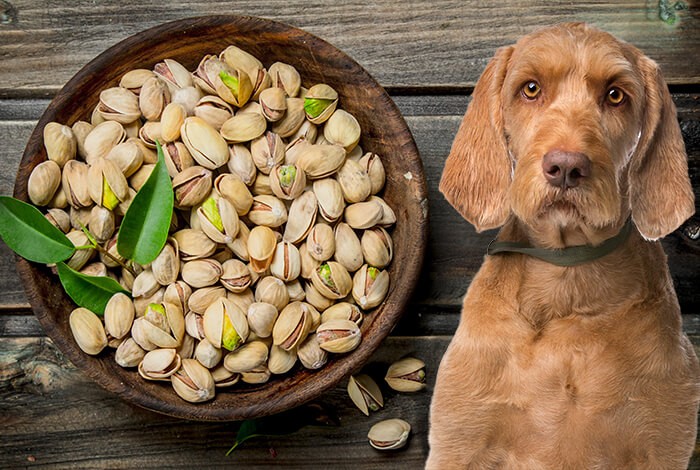
What to Do If Your Dog Eats Pistachios
In large quantities, pistachios can make your dog very sick. As a result, it’s best to keep all pistachios away from your dog. If your dog does get into your pistachios or discarded pistachio shells, it’s best to consult with your dog’s veterinarian or your closest emergency veterinary clinic right away.
Can Dogs Eat Pistachios?
“Though pistachios are not in themselves toxic to dogs, there are concerns with dogs eating large amounts of pistachios,” advises Dr. Jerry Klein, Chief Veterinarian for the AKC. For your dog’s safety, it’s best to avoid feeding them pistachios. Pistachios can upset your dog’s stomach, and when consumed in large quantities, pistachios can pose several health risks:
If your dog tries to swallow pistachios or their shells, they could become choking hazards and get lodged in your pet’s throat. If you’re eating nuts, be sure to properly dispose of the shells in a trashcan or compost bin that your dog can’t access.

Pistachios’ high fat content makes them dangerous for dogs. “The nut is high in fat, salt, and could cause gastrointestinal issues in some dogs,” explains Dr. Klein. Consumption of fatty, salty snacks can lead to pancreatitis in dogs.
Symptoms to watch for include diarrhea, vomiting, and loss of appetite. Pancreatitis is a serious condition and can progress quickly. If your dog seems lethargic or has any gastrointestinal upset after eating pistachios, consult a veterinarian immediately.
Although pistachios aren’t explicitly toxic, they do contain substances that are dangerous to dogs. Urushiol, which is also found in poison ivy, makes dogs sick with an allergy-like response. Aflatoxin is naturally produced from mold that grows on the shells of nuts. Consuming aflatoxin can make dogs weak and lethargic, cause gastrointestinal upset, and even lead to seizures.

Since the risks clearly outweigh the rewards, the real question isn’t whether your dog can have pistachios — it’s what to reach for instead. Here are the safer swaps, a quick nut-by-nut comparison, and the answers people ask most.
Safer Snack Alternatives to Pistachios
Good news: your dog has plenty of tasty options that skip the fat, salt, and shells. Work through these safer alternatives to pistachios by category:
- Fruits: apple slices (no seeds), blueberries, banana in small bites, seedless watermelon
- Veggies: carrot sticks, green beans, plain pumpkin
- Safer nuts, in moderation: a plain unsalted peanut, or a lick of dog-friendly peanut butter (xylitol-free)
- Dog-specific treats: store-bought treats built for canine tummies
Each one gives you that “here, buddy” moment without the worry.
Pistachios vs. Other Nuts: Which Are Safe for Dogs?
When feeding nuts to dogs, not all nuts are created equal. Some are merely risky; one is outright dangerous. Here’s the cheat sheet:
| Nut | Safe? | The catch |
|---|---|---|
| Pistachios | ⚠️ Risky | Fat, salt, shells, mold — not toxic, but not ideal |
| Peanuts | ✅ Best bet | Plain and unsalted only; skip the shell |
| Cashews | ⚠️ Okay-ish | A few plain ones; still fatty |
| Almonds | ⚠️ Risky | Hard to digest, choking risk |
| Walnuts | ❌ Avoid | Choking risk; moldy ones can be toxic |
| Macadamia | 🚫 Toxic | Macadamia nuts are toxic to dogs — never |
If you remember one line: plain peanuts are the friendly pick, and macadamias are the hard no.
Frequently Asked Questions
Can dogs eat one pistachio safely? Usually, yes. Because pistachios are not toxic to dogs, one plain, unsalted, shelled nut rarely harms a healthy dog. Just watch for any digestive upset afterward, and don’t make it a habit — the fat and salt pile up fast with repeat snacking.
What is aflatoxin poisoning in dogs? It’s illness caused by aflatoxin, a toxin made by mold that can grow on nuts like pistachios. Aflatoxin poisoning in dogs attacks the liver and may bring vomiting, jaundice, and weakness — sometimes with no visible mold at all. It’s a big reason to toss old or stale pistachios.
Are pistachios worse than almonds or cashews for dogs? They’re all in the same “fatty and risky” club. Pistachios stand out for their shells and mold risk, almonds are harder to digest, and cashews are a touch gentler plain but still rich. So are pistachios bad for dogs compared to these? About equal — all are best kept to rare, tiny amounts.
Which nuts are toxic to dogs? Only one common nut is truly toxic: the macadamia, which can trigger weakness, tremors, and fever. The rest — pistachios, almonds, walnuts, pecans, cashews — aren’t poison, but they carry choking, fat, salt, or mold risks. Think “one true danger, several not-worth-it snacks.”
Do red-dyed pistachios harm dogs? Skip them. Red pistachios carry the same fat and shell risks as plain ones, plus added dye and almost always salt. The color offers zero benefit and a little extra irritation risk. If a nut is dyed, salted, or flavored, it’s an easy no.
How long after eating pistachios will a dog get sick? It varies. Mild gastrointestinal upset can show within a few hours, while vomiting, diarrhea, and loss of appetite often appear over 6–24 hours. Serious signs like pancreatitis may take 12–48 hours. When in doubt, consult a veterinarian immediately instead of waiting it out.
The Verdict: Why Skipping Pistachios Wins
So, circling back to where we started — can dogs eat pistachios? Technically yes, a plain one won’t poison them. But between the fat, the salt, the shells, and the mold, the smart move is to skip them. Reach for a carrot or a dab of dog-friendly peanut butter instead. Your dog gets the treat, you skip the vet bill — everybody wins.