
Puppies spend a great deal of time playing, chewing and investigating objects. All of these normal activities involve puppies using their mouths and their needle-sharp teeth. When puppies play with people, they often bite, chew and mouth on people’s hands, limbs and clothing. This kind of behavior may seem cute when your puppy is seven weeks old, but it’s not nearly so endearing when he’s three or four months old—and getting bigger by the day!
Hey there, fellow puppy parents! If you’re reading this, I’m guessing your adorable little fur ball has turned into a tiny shark with needle-sharp teeth. Don’t worry – you’re not alone! As a dog owner who’s been through this challenging phase (and has the tiny scars to prove it), I understand the frustration of constantly having your hands, ankles, and probably your favorite pair of slippers attacked by those tiny chompers.
So let’s address the burning question at what age will my puppy stop biting me? The short answer is that most puppies start to decrease their biting behavior around 4-6 months of age and by 8-12 months, most have outgrown their nippy phase. But there’s a lot more to understand about this natural behavior!
Why Does My Puppy Keep Biting Everything (Including Me)?
Before we dive into when the biting will stop, it’s important to understand why puppies bite in the first place. Trust me your pup isn’t just trying to drive you crazy!
Common Reasons for Puppy Biting:
- Exploring their world: Puppies explore with their mouths, just like human babies do with their hands
- Teething discomfort: Adult teeth start growing in when puppies are 12-16 weeks old
- Normal play behavior: Puppies play with their littermates by mouthing and nipping
- Learning bite inhibition: It’s how they figure out how hard is too hard to bite
- Seeking attention: Sometimes even negative attention is better than no attention!
- Excess energy or overexcitement: When those puppy zoomies hit, anything can become a target
- Overstimulation or tiredness: Just like toddlers, tired puppies can get cranky and bitey
The Puppy Biting Timeline: What to Expect
I’ve put together this timeline based on what veterinary behaviorists and my own experience tell us about puppy biting development
| Age | Biting Behavior | What’s Happening |
|---|---|---|
| 8-10 weeks | Very mouthy, sharp puppy teeth | Learning about the world through mouthing |
| 12-16 weeks | Peak biting phase, can be quite painful | Teething begins, adult teeth starting to come in |
| 4-6 months | Gradually decreasing biting | Most adult teeth in place, learning bite inhibition |
| 6-8 months | Occasional mouthing during play | Teething complete, improving self-control |
| 8-12 months | Minimal mouthing, gentle if it occurs | Maturity developing, better impulse control |
Remember that every puppy is different! Some breeds might take longer to outgrow biting, while others might stop earlier. Factors like breed, socialization, training consistency, and individual personality all play a role in when your specific puppy will stop the biting behavior.
7 Ways to Help Your Puppy Stop Biting Sooner
While waiting for your puppy to naturally outgrow this phase, there are things you can do to speed up the process and make life more pleasant for everyone. Here are my top tips:
1. Teach Bite Inhibition
Bite inhibition refers to your dog learning how to control the force of their mouthing. This is super important – a dog who knows how to be gentle with their mouth is less likely to cause harm if they ever bite out of fear or pain later in life.
When your puppy bites too hard during play:
- Make a high-pitched yelp sound (similar to how another puppy would react)
- Let your hand go limp
- Stop playing for a moment
- Resume play once your puppy is calm
This teaches your puppy that biting too hard makes fun things stop. As your puppy gets better at controlling the force, you can gradually reduce the pressure that’s acceptable until no teeth on skin is the rule.
2. Use Time-Outs Effectively
If yelping doesn’t work (and for some puppies, it actually makes them more excited), try a brief time-out:
- When your puppy bites hard, say “Ouch!” or “Too bad!”
- Immediately stop playing and ignore your puppy for 10-20 seconds
- If they continue to bite, leave the room for 30-60 seconds
- Return and resume play calmly
- Repeat as needed (but no more than 3 times in a 15-minute period)
3. Redirect to Appropriate Chew Toys
Always have puppy-appropriate toys nearby! When your puppy starts to mouth you:
- Quickly substitute a toy or chew bone
- Praise lavishly when they chew on the toy instead of you
- Keep a variety of textures and types of toys to find what your puppy prefers
- Try freezing some teething toys to soothe sore gums
I’ve found that keeping toys in my pocket makes it easy to quickly redirect those sharp teeth away from my hands!
4. Encourage Non-Contact Play
Some types of play are more likely to get your puppy overexcited and bitey. Instead of wrestling or playing with your hands, try:
- Fetch (with appropriate sized toys)
- Tug-of-war (with rules about when to release)
- Training games that engage their mind
- Puzzle toys that keep them mentally stimulated
5. Manage Ankle-Biters
If your puppy loves to ambush your feet and ankles when you walk:
- Freeze immediately when they attack
- Have a toy ready to redirect them
- Reward calm behavior around moving feet
- Consider keeping a drag leash on your puppy indoors during training
6. Provide Plenty of Exercise and Mental Stimulation
A tired puppy is generally a better-behaved puppy! Make sure your little one gets:
- Age-appropriate physical exercise (don’t overdo it with young puppies)
- Mental stimulation through training and puzzle toys
- Socialization with other puppies and friendly adult dogs
- Structured nap times (overtired puppies can be extra bitey!)
7. Be Consistent With Training
Consistency is KEY to helping your puppy learn faster:
- Make sure all family members follow the same rules
- Never encourage nipping by enticing your puppy to chase hands or feet
- Don’t use physical punishment – it can make biting worse or cause fear
- Consider puppy socialization classes where they can learn from other puppies
When to Worry: Normal Puppy Biting vs. Problem Behavior
While most puppy biting is perfectly normal, there are times when you might need professional help. Here are some warning signs that your puppy’s biting might need expert attention:
- Biting that seems driven by fear or aggression rather than play
- Stiff body posture, growling, or snapping when you handle certain areas
- Biting that intensifies rather than decreases with age
- Biting that breaks skin regularly or causes bruising
- “Temper tantrum” behavior with frozen posture and intense biting
If you notice any of these signs, don’t wait – reach out to a certified dog trainer, veterinary behaviorist, or your vet for guidance. The sooner you address potential problems, the better the outcome!
Common Questions About Puppy Biting
Is it normal for my puppy to bite so much?
Yes! It’s completely normal for puppies to explore the world with their mouths and to play by mouthing. The key is teaching them appropriate bite inhibition.
My puppy only bites me and not other family members. Why?
This is actually pretty common! Your puppy might see you as their primary playmate, or they might be responding differently to your energy level or the way you interact with them. Make sure everyone in the family is consistent with training.
Will spaying/neutering help reduce biting?
While spaying/neutering has many benefits, it doesn’t directly impact biting behavior in puppies. Consistent training and socialization are much more important for addressing this issue.
My puppy bites more when tired or overstimulated. What can I do?
Just like human toddlers, puppies can get “cranky” when overtired! Learn to recognize the signs that your puppy needs a nap, and provide a quiet, comfortable place for them to rest. Enforced nap times in a crate or pen can work wonders.
I’ve tried everything and my puppy is still biting! Help!
If you’ve been consistent with training for several weeks and see no improvement, it might be time to call in a professional. A certified dog trainer or veterinary behaviorist can assess your specific situation and provide personalized guidance.
Final Thoughts
Remember, that cute little land shark will eventually grow out of the biting phase! With patience, consistency, and appropriate training, your puppy will learn to be gentle with those chompers. Before you know it, the puppy who once treated your hands like chew toys will be giving you gentle kisses instead.
Have you found any particular techniques that work well with your bitey puppy? I’d love to hear about your experiences in the comments below!
And if you’re struggling with the puppy biting phase, hang in there! I promise those razor-sharp puppy teeth don’t last forever, and all this training will help you build a strong foundation for a wonderful relationship with your adult dog.
Happy training!
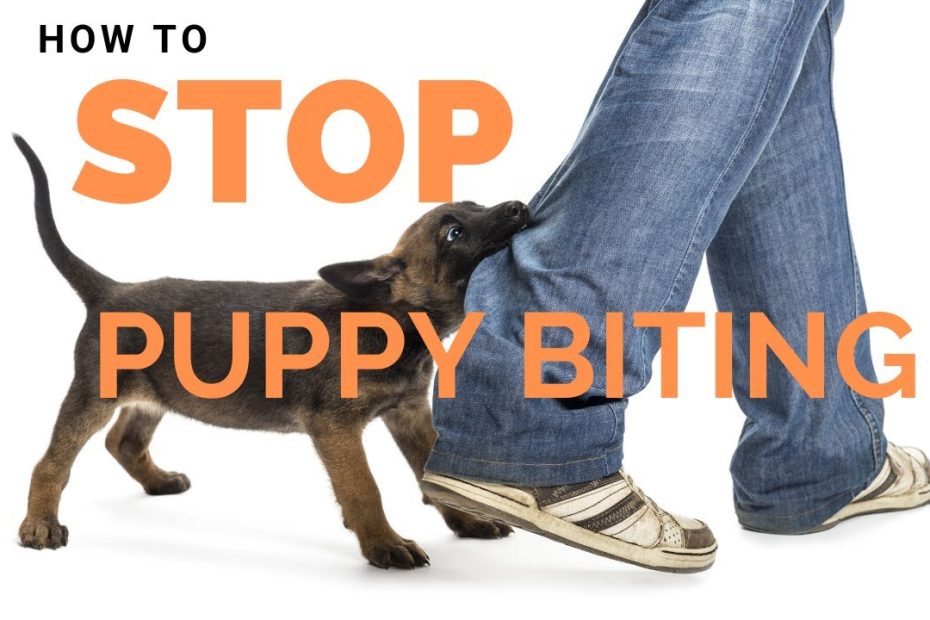
What to Do About Puppy Mouthing
It’s important to help your puppy learn to curb his mouthy behavior. There are various ways, some better than others, to teach this lesson. The ultimate goal is to train your puppy to stop mouthing and biting people altogether. However, the first and most important objective is to teach him that people have very sensitive skin, so he must be very gentle when using his mouth.
Bite Inhibition: Teach Your Puppy to Be Gentle Bite inhibition refers to a dog’s ability to control the force of his mouthing. A puppy or dog who hasn’t learned bite inhibition with people doesn’t recognize the sensitivity of human skin, and so he bites too hard, even in play. Some behaviorists and trainers believe that a dog who has learned to use his mouth gently when interacting with people will be less likely to bite hard and break skin if he ever bites someone in a situation apart from play—like when he’s afraid or in pain.
Puppies usually learn bite inhibition during play with other puppies. If you watch a group of puppies playing, you’ll see plenty of chasing, pouncing and wrestling. Puppies also bite each other all over. Every now and then, a pup will bite his playmate too hard. The victim of the painful bite yelps and usually stops playing. The offender is often taken aback by the yelp and also stops playing for a moment. However, pretty soon, both playmates are back in the game. Through this kind of interaction, puppies learn to control the intensity of their bites so that no one gets hurt and the play can continue without interruption. If puppies can learn how to be gentle from each other, they can also learn the same lesson from people.
When you play with your puppy, let him mouth on your hands. Continue play until he bites especially hard. When he does, immediately give a high-pitched yelp, as if you’re hurt, and let your hand go limp. This should startle your puppy and cause him to stop mouthing you, at least momentarily. (If yelping seems to have no effect, you can say “Too bad!” or “You blew it!” in a stern voice instead.) Praise your puppy for stopping or for licking you. Resume whatever you were doing before. If your puppy bites you hard again, yelp again. Repeat these steps no more than three times within a 15-minute period. If you find that yelping alone doesn’t work, you can switch to a time-out procedure. Time-outs are often very effective for curbing mouthing in puppies. When your puppy delivers a hard bite, yelp loudly. Then, when he startles and turns to look at you or looks around, remove your hand. Either ignore him for 10 to 20 seconds or, if he starts mouthing on you again, get up and move away for 10 to 20 seconds. After the short time-out, return to your puppy and encourage him to play with you again. It’s important to teach him that gentle play continues, but painful play stops. Play with your puppy until he bites hard again. When he does, repeat the sequence above. When your puppy isn’t delivering really hard bites anymore, you can tighten up your rules a little. Require your puppy to be even gentler. Yelp and stop play in response to moderately hard bites. Persist with this process of yelping and then ignoring your puppy or giving him a time-out for his hardest bites. As those disappear, do the same for his next-hardest bites, and so on, until your puppy can play with your hands very gently, controlling the force of his mouthing so that you feel little or no pressure at all.
What to Do Next: Teach Your Puppy That Teeth Don’t Belong on Human Skin
- Substitute a toy or chew bone when your puppy tries to gnaw on fingers or toes.
- Puppies often mouth on people’s hands when stroked, patted and scratched (unless they’re sleepy or distracted). If your puppy gets all riled up when you pet him, distract him by feeding him small treats from your other hand. This will help your puppy get used to being touched without mouthing.
- Encourage noncontact forms of play, such as fetch and tug-of-war, rather than wrestling and rough play with your hands. Once your puppy can play tug safely, keep tug toys in your pocket or have them easily accessible. If he starts to mouth you, you can immediately redirect him to the tug toy. Ideally, he’ll start to anticipate and look for a toy when he feels like mouthing.
- If your puppy bites at your feet and ankles, carry his favorite tug toy in your pocket. Whenever he ambushes you, instantly stop moving your feet. Take out the tug toy and wave it enticingly. When your puppy grabs the toy, start moving again. If you don’t happen to have the toy available, just freeze and wait for your puppy to stop mouthing you. The second he stops, praise and get a toy to reward him. Repeat these steps until your puppy gets used to watching you move around without going after your feet or ankles.
- Provide plenty of interesting and new toys so that your puppy will play with them instead of gnawing on you or your clothing.
- Provide plenty of opportunities for your puppy to play with other puppies and with friendly, vaccinated adult dogs. Playing and socializing with dog buddies is important for your puppy’s development—and if he expends a lot of his energy playing with other puppies, he’ll feel less motivated to play roughly with you. Consider enrolling your puppy in a good puppy class, where he can have supervised playtime with other puppies and learn some important new skills! Please see our article, Finding Professional Behavior Help, to locate a Certified Professional Dog Trainer (CPDT) in your area who offers puppy classes.
- Use a time-out procedure, just like the one described above—but change the rules a little. Instead of giving your puppy time-outs for hard biting, start to give him time-outs every time you feel his teeth touch your skin.
- The instant you feel your puppy’s teeth touch you, give a high-pitched yelp. Then immediately walk away from him. Ignore him for 30 to 60 seconds. If your puppy follows you or continues to bite and nip at you, leave the room for 30 to 60 seconds. (Be sure that the room is “puppy-proofed” before you leave your puppy alone in it. Don’t leave him in an area with things he might destroy or things that might hurt him.) After the brief time-out, return to the room and calmly resume whatever you were doing with your puppy.
- Alternatively, you can keep a leash attached to your puppy during time-out training and let it drag on the floor when you’re there to supervise him. Then, instead of leaving the room when your puppy mouths you, you can take hold of his leash and lead him to a quiet area, tether him, and turn your back to him for the brief time-out. Then untie him and resume whatever you were doing.
- If a time-out isn’t viable or effective, consider using a taste deterrent. Spray areas of your body and clothing that your puppy likes to mouth before you start interacting with him. If he mouths you or your clothing, stop moving and wait for him to react to the bad taste of the deterrent. Praise him lavishly when he lets go of you. Apply the bad taste to your body and clothes for at least two weeks. After two weeks of being punished by the bitter taste every time he mouths you, your puppy will likely learn to inhibit his mouthy behavior.
- Be patient and understanding. Playful mouthing is normal behavior for a puppy or young dog.
Because mouthing issues can be challenging to work with, don’t hesitate to enlist the help of a Certified Professional Dog Trainer (CPDT). A CPDT will offer group or private classes that can give you and your dog lots of assistance with mouthing.Please see our article, Finding Professional Help, to locate a CPDT in your area.
- Avoid waving your fingers or toes in your puppy’s face or slapping the sides of his face to entice him to play. Doing these things can actually encourage your puppy to bite your hands and feet.
- Do not discourage your puppy from playing with you in general. Play builds a strong bond between a dog and his human family. You want to teach your puppy to play gently, rather than not at all.
- Avoid jerking your hands or feet away from your puppy when he mouths. This will encourage him to jump forward and grab at you. It’s much more effective to let your hands or feet go limp so that they aren’t much fun to play with.
- Slapping or hitting puppies for playful mouthing can cause them to bite harder. They usually react by playing more aggressively. Physical punishment can also make your puppy afraid of you—and it can even cause real aggression. Avoid scruff shaking, whacking your puppy on the nose, sticking your fingers down his throat and all other punishments that might hurt or scare him.
When Does Mouthing Become Aggression?
Most puppy mouthing is normal behavior. However, some puppies bite out of fear or frustration, and this type of biting can signal problems with future aggression.
Puppy “Temper Tantrums” Puppies sometimes have temper tantrums. Usually tantrums happen when you’re making a puppy do something he doesn’t like. Something as benign as simply holding your puppy still or handling his body might upset him. Tantrums can also happen when play escalates. (Even human “puppies” can have tantrums during play when they get overexcited or upset)! A puppy temper tantrum is more serious than playful mouthing, but it isn’t always easy to tell the difference between the two. In most cases, a playful puppy will have a relaxed body and face. His muzzle might look wrinkled, but you won’t see a lot of tension in his facial muscles. If your puppy has a temper tantrum, his body might look very stiff or frozen. He might pull his lips back to expose his teeth or growl. Almost always, his bites will be much more painful than normal mouthing during play.
If you’re holding or handling your puppy and he starts to throw a temper tantrum, avoid yelping like you’re hurt. Doing that might actually cause your puppy to continue or intensify his aggressive behavior. Instead, be very calm and unemotional. Don’t hurt your puppy, but continue to hold him firmly without constriction, if possible, until he stops struggling. After he’s quieted down for just a second or two, let him go. Then make plans to contact a qualified professional for help. Repeated bouts of biting in frustration are not something that the puppy will simply grow out of, so your puppy’s behavior should be assessed and resolved as soon as possible.
When and Where to Get Help A trained professional can help you determine whether or not your puppy’s mouthing is normal, and she or he can guide you through an effective treatment plan. If you suspect that your puppy’s biting fits the description of aggressive or fearful behavior, please seek consultation with a qualified professional, such as a Certified Applied Animal Behaviorist (CAAB or ACAAB) or a Diplomate of the American College of Veterinary Behavior (Dip ACVB). If you can’t find a behaviorist in your area, you can seek help from a Certified Professional Dog Trainer (CPDT)—but be sure to determine whether she or he has professional training and experience in successfully treating fear and aggression problems, as this expertise isn’t required for CPDT certification. Please see our article, Finding Professional Behavior Help, to locate one of these professionals in your area.
