
Even the cutest of doggos get that “wet dog smell” from time to time. While we hold our furry or feathery friends near and dear to our hearts, sometimes we want to hold them just a little further away because — let’s face it — they can be stinky. Whether your dog got caught out in the rain or your cat just visited the litter box, pet odors are part of pet ownership.
Plus, most pets aren’t stationary creatures, so these odors don’t stay in one spot — they travel with your pet, all over the house. An air purifier can help remove these pungent odors from a room, instead of just covering them up with a better scent.
Living with our furry best friends comes with so many joys, but let’s be honest – sometimes those joys come with a side of… well, stink. If you’ve ever walked into your house after being gone for a few hours and thought “wow, it really smells like dog in here,” you’re definitely not alone! As someone who’s lived with multiple dogs over the years, I know that struggle all too well.
The big question many pet parents ask is: do air purifiers actually help with dog odor? The short answer is YES… but with some important caveats. Let’s dive into everything you need to know about tackling those persistent pet smells with an air purifier.
The Truth About Dog Odors: Why Your Home Gets Stinky
Before we talk about solutions, let’s understand what we’re dealing with. Dog odors come from several sources:
- Wet dog smell – Those microorganisms living in your dog’s fur release musky molecules when they get wet
- Urine and litterbox smells – Uric acid crystalizes and doesn’t dissolve in water, making these smells particularly stubborn
- Dirty fur – Dead skin cells, dried saliva, and dirt trapped in your pet’s coat
- Dander – Those tiny flakes of dead skin that float through the air
- Medical conditions – Sometimes bad odors can indicate bacterial infections or other health issues
What makes dog odors particularly challenging is that they don’t stay in one place. Your pup carries these smells all around your home as they move from room to room leaving a trail of scent molecules behind.
How Air Purifiers Work Against Pet Odors
So how exactly do air purifiers help with these persistent pet smells? An effective air purifier doesn’t just mask odors like a candle or air freshener – it actually removes the odor-causing particles from the air
Here’s how they combat dog odor:
- Filtering the air – Air purifiers pull in air and pass it through filters that trap particles and pollutants
- Neutralizing odors – Some filters can actually break down smell molecules at a molecular level
- Removing allergens – By capturing pet dander, they reduce both smells and allergy symptoms
But not all air purifiers are created equal when it comes to fighting pet odors. Let’s look at what really matters
What to Look for in an Air Purifier for Dog Odors
If you’re serious about tackling pet smells, these are the key features to look for:
1. The Right Filtration System
The most important factor is getting an air purifier with the right kind of filters:
-
HEPA Filters – These capture 99.97% of particles as small as 0.3 microns, including pet dander and hair. While they don’t directly neutralize odors, removing these particles significantly reduces the sources of smells.
-
Activated Carbon Filters – This is the secret weapon against actual odors. Activated carbon has a massive surface area that traps and neutralizes odor molecules from urine, feces, and general dog smell. If odor control is what you’re after, this is non-negotiable!
-
Pre-filters – These catch larger particles like pet hair before they reach the main filter, extending the life of your more expensive HEPA and carbon filters.
Some air purifiers also include additional technologies:
- UV-C Light – Kills bacteria and viruses, which can indirectly reduce odors
- PECO filters – Uses light to oxidize harmful molecules rather than just trapping them
Warning about Ozone Generators: Some air purifiers are marketed as ozone generators. While ozone can neutralize odors, it can be harmful to both humans and pets – especially birds! I’d recommend avoiding these entirely.
2. Coverage Area and CADR Rating
Make sure the air purifier you choose is designed for the size of the room where your dog spends the most time. Look for:
- CADR Rating (Clean Air Delivery Rate) – This indicates how quickly the purifier can clean a room. Higher is better!
- Recommended Room Size – Don’t get a purifier meant for a small bedroom if you need to clean your entire open-concept living area.
3. Noise Level and Convenience Features
Some practical considerations that make a big difference:
- Noise Level – Some purifiers can be quite loud, especially at higher speeds
- Filter Replacement Indicators – These let you know when it’s time for new filters
- Auto Mode – Adjusts fan speed based on detected air quality
- Smart Features – App control, air quality monitoring, etc.
My Top 5 Air Purifiers for Dog Odors
After reviewing many options, here are my top picks for tackling pet odors:
1. Honeywell 50250-S True HEPA Air Purifier
Best for: Large rooms (up to 390 sq ft)
Why I love it: I’ve personally had this one for years and it’s still going strong. It uses both HEPA and carbon filtration, and the 360-degree air intake really helps increase efficiency. It’s not the prettiest unit out there, but it works!
2. LEVOIT Air Purifier
Best for: Bedrooms (up to 129 sq ft)
Why I love it: Super quiet operation and compact size make this perfect for bedrooms. It uses a 3-stage filtration system including HEPA and activated carbon. Plus, it’s one of the more affordable options!
3. GermGuardian AC4825
Best for: Medium rooms (up to 167 sq ft)
Why I love it: This one includes UV-C light technology to kill germs along with its HEPA and carbon filters. It’s Energy Star certified, so it won’t cost a fortune to run.
4. Hathaspace Smart True HEPA Air Purifier
Best for: Large living areas (up to 350 sq ft)
Why I love it: With a 6-in-1 filter system and smart features that adjust to your air quality, this is great for tech-savvy pet owners. It even claims to help control pet hair!
5. Blue Pure 211+ Air Purifier
Best for: Very large spaces (400-600 sq ft)
Why I love it: While it’s pricier than others, this purifier handles the largest spaces and looks stylish doing it. I love that the pre-filter is washable and comes in different colors to match your decor.
Beyond Air Purifiers: A Holistic Approach to Dog Odors
Air purifiers are fantastic, but they work best as part of a comprehensive approach to keeping your home fresh. Here are some other tactics to use alongside your air purifier:
Regular Pet Grooming
- Brush your dog regularly to remove loose fur and dander
- Bathe them with a quality pet shampoo (but not too frequently as it can dry out their skin)
- Keep up with dental hygiene to prevent bad breath
Clean Up Promptly
- Address accidents immediately with enzymatic cleaners
- Clean up feces right away (but don’t use a steamer on urine accidents!)
- Wash pet toys and bedding frequently
Home Maintenance
- Vacuum regularly with a HEPA-filtered vacuum
- Wash pet bedding weekly
- Open windows regularly for ventilation
- Use baking soda as a natural odor absorber on carpets and furniture
The Reality Check: Managing Expectations
While air purifiers can significantly reduce dog odors, they’re not magic. Here’s what you should realistically expect:
✅ What Air Purifiers CAN Do:
- Significantly reduce that general “dog smell” in your home
- Remove dander and allergens from the air
- Improve overall air quality
- Make your home smell fresher over time
❌ What Air Purifiers CAN’T Do:
- Instantly eliminate all pet odors
- Remove odors from surfaces (like your couch or carpet)
- Replace regular cleaning and grooming
- Eliminate the smell of a fresh accident immediately
FAQs About Air Purifiers for Dog Odor
Q: How long will it take to notice a difference in dog odors?
A: Most people notice improvement within 24-48 hours of continuous use, but it depends on the size of your space and the strength of the odors.
Q: Where should I place my air purifier for best results?
A: Put it in the room where your dog spends the most time, and make sure it has plenty of clearance around it for proper air circulation.
Q: How often do I need to replace the filters?
A: This varies by model, but typically HEPA filters need replacing every 6-12 months, while carbon filters may need to be changed every 3-6 months depending on usage.
Q: Are air purifiers safe for my dog?
A: Yes, most air purifiers are completely safe for pets. Just avoid ozone generators, which can be harmful to both humans and animals.
Q: Will one air purifier be enough for my whole house?
A: For best results in a multi-room home, you’ll want either a unit sized for your entire open area or multiple units placed in different rooms. Focus on the areas where your dog spends the most time.
Final Thoughts: Are Air Purifiers Worth It for Dog Odors?
As someone who’s lived with multiple dogs over 18+ years, I can confidently say that a good air purifier is absolutely worth the investment for pet owners. The combination of HEPA and activated carbon filtration makes a noticeable difference in how fresh your home smells.
Just remember that an air purifier works best as part of your overall pet odor management strategy, alongside regular cleaning, grooming, and proper ventilation.
Have you tried using an air purifier for pet odors? What’s been your experience? I’d love to hear about it in the comments below!
This article contains affiliate links. If you make a purchase, we earn a small commission at no extra charge to you.
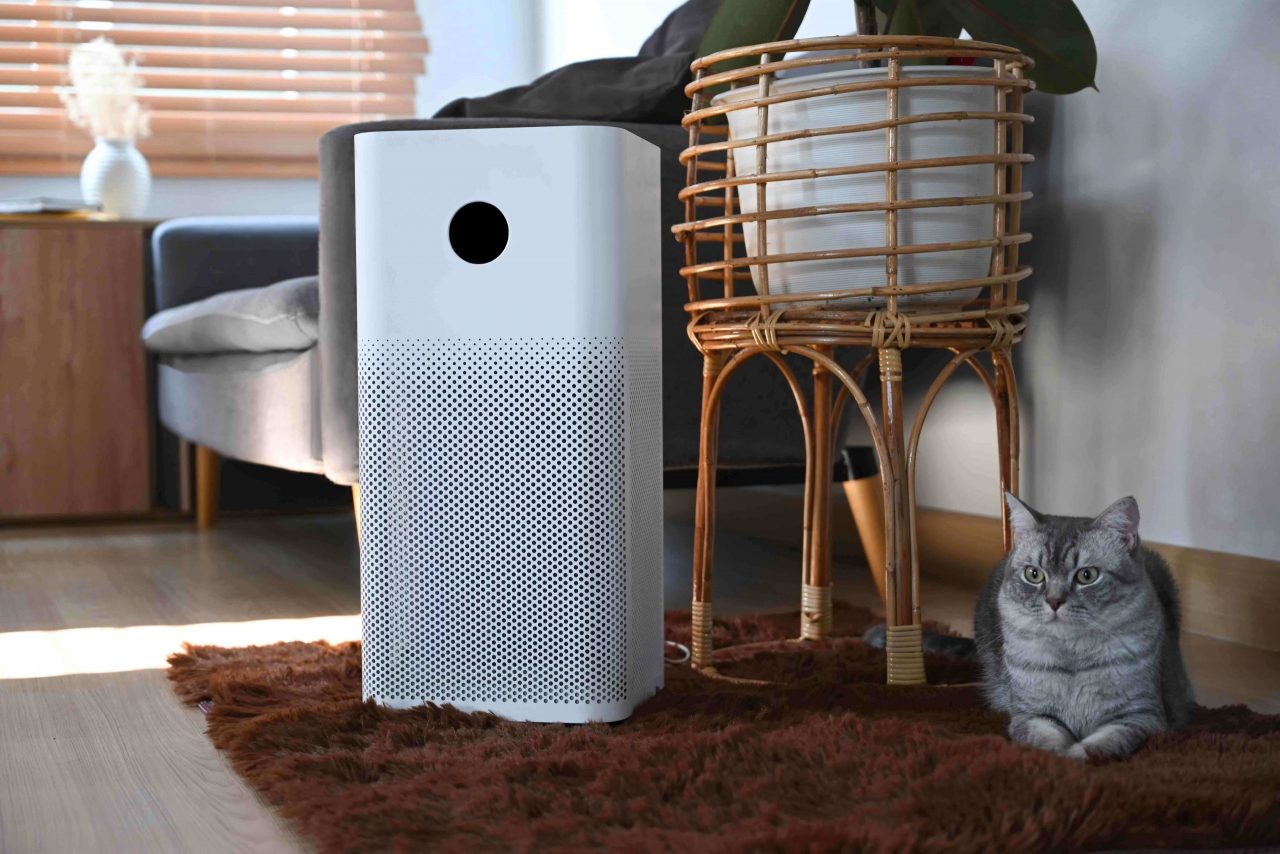
What Causes These Odors?
Lots of things can cause pet odors. Here’s a few:
- Pet urine, litterbox smells or, worse, those carpet accidents. Uric acid is the culprit here. It crystalizes and doesn’t dissolve in water. These crystals are difficult to remove and will react to moisture or humidity, causing the smell to resurface after you think it’s gone.
- Wet dog smell. Dogs have teeny, tiny microorganisms living in their fur. Water breaks down the chemical bonds of these microscopic organism’s byproducts and can release a fog of musky molecules in the air — which our nose easily identifies as a “wet dog smell.”
- Dirty fur. Dead skin cells, dried saliva, dirt and anything else trapped in your pet’s fur can exacerbate odors, leaving your indoor air quality less than desirable.
- Medical conditions. Sometimes a foul odor coming from your pet can be a sign of a bacterial infection. If odors is linger even after a bath, it may be a good idea to schedule a check-up with a vet.
To minimize pet odors, address the issue closest to the source of the problem. Use specialty cleaners that are specifically developed to remove uric acid crystals, and groom your pets regularly. Even so, odors are inevitable when you own a pet. Air purifiers, such as the TruSens series of air purifiers with DuPont™ activated carbon and DuPont™ 360° HEPA filtration, can help minimize those smells.
How TruSens Air Purifiers Can Help
It’s all about the activated carbon filter: an air purifier absorbs the foul-smelling particles from the air, runs it through the filter and distributes cleaner, fresher air. Activated carbon filters are specifically designed to remove gases and volatile organic compounds (VOCs). Most air purifiers come with a HEPA filter, which can mitigate dander, but the next-level carbon filtration is necessary to help remove the odor.
TruSens Air Purifiers also includes PureDirect, a proprietary dual air flow system that moves clean air in multiple directions for more even clean air distribution. TruSens Air Purifier models Z-2000, Z-2500, Z-3000, and Z-3500 come with SensorPod, a unique remote monitor that communicates with the purifier to respond to air quality changes in real time. Choose the air purifier size that best suits the size of your room—but keep in mind that the larger the air purifier, the more clean air it is able to circulate in a shorter time, so a large air purifier in a small room may be extra powerful.