
Have you ever experienced that heart-stopping moment when you realize your furry friend is nowhere to be found? If you’re wondering “can a dog get lost?” the unfortunate answer is absolutely yes. In fact, according to statistics, one in three pets will become lost in their lifetime. That’s a pretty alarming number!
As a dog owner myself, I know the panic that sets in when your pup disappears. The good news? Most lost dogs are eventually found, but timing and proper action are critical. Let’s dive into everything you need to know about lost dogs – from why they go missing to how to bring them home safely.
The Reality of Lost Dogs: Statistics and Chances
First, let’s talk about some encouraging numbers that might ease your mind:
- Within the first 24 hours of a dog being marked as “lost,” the chances of finding them are as high as 93%
- After that critical 24-hour mark, the chances drop to about 60%
- Overall, about 90% of lost dogs are eventually found alive
- Around 20% of lost dogs return home on their own
- The average missing dog is lost for approximately 30 days
These statistics show that while dogs definitely can and do get lost. the odds of reuniting with your furry friend are actually quite good – especially if you act quickly!
How Long Can Dogs Survive When Lost?
A question that haunts many dog owners is how long their beloved pet can survive on their own. The answer depends on several factors:
Factors Influencing a Missing Dog’s Survival
Breed and Size Considerations
Larger breeds like German Shepherds and Labrador Retrievers typically have greater physical endurance and can withstand harsh conditions better than smaller breeds like Chihuahuas Smaller dogs are more vulnerable to predators and temperature extremes
Age and Health
Young puppies and elderly dogs have the hardest time surviving on their own. A healthy adult dog in prime condition has the best chance of extended survival.
Environmental Conditions
A dog lost in mild weather with access to water sources has much better chances than one lost in extreme heat, cold, or areas with many predators
Temperament and Survival Skills
Dogs with high prey drives might be more successful at hunting for food. Dogs used to spending time outdoors typically adapt better to being lost than primarily indoor pets.
Basic Survival Needs
When it comes to the bare necessities:
- Dogs can typically survive only around three days without water, especially in hot weather
- A healthy dog can potentially survive for several weeks without food, though they’ll quickly become weak
- Shelter from extreme weather is essential for survival
Where Do Dogs Go When They Get Lost?
Understanding where dogs typically go when lost can help in your search efforts:
- Many dogs don’t actually travel very far from home unless they’re chased
- A medium-sized dog can travel up to 15 miles (24 km) in a day, though most don’t
- Lost dogs will focus on finding safety, water, and food in that order
- Dogs often hide when scared, which can make them harder to find even when they’re nearby
- Some dogs return to familiar places like dog parks or neighbors’ homes
The Missing Animal Response Network’s study shows that lost outdoor-access cats traveled a median distance of just 344 yards from home (about a 17-house radius). While dogs can travel farther, many stay relatively close to where they went missing.
Dog Behavior When Lost: What to Expect
Lost dogs don’t behave the same way as they do at home. Understanding their psychology can help you find them:
- Dogs often become scared and anxious when they realize they’re lost
- They may hide and be too afraid to respond when called
- Their survival instincts kick in after a while, focusing on finding food, water, and shelter
- Dogs can actually smell their home from considerable distances (up to 12 miles in perfect conditions)
- A lost dog might not immediately approach even their owner due to fear and confusion
What To Do in the First 24 Hours After Your Dog Goes Missing
Since your chances of finding your dog are highest in the first 24 hours, here’s what you should do immediately:
1. Get the Word Out About Your Missing Dog
- Tell neighbors, friends, and family members
- Post on social media and neighborhood groups
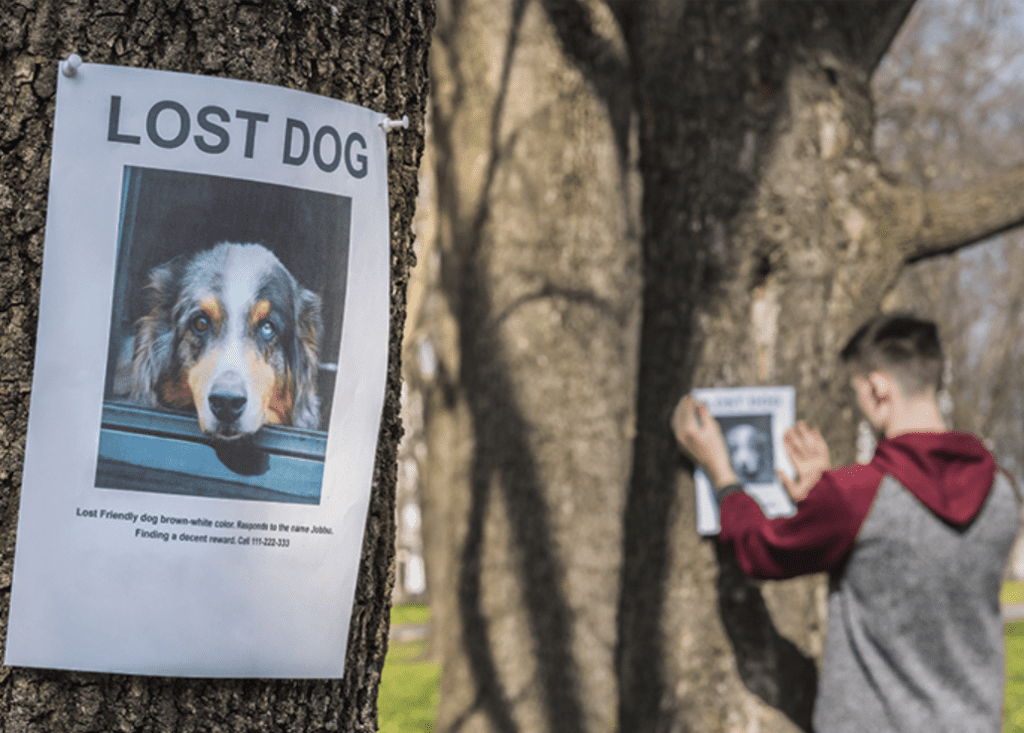
- Create “lost dog” posters with a clear photo and your contact information
- Post these in your neighborhood, at local businesses, and at animal shelters
2. Contact the Authorities
- File a missing pet report with local animal shelters and animal control
- Contact nearby veterinary clinics
- Provide accurate descriptions and mention if your dog is microchipped
3. Organize a Local Search
- Start searching in your immediate neighborhood
- Use a grid-like pattern to be methodical
- Have people call your dog’s name in a friendly, positive voice
- Focus on areas where dogs might seek shelter or water
4. Make Your Home Appealing for Your Dog’s Return
- Put your dog’s bed outside where they can smell it
- Place some of your worn clothing or bedding outside too
- Call their name in a friendly (not anxious) voice
- Shake their treat can if they respond to that
How to Approach a Lost Dog When You Find Them
If you’re lucky enough to locate your lost dog, approaching them correctly is crucial:
- Approach slowly and obviously – no sudden movements
- Use a positive, calm voice with phrases like “good boy/girl”
- Don’t chase them – this will only scare them away
- Use treats or toys to lure them to you
- Once they approach, pet them gently before attempting to secure them
- Clip a leash on carefully while continuing to give positive attention
- Remain calm if they struggle – don’t force them to move
Preventing Dogs from Getting Lost
The best solution is prevention! Here are some proactive measures:
Secure Your Property
- Ensure your yard has secure fencing without gaps or holes
- Regularly inspect fences for damage
- Consider burying wire mesh along fence bases if your dog digs
Proper Identification
- Make sure your dog is microchipped (dogs with microchips are returned to their families 52.2% of the time, compared to just 21.9% for dogs without)
- Keep microchip registration information updated
- Have your dog wear a collar with ID tag at all times
Training and Equipment
- Teach reliable recall commands
- Use proper leash training
- Consider GPS tracking devices for dogs prone to wandering
- Avoid risky situations like off-leash walks in unfamiliar areas
Long-Term Missing Cases: Never Give Up Hope
If your dog has been missing for more than a few days, don’t despair:
- Dogs can survive for months or even years on their own
- There are numerous stories of dogs being found after extended periods
- Continue checking shelters regularly – some dogs aren’t found immediately
- Refresh your missing dog posts periodically
- Expand your search radius as time passes
When Should You Stop Looking for a Lost Dog?
Never! As long as there’s a possibility your dog is out there, don’t give up hope. There are countless stories of dogs reuniting with their families after months or even years.
Resources for Finding Lost Dogs
If your dog goes missing, these resources can help:
- Petco Love Lost: A nationwide lost and found pet database
- Local animal shelters and animal control
- Lost Dogs of America and similar organizations
- Social media groups dedicated to lost and found pets
- Pet FBI and other online pet recovery sites
- Professional pet tracking services that use tracking dogs
Final Thoughts
So, can a dog get lost? Unfortunately, yes they can. But with quick action, persistence, and the right approach, the odds are very much in your favor for a happy reunion. The key is to act quickly, spread the word widely, search systematically, and never give up hope.
Remember, a microchipped dog with proper ID has the best chances of making it home safely. Taking preventive measures now could save you and your furry friend a lot of heartache down the road.
Have you ever lost a dog or helped find one? We’d love to hear your stories and tips in the comments below!
Circumstances Surrounding the Disappearance of a Lost Dog
A dog that digs out from a yard to explore a scent will tend to travel a short distance before it is found meandering and doubling back as it explores a scent. On the other hand, a dog that bolts in panic due to fireworks or thunder will take off at a blind run and can run for several miles.
Weather: A dog that escapes on a beautiful spring day may travel farther than one that escapes in a snowstorm. Extreme weather conditions (snow, hail, rain, sweltering heat) will decrease the distances that lost dogs travel.
Terrain: A dog that escapes in a residential area will not travel as far as a dog that escapes in a mountainous area. Fences that create barriers will influence a dog’s travel since a dog will tend to take the “path of least resistance” when traveling. Cactus, heavy brush, and steep cliffs can be barriers that influence whether a dog continues on a path or changes directions.
Appearance of the Dog: What a dog looks like can influence how quickly it will be picked up by a rescuer. In general, most people are less inclined to pull over and attempt to grab a loose Pit Bull they perceive as being “aggressive” than they would a “friendly” Labrador Retriever. Also, size matters as people are more inclined to pick up small dogs because they look vulnerable and are easier to transport and house than large dogs. In addition, people are more likely to attempt to rescue a purebred dog that they perceive to have value than a mixed breed dog. When average motorists see a mixed breed dog trotting down the sidewalk, their impression is often that the dog belongs in the neighborhood or that it is a homeless stray. But when those same people see a Boston Terrier, they are inclined to believe that, because it is a “valuable purebred dog,” it must be a lost pet.
Population Density: A dog that escapes in Manhattan will travel a shorter distance than will a dog that escapes in the Rockies or in rural farmland. When dogs escape into areas with a high number of people, their chances of being found close to the escape point are increased. But in areas with an extremely low number of people, dogs tend to travel farther and their chances of being found close to the escape point are decreased. A dog that escapes in the middle of the night will travel farther before being seen than a dog that escapes during rush hour traffic.
Factors That Influence Distances Traveled
There are six major factors that influence the distances that a lost dog will travel: Temperament, Circumstances, Weather, Terrain, Appearance, and Population Density.
We Found a Lost Dog in a Dumpster
FAQ
Can dogs find their way home if lost?
Is it possible for a dog to get lost?
Yes they certainly can get lost. Many people lose their dogs yearly necessitating calls to local shelters, animal control, posters in neighbourhoods and online social media to help find the pet.
Where do dogs go when they are lost?
What are the chances of finding a lost dog?
Fortunately, statistics show that many missing dogs find their way back home. Around 70% of lost dogs are found safe.Jun 17, 2025