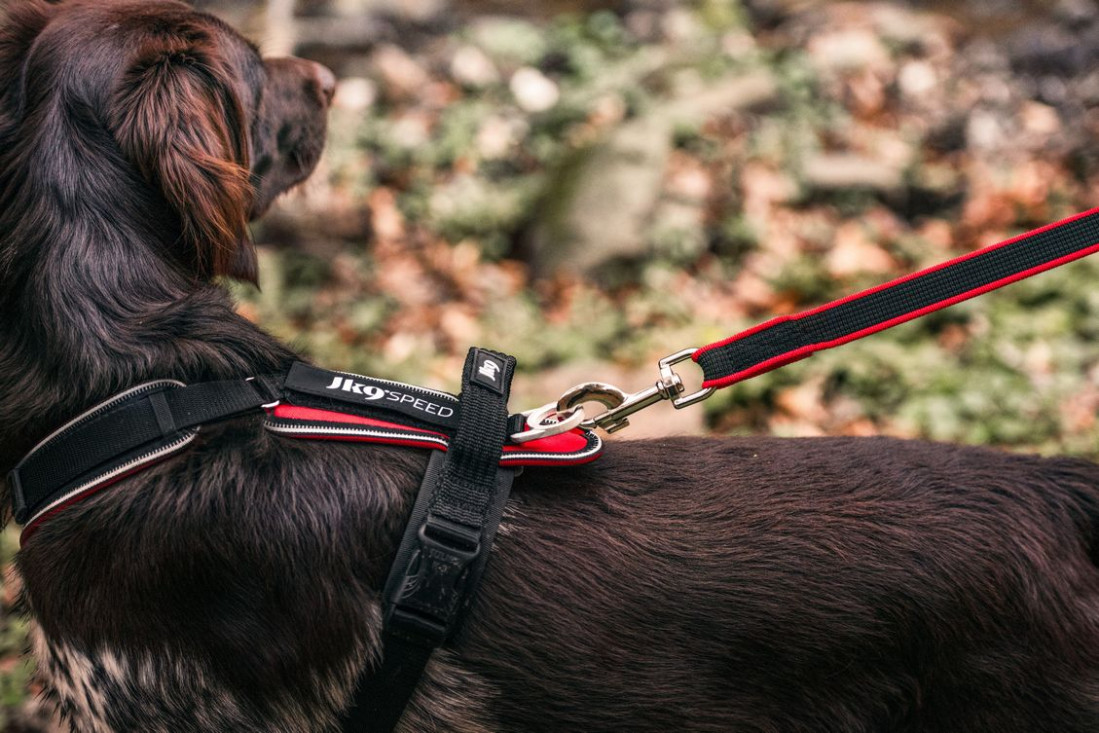
So, you’ve bought a fancy new harness for your furry friend thinking it’ll solve all your dog-walking woes – only to watch in horror as Fido wriggles right out of it during your neighborhood stroll! Trust me, I’ve been there and it’s not just embarrassing – it can be downright dangerous.
At Julius-K9, we see this problem all the time. Dogs are escape artists by nature, and yes, they absolutely CAN slip out of harnesses if they’re not properly fitted or if you’ve chosen the wrong type for your particular pooch.
Let’s dive into why harnesses slip, how to prevent escapes, and what to look for when shopping for a truly secure harness.
Why Dogs Slip Out of Harnesses (The Real Reasons)
Ever wondered why your dog’s harness keeps shifting around or how your four-legged Houdini manages to escape? Here are the main culprits:
Improper Fitting
The number one reason dogs slip out of harnesses is improper fitting A correctly fitted harness should
- Stay in place at all times
- Fit snugly against your dog’s chest, back, and belly
- Allow you to fit two fingers between the harness and your dog’s body (the golden rule!)
Too loose, and your clever canine will back right out of it. Too tight, and they’ll be uncomfortable and may try to wriggle free due to discomfort.
Wrong Size Selection
Using the wrong size harness is asking for trouble. If the harness is too big, it’s basically an invitation for your dog to slip out. On the flip side, a harness that’s too small might ride up or shift positions, creating gaps where your dog can wiggle free.
This isn’t just annoying – it’s potentially dangerous as your dog could escape the harness at the worst possible moment (like near traffic or other triggers)
Excessive Pulling
Got an excitable puller on your hands? All that tugging and lunging can gradually work a harness out of position. When a harness shifts due to pulling, it creates uneven pressure points and potential escape routes.
As we say at Julius-K9, “There is no such thing as a completely no-pull harness.” No-pull equipment is designed to limit pulling and reduce strain, but training is the ultimate solution.
Imbalanced Load Distribution
Sometimes we’re the problem! If you’ve attached too many accessories to one side of the harness (poop bags, lights, treat pouches), you might be creating an imbalance that causes the harness to shift position.
Inadequate Design for Dog Shape
Not all harnesses work for all dog shapes. Dogs with narrow chests, slender necks, or unique body shapes (like Greyhounds or Whippets) need harnesses specifically designed for their body type.
The Telltale Signs Your Dog’s Harness Doesn’t Fit Right
How do you know if your dog’s harness is a disaster waiting to happen? Look for these warning signs:
- Constant shifting – The harness moves around even during calm walking
- Sideways sliding – The harness consistently slides to one side
- Riding up – The harness creeps up toward your dog’s neck
- Visible discomfort – Your dog walks uncomfortably or tries to paw at the harness
- Chafing or fur loss – Look for signs of rubbing under the legs or on the chest
How to Properly Fit a Dog Harness (Step-by-Step)
Getting the fit right is crucial, so let’s break it down into simple steps:
- Measure your dog carefully before purchasing (chest circumference and neck girth at minimum)
- Adjust all straps so they’re snug but not tight (remember the two-finger rule)
- Check pressure points under legs and around neck for even distribution
- Watch your dog move in the harness to see if it stays in position
- Make micro-adjustments as needed – don’t settle for “close enough”
Need more guidance? Julius-K9 has a comprehensive “How to fit and measure your dog for a harness” guide on our website.
Types of Harnesses Least Likely to Slip
Not all harnesses are created equal when it comes to security. Here are the styles least likely to result in escapes:
Front and Back Clip (Dual Attachment) Harnesses
For highly energetic dogs that need more control, consider a harness with both front and back attachment points. These allow you to use a double-ended lead that clips to both the chest and back simultaneously.
This design provides extra control and distributes pressure more evenly over your dog’s body. As we’ve found at Julius-K9, harnesses with a front clip should have a wider chest plate to help with pressure distribution and keep the harness firmly in place.
Full-Body Harnesses
These cover more of your dog’s torso and typically have multiple adjustment points, making them harder to slip out of. They’re especially good for dogs with unusual body shapes.
Y-Shaped Front Harnesses
The Y-shape follows your dog’s natural anatomy and reduces shifting. When fitted correctly, these are difficult for even the most determined escape artists to wriggle out of.
6 Practical Tips to Stop Your Dog’s Harness from Slipping
Now for the practical stuff! Here’s what actually works to keep that harness in place:
-
Double-check all straps before every walk – Straps can loosen over time
-
Consider a harness with a belly strap – This additional point of security makes it much harder for dogs to back out
-
Use a double-ended lead – Attaching to both front and back clips provides balanced control and keeps the harness positioned correctly
-
Add a safety connection – Some trainers recommend using both a harness and a collar connected with a coupler as a backup security system
-
Don’t overload one side – Keep accessories balanced on both sides of the harness
-
Address the pulling behavior – The best long-term solution is training your dog not to pull (check out our “How to stop your dog pulling on the lead” article for training tips)
When to Consider a Professional Fitting
Sometimes, it’s worth getting expert help, especially if:
- You have a dog with an unusual body shape
- Your dog has repeatedly escaped from harnesses
- You’re unsure about measuring and fitting
- Your dog shows signs of discomfort in their current harness
Many pet stores offer fitting services, or you could consult with a professional dog trainer who specializes in equipment.
Common Mistakes Dog Owners Make with Harnesses
We’ve all been there! Here are the blunders to avoid:
- Buying online without measuring – Guessing your dog’s size is a recipe for disaster
- Ignoring manufacturer’s sizing guides – Different brands have different sizing systems
- Skipping regular adjustments – Dogs change shape as they grow, gain/lose weight, or develop muscle
- Assuming one style works for all activities – You might need different harnesses for different scenarios
- Not checking for wear and tear – Damaged harnesses can fail when you least expect it
Training Your Dog to Accept a Harness
Sometimes the problem isn’t just the harness itself, but your dog’s comfort level with wearing it. We recommend:
- Introducing the harness gradually – Let your dog sniff and investigate before putting it on
- Using positive reinforcement – Treats and praise make the harness a positive experience
- Starting with short wearing periods – Build up wearing time gradually
- Checking for any signs of discomfort – Address these immediately rather than forcing your dog to “get used to it”
FAQs About Dogs Slipping Out of Harnesses
Q: My dog backs out of every harness I try. What am I doing wrong?
A: You likely need a harness specifically designed for “escape artists” with additional security features. Look for Y-shaped front pieces, belly straps, and multiple adjustment points.
Q: Can a properly fitted harness ever fail?
A: Even the best harnesses can occasionally fail due to manufacturing defects, wear and tear, or extreme circumstances. That’s why regular inspection and proper fitting are crucial.
Q: Are certain breeds more likely to slip out of harnesses?
A: Yes! Dogs with narrow heads compared to their necks (like Greyhounds, Whippets, and some Collies) are notorious escape artists. Breeds with thick necks and narrow chests can also be challenging to fit.
Q: Is it better to have a harness too tight or too loose?
A: Neither! Too tight restricts movement and causes discomfort; too loose creates escape opportunities. The two-finger rule is your best guide.
Q: My dog only slips out when scared. What can I do?
A: This is actually common! For fearful dogs, consider a harness with a “panic handle” for quick grabbing and additional security features. Work on counter-conditioning to reduce fear responses.
Making the Right Choice for Your Dog
When it comes to harness security, there’s no one-size-fits-all solution. What works for one dog might be a disaster for another. The key is understanding your individual dog’s needs, body shape, and behavior.
At Julius-K9, we’ve seen thousands of dogs benefit from properly fitted harnesses that enhance control while keeping them secure and comfortable. Remember that the perfect harness isn’t just about preventing escapes – it’s about creating a positive walking experience for both you and your furry friend.
So yes, dogs absolutely CAN slip out of harnesses – but with the right knowledge, proper fitting, and appropriate equipment, you can dramatically reduce that risk. Your dog’s safety is worth the extra time and effort to get it right!
Have you had experience with a dog escaping from a harness? What solutions worked for you? We’d love to hear your stories and suggestions in the comments below!