
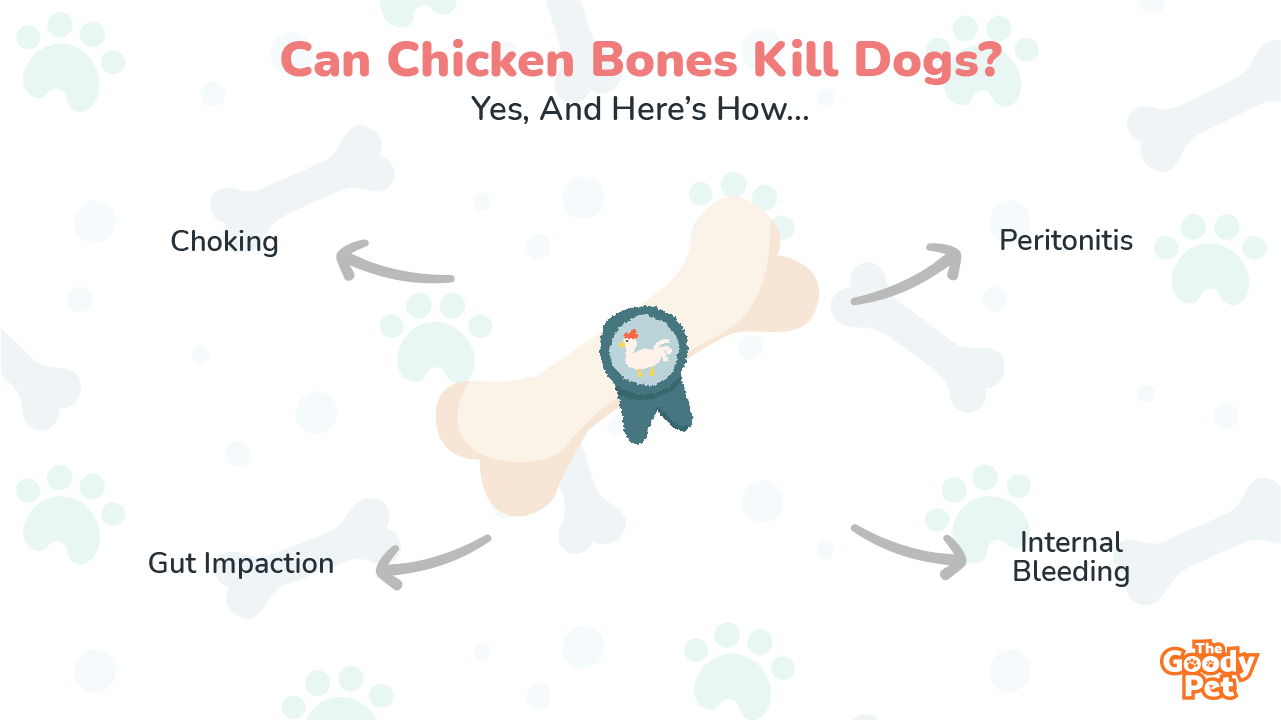
Despite our best efforts, accidents happen, and our dogs are likely to eat something they shouldn’t at some point in their lives. Usually, our dogs will steal a yummy piece of people food off the counter or off of the plate of an unsuspecting guest, even if we’re doing the best we can to prevent it. Many people foods are particularly dangerous for dogs, however. This includes cooked chicken bones, which is something that’s within reach of our pups on a somewhat regular basis. Cooked chicken bones can break and splinter, which can cause your dog to choke and can also puncture the gastrointestinal tract, or get caught in his throat. This is extremely painful to your dog and can potentially lead to death. So what exactly should you do if you find your dog has eaten chicken bones?
Remember, panicking isn’t going to help our dogs in any way. If you catch your dog in the act, try to calmly take the rest of the bones from him. Dogs can be possessive over food, so even if your pup isn’t aggressive, he’s likely to try and gobble everything down before you take it away. If your dog has already ingested all of the bones, panicking will only confuse him and possibly lead you to take drastic, unnecessary, and potentially dangerous action. Simply make sure your dog isn’t choking, and give your veterinarian a call to help you figure out how to handle the situation. Your veterinarian may offer a simple solution, like giving your dog some pieces of white bread to help cushion the bone fragments, but every veterinarian and situation can be different, so make sure to get in touch with yours.
Although chicken bones can splinter and puncture internal organs, it doesn’t mean that they will do so every time. It’s certainly a risk we’d like to avoid at all costs, but if your dog has already ingested the bones, all you can do now is watch him carefully. Ask your veterinarian about the signs and symptoms of internal bleeding or blockages. If you notice your dog is lethargic, constipated, straining to defecate, or has bloody stool, is vomiting, appears bloated in the abdomen, is not eating or is generally uncomfortable, you’re going to want to seek veterinary attention right away. Check your dog’s stool daily to see if you can see the bone fragments passing through. If you do not see them within 72 hours after ingestion (or whatever time frame is recommended by your veterinarian), it’s a good idea to visit the vet to make sure the bones aren’t stuck in your dog’s intestine, esophagus or throat.
Help! My Dog Ate Chicken Bones – Don’t Panic!
If you’ve just caught your furry friend sneaking those chicken wing bones from your plate or trash can, you’re probably freaking out right now. I get it! As a dog owner myself, I’ve had those heart-stopping moments when my Lab managed to gulp down something he shouldn’t have before I could even say “drop it!”
The good news? In most cases, there’s no immediate cause for worry, even if your dog swallowed a large amount of chicken bones. But that doesn’t mean we should ignore it either. Chicken bones can potentially cause problems for our four-legged friends, so it’s important to know what to do and when to seek help.
Are Chicken Bones Actually Dangerous for Dogs?
Let’s cut to the chase – yes, chicken bones can potentially hurt your dog but they don’t always cause problems. Here’s what you need to understand
Why Chicken Bones Can Be Risky:
- They can splinter easily – especially when cooked, chicken bones become brittle and can break into sharp fragments
- Hollow structure makes them more prone to splintering than other animal bones
- Sharp edges can potentially puncture the gastrointestinal tract
- Can cause choking if not chewed properly
- May lead to blockages in some cases
However, it’s also true that dogs have been eating bones for thousands of years, and in many cases, chicken bones will dissolve once they hit a dog’s stomach before they have a chance to become dangerous
What Happens When a Dog Eats Chicken Bones?
When your dog munches on chicken bones, a few things might happen:
- Best case scenario: The bones get broken down by stomach acid within 24-48 hours and pass through without issues
- Moderate concern: Some gastric irritation causing mild symptoms
- Worst case scenario: Complications like choking, internal injuries, or blockages
Dr. Brad Hinsperger, a practicing veterinarian with 19 years of experience, notes that “chicken bones are lightweight and low in calcium, making it easy for stomach acid to digest and therefore reducing the risk” compared to denser bones like beef or pork.
Raw vs. Cooked: Does It Matter?
Absolutely! There’s a big difference:
Cooked Chicken Bones
- More dangerous – become brittle when cooked
- Break easily into sharp pieces
- Higher risk of splintering and causing internal damage
Raw Chicken Bones
- Less likely to splinter but still not recommended
- Can get stuck on the roof of a dog’s mouth
- Bacterial risk – raw chicken can carry E. coli and other pathogens
Neither are ideal for your dog, but cooked bones pose a greater physical danger.
Warning Signs: When to Worry If Your Dog Ate Chicken Bones
Keep a close eye on your pup for these symptoms that might indicate a problem:
- Choking or difficulty breathing (emergency – seek immediate help!)
- Vomiting (with or without blood)
- Gagging, retching, or excessive drooling
- Lethargy or unusual behavior
- Loss of appetite
- Straining to defecate
- Bloody stool
- Constipation
- Abdominal pain or bloating
If you notice any of these signs, don’t wait – contact your vet right away!
What to Do If Your Dog Ate Chicken Bones: Step-by-Step Guide
- Stay calm – Panicking won’t help and might stress your dog
- Check for choking – Make sure your dog isn’t in immediate distress
- DO NOT induce vomiting – This can cause the sharp bones to damage the esophagus
- DO NOT give medications – Antacids or Pepto-Bismol can delay digestion
- Feed soft food or bread – This can help cushion the bone fragments
- Monitor closely – Watch for any concerning symptoms
- Contact your vet – Let them know what happened, even if your dog seems fine
As the AKC advises, “Try to find out how your dog got ahold of the chicken bones and be sure to take extra precautions to avoid this circumstance in the future.”
When to Call the Vet
You should definitely contact your veterinarian if:
- Your dog is showing any of the warning signs mentioned above
- Your dog is a small breed or puppy (they’re at higher risk)
- Your dog ate a large quantity of bones
- You’re unsure and want professional guidance
- No bone fragments appear in your dog’s stool within 72 hours
Most vets would rather you call for reassurance than wait until a serious problem develops!
How Vets Treat Dogs Who’ve Eaten Chicken Bones
If your dog does need medical attention, here’s what treatment might look like:
- Physical examination to assess your dog’s condition
- X-rays to locate the bones and check for problems
- Fluids to keep your dog hydrated and help with digestion
- Special GI diets to soothe irritated digestive tracts
- Probiotics to restore gut balance
- Surgery in severe cases where bones are causing blockage or perforation
Dr. Hinsperger shares that “we generally recommend 24 hours of hospitalization and intravenous fluids” for dogs who’ve consumed a significant amount of chicken bones.
Potential Complications to Be Aware Of
While most dogs who eat chicken bones recover without issues, there are some serious complications that can occur:
Immediate Concerns:
- Choking – Bones getting stuck in throat
- Oral injuries – Cuts or scrapes in mouth and throat
Short-term Complications:
- Gastroenteritis – Inflammation of stomach and intestines
- Vomiting and diarrhea – Common digestive responses
Serious Complications:
- GI obstruction – Bones blocking the digestive tract
- Perforation – Sharp pieces puncturing stomach or intestines
- Internal bleeding – From tears in digestive tract
- Sepsis – If perforation allows bacteria into abdominal cavity
Prevention is Better Than Treatment
I think we can all agree that avoiding this scary situation altogether is ideal! Here are some tips to prevent your dog from getting chicken bones:
- Keep food out of reach – Don’t leave plates unattended
- Secure your trash – Use dog-proof containers or keep bins behind closed doors
- Train your dog not to counter-surf or steal food
- Be careful with guests who might not know the rules
- Double-bag chicken bones before putting them in the trash
- Crate your dog during meal preparation if needed
- Teach a reliable “drop it” or “leave it” command
The Bottom Line: Should You Panic?
While chicken bones can potentially hurt dogs, the reality is that many dogs eat chicken bones and experience no problems whatsoever. The key is to stay vigilant, know the warning signs, and take appropriate action if needed.
Remember what veterinarians consistently say: in most cases, chicken bones will dissolve in stomach acid within 24-48 hours. But that doesn’t mean we should be careless about preventing our furry friends from accessing them.
As a responsible pet owner, your best approach is prevention first, careful monitoring second, and prompt veterinary care if any concerns arise.
Have you ever had a scary moment when your dog ate something they shouldn’t? I’d love to hear your stories in the comments below! And remember, when in doubt about your pet’s health, always consult with your veterinarian.
FAQs About Dogs and Chicken Bones
Q: Will one chicken bone hurt my dog?
A: Most likely not. A single chicken bone, especially for a medium to large dog, will often pass without issue. However, monitoring is still important.
Q: How long does it take for a dog to digest chicken bones?
A: Typically, chicken bones will dissolve in stomach acid within 24-48 hours.
Q: Can chicken bones kill dogs?
A: While it’s possible in extreme cases (like severe choking or perforation leading to sepsis), most dogs who eat chicken bones recover completely.
Q: What if my dog ate chicken bones but seems fine?
A: Monitor them closely for 72 hours, watching for any signs of distress. If they remain symptom-free, they’ll likely be okay.
Q: Are beef or pork bones safer than chicken bones?
A: Actually, they’re often more dangerous because they’re thicker and denser, making them harder to digest and more likely to cause obstructions.
Remember, when it comes to our furry family members, it’s always better to be safe than sorry. Keep those chicken bones away from curious paws, and your dog will thank you for it!
Learn From the Experience
Prevention is always the best medicine, but we’re all human, and we make mistakes. Try to find out how your dog got ahold of the chicken bones and be sure to take extra precautions to avoid this circumstance in the future. Keep food out of reach, trash lids securely closed, and train your dog not to steal food from the counter or dining table. Although chicken bones might not be the absolute worst thing your dog could ingest, it’s certainly not considered safe, by any means. Take note of your dog’s habits, keep a close eye on where your family and guests leave their food, and make sure to prevent the incident from being repeated.
This article is intended solely as general guidance, and does not constitute health or other professional advice. Individual situations and applicable laws vary by jurisdiction, and you are encouraged to obtain appropriate advice from qualified professionals in the applicable jurisdictions. We make no representations or warranties concerning any course of action taken by any person following or otherwise using the information offered or provided in this article, including any such information associated with and provided in connection with third-party products, and we will not be liable for any direct, indirect, consequential, special, exemplary or other damages that may result, including but not limited to economic loss, injury, illness or death. https://www.akc.org/wp-admin/admin-ajax.php Get Your Free AKC eBook