
Walnuts aren’t just a popular ingredient in desserts, pasta dishes, and salads. For people, walnuts are an excellent source of antioxidants that protect cells from damage and help improve memory and brain health. The fiber and omega-3 fatty acids in walnuts and other tree nuts can help to lower cholesterol, potentially reducing the risk of cardiovascular disease in humans.
As you’re enjoying the satisfying crunch of a walnut, you might be wondering if it can be a healthy snack for your dog, too. Although it may be technically safe for dogs to eat a few walnuts (especially if they are store-bought and unsalted), walnuts are not the best choice for your dog. Walnuts can be a choking hazard for dogs and, when eaten in large quantities, can lead to a potentially life-threatening condition called pancreatitis.
As a dog owner, I’ve always been super careful about what I feed my pup. It’s easy to want to share everything with our four-legged companions, especially when they give us those irresistible puppy eyes! But when it comes to walnuts, you might want to think twice before sharing.
The short answer? No, dogs should not eat walnuts. While you might think nuts are a healthy snack for humans, they can actually pose serious risks to our canine companions.
Why Walnuts Are Dangerous for Dogs
Let’s break down why walnuts aren’t a good treat for your furry friend:
Different Types of Walnuts Mean Different Dangers
Not all walnuts are created equal when it comes to canine consumption
- English walnuts (also known as Persian walnuts) – While technically less dangerous than other varieties, they can still cause digestive upset in dogs when consumed in even small amounts.
- Black walnuts – These are extremely toxic to dogs and should be avoided at all costs.
The Hidden Dangers of Black Walnuts
Black walnuts (Juglans nigra) are native to North America and are particularly dangerous for dogs. They contain a toxic compound called juglone, which can cause
- Severe gastrointestinal problems
- Vomiting
- Diarrhea
- In severe cases, neurological symptoms
If you have black walnut trees in your yard, it’s important to keep your dog away from fallen nuts, especially as they can develop toxic mold quickly.
The Mold Factor
One of the biggest risks with walnuts comes from mold that can develop on them Moldy walnuts can contain mycotoxins like penitrem A and aflatoxin, which are extremely dangerous to dogs.
Symptoms of mycotoxin poisoning include:
- Muscle tremors
- Seizures
- Vomiting
- Decreased appetite
- In severe cases, it can be fatal
The Pancreatitis Problem
Even if the walnuts aren’t moldy or black walnuts, there’s still a major reason to avoid giving them to your dog – the high fat content.
Walnuts are extremely rich in oils and fats. While these might be healthy fats for humans, they can trigger pancreatitis in dogs. Pancreatitis is an inflammation of the pancreas that can be extremely painful and potentially life-threatening.
Signs of pancreatitis include:
- Severe abdominal pain
- Vomiting
- Loss of appetite
- Lethargy
- Dehydration
- Fever
I had a neighbor whose dog developed pancreatitis after eating some high-fat human foods, and the vet bills were astronomical – not to mention how much her poor dog suffered!
Physical Dangers of Walnuts
Beyond the toxicity and fat content issues, walnuts present physical dangers as well:
- Choking hazards – Especially for smaller dog breeds
- Intestinal blockages – Whole walnuts can cause obstructions in your dog’s digestive tract
- Shell fragments – These can damage the digestive tract or cause blockages
What If My Dog Ate a Walnut?
If your dog has consumed a walnut or two, don’t panic right away, but do monitor them closely. The severity of the situation depends on:
- The type of walnut eaten
- How many they consumed
- The size of your dog
- Whether the walnut had any mold
- If they ate shells as well
Signs to Watch For:
- Vomiting
- Diarrhea
- Loss of appetite
- Lethargy
- Tremors or seizures
- Abdominal pain
- Difficulty pooping
When to Call the Vet:
- If your dog ate black walnuts
- If they consumed multiple walnuts
- If you notice ANY symptoms of illness
- If the walnuts might have been moldy
- If you’re unsure and want peace of mind
Remember, it’s always better to be safe than sorry! The Pet Poison Helpline (855-764-7661) is also a great resource if you’re concerned.
Safer Alternatives to Walnuts for Dogs
Fortunately, there are plenty of other treats you can share with your pup that are much safer than walnuts. If you really want to give your dog nuts, consider these safer options (in moderation and unsalted):
- Peanuts (technically legumes)
- Cashews
- Pistachios (shelled)
But honestly, there are even better options that are specifically designed for dogs:
- Commercial dog treats
- Small pieces of cooked lean meat
- Carrot sticks
- Apple slices (no seeds)
- Blueberries
Facts About Walnuts and Dogs: What Experts Say
According to the American Kennel Club, while it may be technically safe for dogs to eat a few English walnuts (especially if they are store-bought and unsalted), walnuts are not the best choice for your dog. They can be a choking hazard and, when eaten in large quantities, can lead to pancreatitis.
PetMD notes that unlike other nuts that are OK for dogs to eat in moderation, walnuts are trickier. English walnuts might be okay in very small portions as an occasional treat, but they’re still not recommended due to their high fat content.
A Personal Story: My Scare With Walnuts
Last Thanksgiving, my curious Lab mix Cooper managed to snag a handful of walnuts that had fallen from the counter while I was preparing a walnut pie. Within a few hours, he started vomiting and looking extremely uncomfortable.
A panicked visit to the emergency vet later, we learned that while he hadn’t consumed enough to cause serious poisoning, the fat content had upset his stomach significantly. It was a $200 vet visit that could have been avoided entirely!
Common Questions About Dogs and Walnuts
Can one walnut kill a dog?
A single English walnut is unlikely to kill a dog, but even one black walnut or moldy walnut could potentially cause serious illness, especially in a small dog. The bigger concern with a single walnut is the possibility of choking or intestinal blockage.
What happens if a dog eats walnuts?
If a dog eats English walnuts, they might experience mild digestive upset due to the high fat content. If they eat black walnuts or moldy walnuts, they could develop serious toxicity with symptoms ranging from vomiting to seizures. In large quantities, any type of walnut could potentially cause pancreatitis.
How many walnuts are toxic to dogs?
There’s no “safe” number of walnuts for dogs. Even a small amount of black walnuts can be toxic, while larger amounts of English walnuts can cause pancreatitis. It’s best to avoid feeding walnuts to dogs entirely.
What nuts are poisonous to dogs?
Besides black walnuts, dogs should avoid macadamia nuts (extremely toxic), hickory nuts, and moldy nuts of any kind. While not immediately toxic, high-fat nuts like pecans should also be avoided due to pancreatitis risk.
The Bottom Line on Dogs and Walnuts
When it comes to feeding our pets, we wanna give them the very best. Although walnuts might be a nutritious snack for us humans, they just aren’t suitable for our canine companions.
The risks—from toxicity to choking hazards to pancreatitis—far outweigh any potential benefits. With so many dog-friendly treats available, there’s really no reason to take the chance with walnuts.
Remember:
- Black walnuts are toxic to dogs
- Moldy walnuts can cause serious poisoning
- All walnuts are high in fat and can trigger pancreatitis
- Physical hazards include choking and intestinal blockages
If you’ve made it this far, you clearly care deeply about your dog’s health and wellbeing! That’s what makes you an awesome pet parent. By avoiding walnuts and other risky foods, you’re helping ensure your furry friend stays happy and healthy for years to come.
So next time you’re enjoying some walnuts, maybe give your pup a dog-safe treat instead. Your four-legged friend will be just as happy, and you’ll have peace of mind knowing you’re keeping them safe!
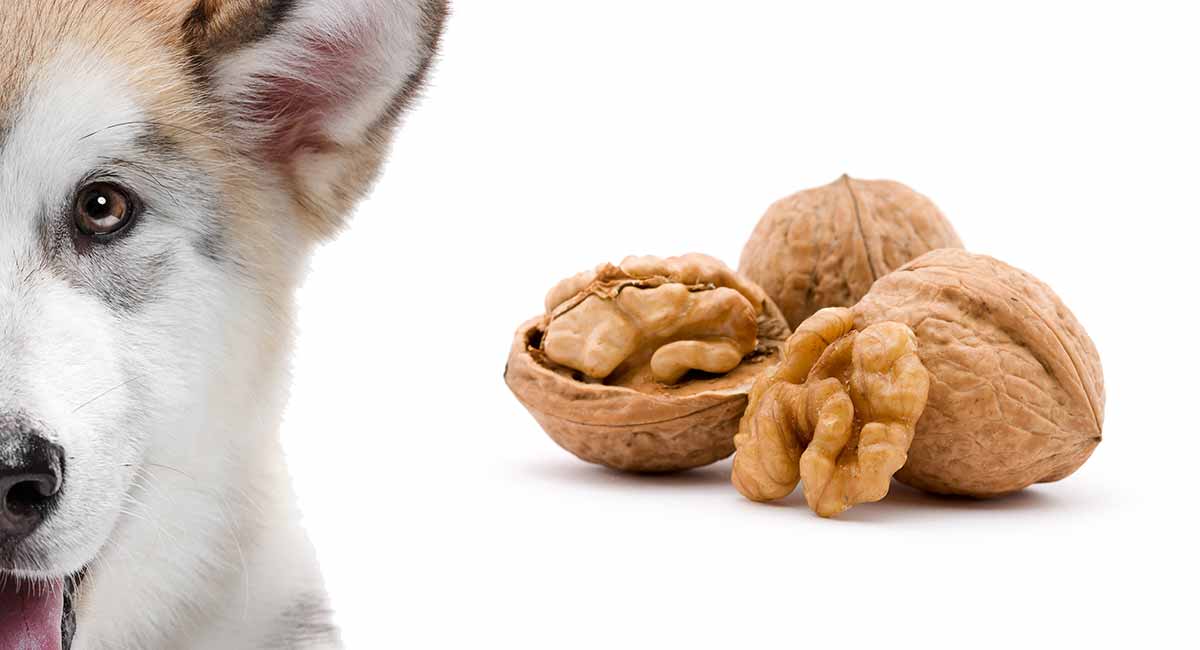
Are Walnuts Bad for Dogs?
It depends on the type of walnut, the presence of mold, and the amount consumed. English walnuts are the ones you typically find in the grocery store aisle. These walnuts aren’t necessarily toxic for dogs, but it’s wise to avoid feeding them to your dog.
Another type is the black walnut (Juglans nigra), which is a species native to North America. Though people don’t commonly eat this type of walnut, black walnuts are still extremely toxic to dogs; along with pecans, black walnuts may contain a toxic chemical called juglone.
For dogs, consuming juglone can cause gastrointestinal (GI) problems like upset stomach, vomiting, and diarrhea. Depending on the amount your dog ingests, GI symptoms can last a few hours or worsen, if left untreated. Accordingly, it’s important to seek veterinary care immediately since a dog’s condition can rapidly deteriorate; in some cases, juglone consumption could be fatal.

Like other tree nuts, walnuts are susceptible to mold due to exposure to moisture and high temperatures during harvesting and storage. Mold can grow on the shell or kernel. A particular concern regarding walnuts for dogs is that walnuts grow a type of mold called Aspergillus flavus. This produces aflatoxin, a natural poison that can also affect corn, rice, and peanuts.
For dogs, ingestion of aflatoxin can lead to decreased appetite, vomiting, and even death. In addition, moldy walnuts may contain a mycotoxin called penitrem A, which can lead to muscle tremors, seizures, and vomiting. Be sure to contact your veterinarian immediately if your dog accidentally eats a black walnut or moldy walnut.
Can Dogs Have Walnuts?
Unlike almonds and cashews, which can dogs can safely consume when fed occasionally and in very small quantities, walnuts are best to avoid altogether. The good news is that if your dog accidentally ingests a walnut or two, they’re unlikely to suffer ill effects.
