
The Short Answer: Yes, But It’s Complicated
Yes you absolutely can get rabies from dog saliva – but before you panic about that slobbery kiss your pup just gave you there’s a whole lot more to understand about how rabies actually works.
I’ve spent hours researching this topic because, like many dog owners, I wondered about those wet doggy kisses and whether they pose any real danger. The truth is both reassuring and important to know
What Exactly Is Rabies?
Rabies is one of those scary diseases we’ve all heard about but may not fully understand. It’s a viral disease that affects mammals, including dogs and humans. And here’s the sobering fact – once clinical symptoms appear, rabies is almost 100% fatal.
The rabies virus attacks the central nervous system and is present in over 150 countries worldwide, primarily in Asia and Africa. According to the World Health Organization (WHO), dogs are responsible for 99% of human rabies transmissions through bites and scratches.
How Rabies Spreads: It’s Not Just Any Saliva
Here’s where many people get confused. While rabies can indeed be transmitted through dog saliva, several important conditions must be met
- The dog must actually have rabies
- The virus-containing saliva must enter your body
- This typically happens through bite wounds or scratches
Simply getting licked by a healthy dog on intact skin poses virtually no risk. The rabies virus doesn’t survive long outside a mammal’s body, and it needs a direct route into your bloodstream or nervous system.
The Transmission Process Explained
Let me break down exactly how rabies transmission works:
- The virus spreads through saliva when an infected animal bites another animal or human
- Transmission by other means is extremely rare
- After a bite, the virus reproduces in tissues near the wound
- It then travels through peripheral nerves to reach the spinal cord and brain
- Once in the brain, it spreads to the salivary glands
- Only then can the virus be shed in saliva
This is why the “saliva on intact skin” scenario isn’t dangerous – the virus needs that entry point into your system.
Dog Vaccination: Your Best Protection
I cannot stress this enough – vaccination is the cornerstone of rabies prevention! Modern rabies vaccines for dogs are incredibly safe and effective. If your dog is properly vaccinated against rabies, the chances of them contracting or transmitting the disease are minimal.
In most states and provinces, rabies vaccination is required by law for dogs between 12-16 weeks of age, with regular boosters as determined by local regulations.
When Should You Be Concerned?
You should be concerned about potential rabies exposure if:
- You’re bitten by an unvaccinated dog
- You’re bitten by a stray or feral dog
- You’re bitten by a dog showing unusual behavior like:
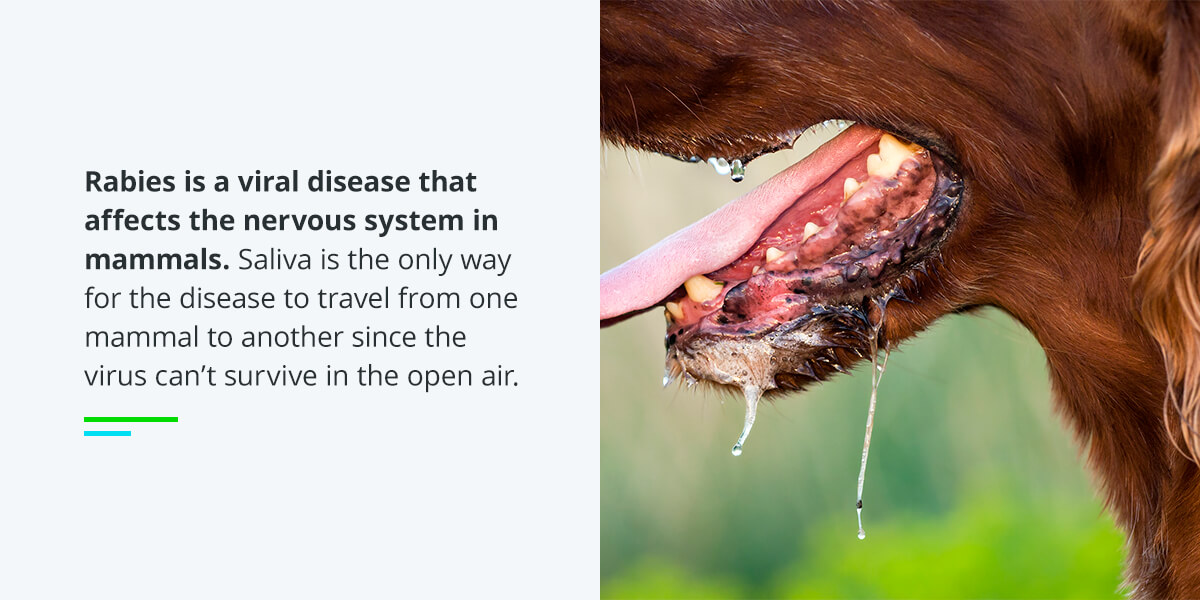
- Excessive salivation
- Aggression
- Lack of fear toward people
- Progressive paralysis
- Difficulty swallowing
Rabies typically progresses through three stages in dogs:
- Prodromal phase – A marked change in temperament lasting 2-3 days
- Furious rabies – Aggressive behavior, excitability, and strange appetite
- Dumb rabies – Progressive paralysis, facial distortion, difficulty swallowing
What To Do If You’re Exposed
If you suspect you’ve been exposed to rabies through a dog bite or scratch:
- Immediately wash the wound thoroughly with soap and water for at least 15 minutes
- Seek medical attention right away – don’t wait for symptoms!
- Report the incident to local health authorities
- If possible, the dog should be observed for signs of rabies
The WHO recommends that people who have been bitten and not previously vaccinated for rabies should receive immunoglobulin promptly, followed by a series of vaccines. This post-exposure prophylaxis (PEP) is extremely effective when administered promptly.
The Global Impact of Rabies
Rabies is no small problem globally. According to the WHO:
- Around 59,000 people die from rabies annually worldwide
- 40% of those affected are children under 15 years old
- The global cost of rabies is estimated at US$8.6 billion per year
- Over 29 million people receive human rabies vaccines annually
These numbers are sobering, but they also highlight why proper vaccination and awareness are so crucial.
Common Misconceptions About Rabies
Let me clear up some common confusions about rabies:
-
Myth: All dogs with rabies foam at the mouth
Truth: While excessive salivation can occur, not all rabid dogs show this symptom -
Myth: Dogs with rabies are always aggressive
Truth: Some rabid dogs develop “dumb rabies” with paralysis rather than aggression -
Myth: You can tell if a dog has rabies just by looking at it
Truth: Some rabid dogs may appear normal in early stages -
Myth: Hydrophobia (fear of water) is a sign of rabies in dogs
Truth: This is a feature of human rabies, not canine rabies -
Myth: Small amounts of saliva on intact skin can transmit rabies
Truth: The virus typically needs a wound or mucous membrane to enter the body
Risk Factors and Geographic Considerations
Your risk of rabies exposure varies significantly depending on where you live:
High-Risk Areas:
- Parts of Africa and Asia
- Rural areas with limited access to vaccines
- Regions with large stray dog populations
Low-Risk Areas:
- Most developed countries with strong vaccination programs
- Urban areas with good animal control
Rabies-Free Areas:
Some areas are completely rabies-free, including Antarctica, Australia, Fiji, Finland, Iceland, Ireland, Japan, New Zealand, Norway, Sweden, and the UK.
Beyond Dogs: Other Rabies Sources
While dogs account for 99% of human rabies cases globally, it’s worth noting other potential sources:
- In the Americas, where dog rabies is better controlled, bats are now the primary source
- Other wildlife like foxes, raccoons, and skunks can carry rabies
- Rodents rarely transmit rabies
Protection Through One Health Approach
The WHO and its partners aim to end human deaths from dog-mediated rabies by 2030 through a comprehensive “One Health” approach that includes:
- Mass dog vaccination
- Ensuring access to post-exposure prophylaxis (PEP)
- Health worker training
- Improved surveillance
- Bite prevention through community awareness
Practical Prevention Tips for Dog Owners
As a responsible dog owner, here’s what you can do:
- Keep your dog’s rabies vaccinations current
- Supervise your dog outdoors to prevent contact with wildlife
- Teach children proper behavior around dogs to prevent bites
- Know the signs of rabies so you can seek help quickly if needed
- Have your contact info on your dog’s collar in case they get lost
So, can you get rabies from dog saliva? Technically yes, but practically speaking, the risk is extremely low if:
- Your dog is properly vaccinated
- The saliva doesn’t enter through a wound or mucous membrane
- You live in an area with good rabies control
For most people in developed countries with vaccinated pets, the risk of contracting rabies from dog saliva is minimal. However, understanding the risks and taking proper precautions remains important.
FAQs About Rabies Transmission
Q: Can I get rabies from my vaccinated dog licking my face?
A: The risk is extremely low. Properly vaccinated dogs are very unlikely to contract rabies.
Q: How long does the rabies virus survive in saliva outside the body?
A: The rabies virus doesn’t survive long outside a mammal’s body.
Q: What should I do if a stray dog licks an open wound?
A: Wash the area thoroughly with soap and water and seek medical advice immediately.
Q: Can puppies transmit rabies?
A: Yes, puppies can contract and transmit rabies, which is why vaccination typically begins at 12-16 weeks.
Q: Is rabies testing available for living animals?
A: No, rabies can only be definitively diagnosed by examining brain tissue after death.
Q: How effective is post-exposure treatment?
A: When administered promptly after exposure, post-exposure prophylaxis is highly effective at preventing rabies.
Remember, while rabies is a serious disease, proper vaccination and awareness make it largely preventable. Stay informed, keep your pets vaccinated, and enjoy their companionship with peace of mind!
Mayo Clinic Minute: What you should know about bats and rabiesLearn more about the risk of rabies from bats and how to prevent rabies.
Jason Howland: The most dangerous threat of rabies in the U.S. is flying overhead.
Gregory Poland, M.D., Vaccine Research Group Mayo Clinic: “It used to be thought, well, its a rabid dog. But the more common way of getting rabies is from the silver-haired bat.”
Jason Howland: The deadly virus is transmitted from the saliva of infected animals to humans, usually through a bite.
Dr. Poland: “… The bat doesnt always bite. Sometimes the saliva will drool onto you, and you could have a minor open cut. Or sometimes a bat will lick on the skin and, again, transmit the virus that way.”
Jason Howland: Dr. Poland says thats why if you wake up and find a bat in the room, you should get the rabies vaccine.
Dr. Poland: “People think, Well, the bats in the house. We woke up with it, doesnt look like it bit anybody. Doesnt matter. Rabies is such a severe disease with no cure, no treatment for it, that the safer thing to do is to give rabies vaccine.”
Jason Howland: That includes an immune globulin and multidose rabies series which is not cheap. A typical series of rabies vaccines cost anywhere from three to seven thousand dollars.
For the Mayo Clinic News Network, Im Jason Howland.
The first symptoms of rabies may be very similar to those of the flu and may last for days.
Later signs and symptoms may include:
- Fever
- Headache
- Nausea
- Vomiting
- Agitation
- Anxiety
- Confusion
- Hyperactivity
- Difficulty swallowing
- Excessive salivation
- Fear brought on by attempts to drink fluids because of difficulty swallowing water
- Fear brought on by air blown on the face
- Hallucinations
- Insomnia
- Partial paralysis
From Mayo Clinic to your inboxSign up for free and stay up to date on research advancements, health tips, current health topics, and expertise on managing health.
We use the data you provide to deliver you the content you requested. To provide you with the most relevant and helpful information, we may combine your email and website data with other information we have about you. If you are a Mayo Clinic patient, we will only use your protected health information as outlined in our Notice of Privacy Practices. You may opt out of email communications at any time by clicking on the unsubscribe link in the email.
The rabies virus causes a rabies infection. The virus spreads through the saliva of infected animals. Infected animals can spread the virus by biting another animal or a person.
In rare cases, rabies can be spread when infected saliva gets into an open wound or the mucous membranes, such as the mouth or eyes. This could happen if an infected animal licked an open cut on your skin.