
Dogs rely on their fur to protect their skin, help regulate body temperature, and insulate the internal organs from cold and heat. Like our own daily hair loss, some shedding is natural in pets. Some breeds of dogs and cats naturally shed more than others, especially during seasonal changes.
But excessive shedding in dogs can be a sign of disease or illness that requires veterinary care. That’s why it’s important to determine the normal shedding pattern of your dog and know what to do if your dog is shedding a lot.
Let’s be real – if you’ve got a dog, you’ve probably got fur. On your clothes, on your furniture, in your food (yuck!), and pretty much everywhere else. As a dog parent myself, I’ve spent countless hours wondering if there was some magic solution to make it all stop. The short answer? No, you can’t completely stop a dog from shedding – but you CAN manage it effectively! Let’s dive into the furry details.
The Truth About Dog Shedding: It’s Normal!
First things first – shedding is a natural process for dogs. Just like we lose hair every day, dogs shed their fur as part of their normal biological cycle. According to PetMD, dogs rely on their fur for some pretty important stuff:
- Protection for their skin
- Regulation of body temperature
- Insulation from cold and heat
So while that fur all over your black pants might drive you crazy remember it’s serving an important purpose for your furry friend!
Why Is My Dog Shedding So Much?
Before you can tackle excessive shedding, you need to understand what’s normal for YOUR dog and what might be causing problems. Here are some common reasons why your dog might be leaving more fur around than usual:
Breed Matters… A Lot
Contrary to popular belief, long-haired dogs aren’t necessarily the worst shedders. In fact, PetMD points out that short-haired dogs often have denser coats and shed MORE than their long-haired counterparts – it’s just less noticeable because the hairs are shorter!
Some notorious heavy shedders include:
- Labrador Retrievers (the “shedding machines” as described by Dr. Roy Cruzen)
- Akitas
- Chow Chows
- Dalmatians
- German Shepherds
- Siberian Huskies
If you have one of these breeds, I’m sorry to tell ya, but heavy shedding is just part of the package deal!
Seasonal Changes = Shedding Changes
Dogs with double coats (like Huskies and German Shepherds) typically have two major shedding periods each year
- Early spring: They ditch their thick winter undercoat for a lighter summer coat
- Early fall: They shed their summer coat to grow a thicker winter one
During these times, the fur situation can get INTENSE. I remember when my neighbor’s Husky was “blowing his coat” in spring – it looked like it was snowing fur in their backyard!
Diet Problems
Here’s where things get interesting. According to Dr. Cruzen from PetMD, the #1 reason for excessive shedding in dogs is a poor diet. Yep, that bargain basement dog food might be saving you money, but it could be costing your vacuum cleaner its life!
Low-quality dog food might meet minimum standards but often lacks adequate protein and nutrients your dog needs for healthy skin and coat.
Food Allergies or Intolerances
Just like humans dogs can have food allergies or intolerances that manifest as skin problems and – you guessed it – excessive shedding. Common symptoms include
- Itchy skin
- Skin infections
- Patchy hair loss
- Overall increased shedding
Environmental Triggers
Your dog might also be shedding due to:
- Wrong shampoo: Human shampoo is WAY too harsh for dogs and can cause excessive shedding and skin problems
- Stress: Major changes, loud noises, or even vet visits can trigger stress-related shedding
- Parasites: Fleas, ticks, or mange mites can cause both itching and increased fur loss
- Health issues: Hormonal imbalances, infections, or more serious conditions can all manifest through changes in your dog’s coat
When Should You Worry About Shedding?
While some shedding is normal, there are definitely times when you should consult your vet:
- Shedding accompanied by bald patches
- Skin that appears inflamed, discolored, or irritated
- Excessive scratching or biting at the skin
- Other symptoms like increased thirst, weight changes, or lethargy
- Sudden increase in shedding outside normal seasonal patterns
7 Effective Strategies to Reduce Dog Shedding
While you can’t STOP shedding completely, here are my tried-and-true methods to keep it under control:
1. Upgrade Your Dog’s Diet
Since poor nutrition is the #1 cause of excessive shedding, start here! Look for:
- High-quality protein sources listed as the first ingredients
- Foods that meet AAFCO standards
- Omega-3 fatty acids (great for coat health)
- Appropriate formulation for your dog’s age and activity level
I switched my dog from a grocery store brand to a higher-quality food, and within a month, I noticed less shedding and a shinier coat. It costs more, but my sanity (and vacuum cleaner) are worth it!
2. Regular Brushing – The Game Changer
This is honestly the single most effective strategy. Regular brushing removes loose fur before it ends up all over your house!
For best results:
- Brush short-haired dogs 1-2 times weekly
- Brush long-haired or double-coated dogs 3-4 times weekly
- During seasonal shedding periods, brush DAILY if possible
Tools that work wonders:
- Slicker brushes
- FURminators (my personal fave – expensive but WORTH IT)
- Hand mitts for dogs who don’t like regular brushes
3. Bathe Appropriately (But Not Too Much!)
Proper bathing can help remove loose fur, but over-bathing strips natural oils and can make shedding worse.
Do’s:
- Use dog-specific shampoo only
- Rinse thoroughly (leftover shampoo = skin irritation)
- Follow package directions for frequency (usually every 4-8 weeks)
Don’ts:
- Don’t use human products
- Don’t bathe too frequently
- Don’t skip the conditioner if your dog has a longer coat
4. Keep Hydration and Humidity in Mind
Dehydrated skin = more shedding. Make sure your dog:
- Always has access to fresh water
- Gets appropriate moisture in their diet
- Has a humidifier nearby during dry winter months if needed
5. Supplement Wisely
Some supplements can help improve coat health:
- Omega-3 fatty acids (fish oil is great)
- Biotin
- Vitamin E
But always check with your vet before starting any supplement regimen!
6. Control Parasites
Flea and tick prevention is essential for all dogs, even indoor ones. These parasites can cause intense itching, leading to excessive scratching and hair loss.
Make sure your dog is on a year-round preventative program recommended by your vet.
7. Reduce Stress
If your dog seems to shed more during stressful times, try:
- Maintaining regular routines
- Using calming aids during thunderstorms or fireworks
- Creating quiet spaces where your dog can retreat
- Providing adequate exercise and mental stimulation
Living With Shedding: Practical Tips
Let’s face it – even with all these strategies, you’ll still be dealing with some fur. Here’s how to cope:
Household Management
- Invest in a good vacuum designed for pet hair
- Keep lint rollers in every room (and your car, and your office…)
- Use washable slipcovers on furniture
- Consider air purifiers to catch airborne fur
- Establish a regular cleaning schedule during peak shedding seasons
Clothing Hacks
- Choose fabrics that don’t attract fur as much (smooth cotton over fleece)
- Keep a dedicated “dog cuddle” outfit for when you know you’ll get covered
- Store clean clothes in closed closets or drawers
The Bottom Line
While you can’t stop a dog from shedding completely, you can definitely reduce the amount of fur flying around your home with proper nutrition, regular grooming, and addressing any underlying health issues.
Remember that shedding is a natural, normal process for dogs. If you’re absolutely determined to have a fur-free home, you might want to consider one of the few truly non-shedding breeds like Poodles, Bichon Frises, or Portuguese Water Dogs. But even these breeds require regular professional grooming!
For the rest of us with our shedding companions, we’ll just keep brushing, vacuuming, and picking fur out of our food while remembering that all that fur is a small price to pay for the unconditional love our dogs give us every day.
Do you have any amazing tips for managing dog shedding? I’d love to hear them in the comments! We’re all in this furry battle together!
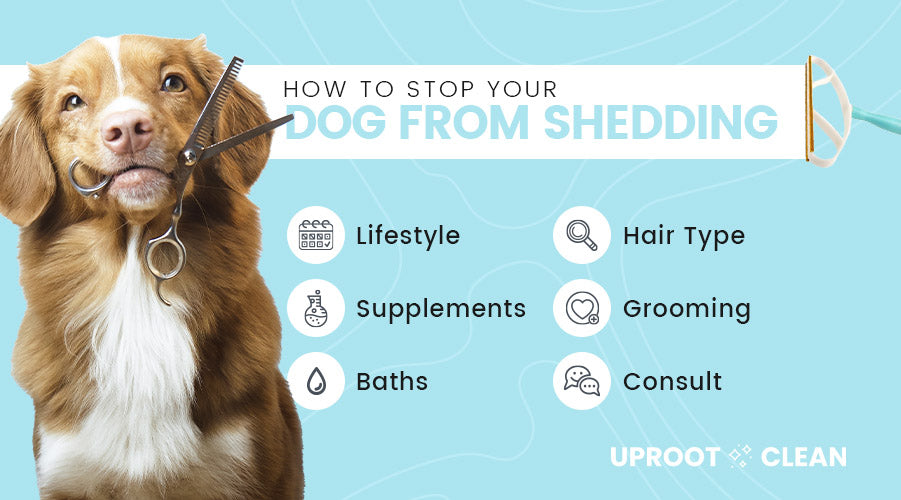
When To See a Vet About Your Dog’s Shedding
If your dog’s shedding is leading to other issues, such as areas of hair loss or skin abnormalities, your dog should be examined by their veterinarian to help determine treatment. You should take your dog to the vet if your pup’s shedding has become excessive (outside of the high-shedding seasons of early spring or fall).
Take your dog to the vet if you notice any accompanying symptoms to the shedding, including:
- Increased thirst
- Increased urination
- Weight gain
- Noticeable parasites on the skin
- Excessive itching
A trip to the vet is never a bad idea if you’re doubting whether your dog’s shedding is normal.
Hormonal Imbalances, Tumors, and Other Underlying Diseases
Excessive shedding may also be a sign of hormonal imbalances. Some dogs shed excessively after giving birth or after spaying or neutering.
Shedding on various parts of the body, clumps of shedding, and skin discoloration may also be signs of an array of serious issues, including:
How To Stop Dog Shedding (Easy Tricks from A Vet)
FAQ
What can I give my dog to stop excessive shedding?
Can you permanently stop a dog from shedding?
No, it’s not possible to totally stop a dog shedding.
How do I stop my dog from shedding in my house?
Wash Bedding Regularly: Wash your dog’s bedding, blankets, and toys frequently to reduce hair accumulation. Keep a Lint Roller Handy: Use lint rollers on clothes and furniture for quick clean-ups. HEPA Filters: Consider using air purifiers with HEPA filters to help capture pet dander and hair in the air.