
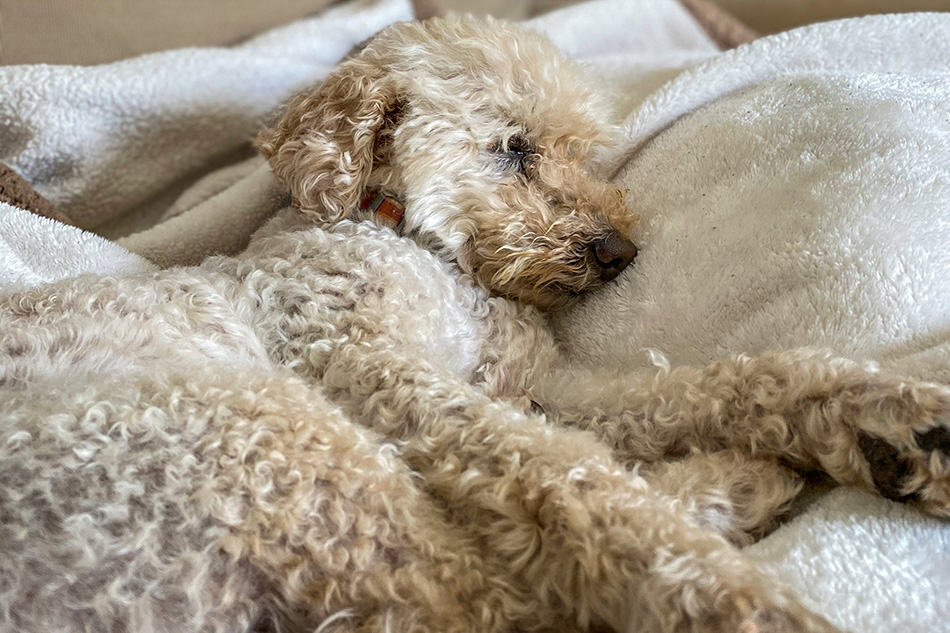
They often use blankets when they are with you on the couch or in bed, as well as when they are in their happy place, whether it’s a crate or their own bed.
While most blankets are harmless for pets, there are factors to consider before allowing your pet to have a blanket all to themselves.
Ever tucked yourself into bed with a warm, fluffy blanket and wondered if your furry friend could use the same comfort? I’ve asked myself this question countless times watching my dog curl up on his bed. The truth is, whether dogs need blankets at night isn’t a simple yes or no answer – it depends on several factors unique to your pup.
In this guide, I’ll walk you through everything you need to know about keeping your dog comfortable at night, including when blankets are helpful, potential risks, and how to choose the right blanket for your four-legged family member.
Understanding Your Dog’s Temperature Regulation
Dogs regulate their body temperature differently than we do. Their normal body temperature ranges from 101 to 102.5 degrees Fahrenheit – higher than our human average. While dogs have fur coats for insulation, not all coats are created equal.
Your dog primarily regulates temperature through:
- Panting (their main cooling mechanism)
- Limited sweating through paw pads
- Their fur coat (which varies greatly by breed)
During sleep, when activity levels drop, some dogs struggle to maintain comfortable body temperature without a little help.
Which Dogs Benefit Most from Blankets?
Not all dogs need the extra warmth, but certain types definitely appreciate it
Breed and Coat Type
- Short-haired breeds: Greyhounds, Whippets, Boxers, and Chihuahuas have minimal insulation and often benefit from blankets.
- Small breeds: Smaller dogs lose heat quicker due to their higher surface area-to-volume ratio.
- Long-haired breeds: Huskies, Malamutes, and Bernese Mountain Dogs are naturally insulated and rarely need extra warmth unless it’s extremely cold.
- Double-coated breeds: Labs and German Shepherds have good insulation but may still appreciate blankets when older.
Age Considerations
- Puppies: They haven’t fully developed temperature regulation abilities and need extra warmth.
- Senior dogs: Older dogs often have decreased muscle mass, slower metabolism, and conditions like arthritis that make them more sensitive to cold.
Health Factors
Dogs with certain health conditions often benefit from blankets
- Those with hypothyroidism
- Dogs with arthritis (warmth helps alleviate joint pain)
- Pets with kidney or heart disease
- Thin dogs with low body fat
- Dogs recovering from illness or surgery
Signs Your Dog Might Need a Blanket
Your dog can’t tell you they’re cold, but they show plenty of signs. Watch for:
- Shivering or trembling
- Curling up tightly into a ball
- Seeking warm places (near heaters, sunny spots)
- Cold ears, paws, or body
- Whining or restlessness at night
- Reluctance to sleep in their usual spot
- Tucking their tail around their body
If you notice these behaviors, especially during colder months, your dog might appreciate a blanket!
Blanket Safety: What You Need to Know
While blankets can be wonderful for dogs, safety should always come first. Here are some important safety considerations:
Potential Hazards
- Overheating: Some dogs, especially those with thick coats, can get too warm under blankets.
- Suffocation risk: Particularly for puppies or small dogs with heavy blankets.
- Entanglement: Dogs can get tangled in blankets with loose threads or fringe.
- Ingestion hazards: Some dogs chew blankets, potentially causing intestinal blockages.
Safe Blanket Practices
- Never use weighted blankets for pets – they’re designed for humans and can trap or injure your dog.
- Heated blankets should ONLY be used with direct, constant supervision.
- Remove blankets with loose threads, tassels, or fringe that could be chewed and swallowed.
- Ensure your dog can easily get away from the blanket if they become uncomfortable.
- Regularly wash blankets to prevent bacteria buildup.
Choosing the Right Blanket for Your Dog
The best blanket for your dog depends on their specific needs. Here’s what to consider:
Materials
The safest and most comfortable materials include:
- Fleece: Warm, lightweight, durable, and easy to wash
- Microfiber: Difficult to rip or shed, good for dogs left alone
- Cotton: Breathable and hypoallergenic, good for sensitive skin
- Flannel: Soft and warm for extra comfort
Avoid wool, which can be itchy and cause skin irritation for some dogs.
Size Considerations
- Small dogs: 20″x30″ or smaller
- Medium dogs: 30″x40″
- Large dogs: 40″x50″ or larger
The blanket should be large enough to cover your dog but not so large it becomes a hazard.
Safety Features
Look for:
- Non-slip backing to prevent sliding
- Double-stitched seams for durability
- Breathable materials to prevent overheating
- Machine-washable fabrics for easy cleaning
Alternatives to Blankets
If blankets aren’t right for your dog, consider these alternatives:
- Heated dog beds: Great for older dogs or those with arthritis (but never leave them unattended)
- Orthopedic beds: Provide joint support and insulation from cold floors
- Elevated beds: Keep your dog off cold floors
- Dog sweaters or pajamas: Especially helpful for short-haired breeds
- Nesting beds: Allow dogs to burrow and create their own warm space
FAQs About Dogs and Blankets
Do all dogs benefit from having a blanket at night?
No, not all dogs need blankets. Thick-coated breeds might actually overheat with blankets, while small, short-haired, elderly, or sick dogs often appreciate the extra warmth.
Can a blanket help with my dog’s anxiety?
Yes! Blankets can provide security and comfort for anxious dogs. The feeling of being enveloped can reduce anxiety levels, similar to how swaddling calms babies.
How often should I wash my dog’s blanket?
Wash your dog’s blanket at least once a week, or more often if it becomes visibly soiled. Use pet-safe detergent and avoid fabric softeners that might irritate your dog’s skin.
Is it possible for my dog to overheat with a blanket?
Absolutely. Dogs with thick fur coats are especially susceptible to overheating. Signs include excessive panting, drooling, restlessness, and lethargy. Always provide access to cooler areas.
Should I still provide a blanket if my dog sleeps in my bed?
Even if your dog shares your bed, a separate blanket can be beneficial. It gives them their own space, contains shedding, and allows them to regulate their temperature by moving on or off the blanket.
Creating the Perfect Sleeping Environment
The ideal sleeping environment for your dog includes more than just a blanket. Consider:
- Room temperature: 65-75°F is comfortable for most dogs
- Draft-free area: Use draft stoppers if needed
- Comfortable bedding: The right dog bed makes a huge difference
- Options: Give your dog choices between warmer and cooler sleeping spots
Final Thoughts
So, do dogs need blankets at night? For many dogs, especially those that are small, short-haired, elderly, or have health issues, the answer is yes – particularly during colder months. However, each dog is unique, and the best approach is to observe your pet’s behavior and preferences.
I’ve found that providing options works best – offering a blanket but letting my dog choose whether to use it. This way, they can regulate their own comfort throughout the night.
Remember, a comfy dog is a happy dog! By paying attention to your pup’s signals and creating a cozy sleeping environment, you’ll both enjoy better rest and strengthen your bond.
Should I cover my dog’s crate with a blanket at night?
While covering your dog’s crate with a blanket might be helpful to calm them down and provide a more natural “den-like” environment, it can come with some risk.
Dogs who are very hyper in the crate or have anxiety might be tempted to pull the blanket into the crate and then destroy it, possibly ingesting some of the fabric.
An alternative to a blanket for covering the crate would be a crate cover designed for this purpose.
Do Pets Need Blankets?
Pets who are older or young and growing, with less muscle mass to keep them warm, might benefit from a blanket while being supervised.
Pets who have anxiety might benefit from using a blanket for comfort’s sake.
Not all pets need a blanket for warmth and comfort. Some prefer a plush, comfy bed instead, which might also be less hazardous. Another alternative to a blanket would be a coat or jacket designed for pets.
It’s important not to offer your pet a heavily used blanket, as they can shred or rip more easily, which can be harmful if your pet ingests part of it or if their limbs get tangled up in it.
If a limb gets stuck and your pet panics, they can get seriously injured, especially if they are in a place they try to escape from, such as a high bed or couch.
Jumping off these surfaces entangled in a blanket can cause skin wounds, sprains, strained muscles, or broken bones.
A blanket used inappropriately or not under direct supervision can even lead to death by suffocation.