The Pit Bull Terrier has been around for centuries, and its appearance, as well as temperament, are relatively well-defined. The Pitbull, also known as the American Pit Bull Terrier, is classified as a medium-sized dog breed with a muscular build. In the United States, the pitbull name is often unfairly associated with fear. Thus, many people rehabilitating the dog’s reputation refer to them as the Pibble. This effort is designed to spread awareness about the Pitbull’s true nature, that of loyalty, sweetness, and gentleness.
As a Pitbull pet owner, it’s essential to know the growth rates of your pup so that you can keep an eye on their weight and health. A pup’s weight and growth will differ significantly from being a week old to a month old Pitbull puppy to a Pitbull fully grown. A healthy dog becomes a happy adult dog. Early monitoring of a dog’s weight ensures that he stays healthy and does not become an underweight dog or gain weight. The correct weight is critical to the Pitbull’s growth and development.
You should be aware of the age your American Pitbull Terrier will reach full growth and how much they should weigh as they mature. This information allows you to keep tabs on your Pitbull puppy’s weight to ensure it is within an appropriate range for the breed. This knowledge gives you insight into whether your dog’s growth is an expected weight for this dog breed.
6 month old pitbull
Are you the proud parent of a 6-month-old Pitbull pup and wondering if they’re growing at the right pace? Trust me, I’ve been there! When my Pitbull Rex hit the 6-month mark, I was constantly comparing him to other dogs at the park, worrying whether he was too small or growing too fast
In this comprehensive guide, I’ll break down exactly how big your 6-month-old Pitbull should be, what factors affect their growth, and what to expect as they continue to develop. Let’s dive right in!
TL;DR: 6-Month-Old Pitbull Size at a Glance
A 6-month-old Pitbull puppy typically weighs between
- Males: 20-35 pounds (9-16 kg)
- Females: 15-30 pounds (7-14 kg)
Height at this age is usually around:
- 14-17 inches (35-43 cm) at the shoulder
Remember tho, these are just averages – your pup might be perfectly healthy even if they fall slightly outside these ranges!
Understanding Pitbull Growth Patterns
Before we dive deeper into the 6-month mark specifically, it’s important to understand the overall growth trajectory of Pitbulls.
Pitbulls are considered medium-sized dogs that typically reach their full height by about 12 months of age. However, they may continue to “fill out” and develop more muscle mass until they’re about 18 months to 2 years old.
Here’s a basic breakdown of a Pitbull’s growth stages:
| Age | Stage | What’s Happening |
|---|---|---|
| 0-3 months | Early puppyhood | Rapid growth, gaining basic skills |
| 3-6 months | Middle puppyhood | Continued fast growth, developing personality |
| 6-12 months | Adolescence | Growth slows, sexual maturity begins |
| 12-24 months | Young adulthood | Height complete, filling out muscles |
Detailed Size Chart for Pitbull Growth
If your curious about how your pup’s growth compares throughout their first two years, check out this comprehensive chart:
| Age | Male Weight | Female Weight |
|---|---|---|
| 1 month | 3-5 lbs | 2-4 lbs |
| 2 months | 5-15 lbs | 5-15 lbs |
| 3 months | 10-20 lbs | 10-20 lbs |
| 4 months | 15-25 lbs | 10-20 lbs |
| 5 months | 15-30 lbs | 15-25 lbs |
| 6 months | 20-35 lbs | 15-30 lbs |
| 7 months | 20-40 lbs | 15-35 lbs |
| 8 months | 25-45 lbs | 20-35 lbs |
| 9 months | 25-50 lbs | 20-40 lbs |
| 12 months | 30-55 lbs | 25-45 lbs |
| 2 years | 35-60 lbs | 30-50 lbs |
The 6-Month Milestone: What to Expect
At 6 months, your Pitbull puppy is entering adolescence – kinda like the teenage years for dogs! This is a significant transitional period where several important changes are happening:
-
Growth Rate Changes: Around this time, the super-fast growth of early puppyhood begins to slow down. Your pup might still be growing, but not as rapidly as before.
-
Muscle Development: At 6 months, your Pitbull’s body is starting to take on a more athletic, muscular build. They’re not fully filled out yet, but you’ll notice their physique becoming more defined.
-
Height vs. Weight: By 6 months, your Pitbull has likely reached about 70-80% of their adult height, but only about 40-50% of their adult weight.
-
Gender Differences: Male Pitbulls generally weigh a bit more than females at this stage, with males typically ranging from 20-35 pounds and females around 15-30 pounds.
Factors That Affect Your Pitbull’s Size at 6 Months
Not all Pitbulls grow at the same rate or reach the same adult size. Several factors can influence how big your 6-month-old puppy is:
1. Genetics
The single biggest factor in determining your Pitbull’s size is genetics. If your pup comes from larger parents, they’ll likely be on the bigger side of the scale. This is why knowing your puppy’s parentage can help predict their eventual size.
2. Nutrition
What you feed your growing Pitbull plays a huge role in their development. A diet that’s:
- Too limited can result in stunted growth
- Too rich can cause too-rapid growth, potentially leading to joint issues
- Just right will support healthy, steady development
I always recommend a high-quality puppy food formulated for medium to large breeds until your Pitbull reaches about 12-18 months of age.
3. Exercise
The right amount of exercise is crucial for your 6-month-old Pitbull. Too little, and they might gain excess fat; too much high-impact activity could stress developing joints.
For a 6-month-old Pitbull, aim for:
- 30-60 minutes of daily physical activity
- A mix of walking, play, and training
- Limited jumping from heights or very intense exercise
4. Health
Any health issues can impact growth. Common concerns that might affect size include:
- Parasites, which can steal nutrients
- Digestive issues that prevent proper absorption
- Hormonal imbalances
Regular vet check-ups are essential to catch and address any health concerns that might impact your pup’s growth.
Male vs. Female Pitbulls at 6 Months
There are some notable differences between male and female Pitbulls at the 6-month mark:
Male Pitbulls at 6 Months:
- Weight: Typically 20-35 pounds
- Height: Around 14-17 inches at the shoulder
- Build: Starting to develop broader chest and thicker neck
- Energy levels: Often slightly higher
Female Pitbulls at 6 Months:
- Weight: Typically 15-30 pounds
- Height: Around 14-16 inches at the shoulder
- Build: Usually leaner and more agile
- Maturity: May show slightly more mature behavior
Common Concerns About 6-Month-Old Pitbull Size
“My Pitbull seems smaller than others the same age”
Don’t panic! Just like human children, puppies grow at different rates. Some Pitbulls experience growth spurts later than others. As long as your pup is healthy, active, and eating well, they might just be on their own unique timeline.
“My Pitbull is growing too fast!”
Some Pitbulls do grow rapidly, which can be normal. However, extremely rapid growth can sometimes lead to developmental issues. Make sure you’re:
- Feeding appropriate portions
- Using food formulated for large-breed puppies (which controls growth rate)
- Providing appropriate exercise
“How can I tell if my Pitbull will be big or small?”
Look at these indicators:
- Paw size: Oversized paws often indicate more growing to do
- Parents’ size: Genetics plays a huge role
- Growth curve: Track your pup’s growth to spot patterns
How to Support Healthy Growth in Your 6-Month Pitbull
Proper Nutrition
Nutrition is probably THE most important factor in your pup’s development. Here’s what I recommend:
- Protein content: Look for foods with 22-26% protein from quality sources
- Calcium-to-phosphorus ratio: Should be balanced (around 1.2:1)
- Feeding schedule: 2-3 meals per day at 6 months
- Portion control: Follow package guidelines but adjust based on your individual dog’s needs
Appropriate Exercise
At 6 months, your Pitbull needs regular exercise, but with some limitations:
- Daily walks (20-30 minutes, 1-2 times daily)
- Playtime that includes mental stimulation
- Avoid excessive jumping or running on hard surfaces
- Begin basic training and obedience work
Regular Veterinary Care
Schedule regular check-ups to:
- Monitor growth patterns
- Address any nutritional deficiencies
- Keep vaccinations up to date
- Discuss appropriate timing for spaying/neutering
When Will My Pitbull Stop Growing?
If your wondering when your Pitbull puppy will finally reach their adult size, here’s what to expect:
- Height: Most Pitbulls reach their full height around 12-15 months of age
- Weight and muscle: They continue to “fill out” and gain muscle mass until 18-24 months
- Mental maturity: Behavioral maturity often comes later, around 2-3 years
Behavior and Development at 6 Months
Your 6-month-old Pitbull isn’t just growing physically—they’re developing behaviorally too:
- Energy levels: High energy with bursts of playfulness
- Training challenges: May test boundaries (the “teenage phase”)
- Socialization needs: Continued exposure to different people, animals, and environments
- Chewing behavior: May increase due to teething and adolescent behavior
Final Thoughts: Embracing Your Pitbull’s Unique Growth Journey
Every Pitbull is an individual with their own growth trajectory. While the guidelines I’ve shared provide a useful reference point, try not to get too hung up on exact numbers.
The most important indicators of healthy growth aren’t just size measurements, but rather:
- Consistent growth (even if slower or faster than average)
- Good body condition (ribs should be felt but not seen)
- Bright, alert behavior and good energy levels
- Healthy appetite and digestion
My Pitbull Rex was actually on the smaller side at 6 months—only about 22 pounds—but he grew into a healthy, muscular 52-pound adult. The journey of watching your Pitbull grow is one of the most rewarding parts of being a pet parent!
Do you have a 6-month-old Pitbull? How big are they? I’d love to hear about your experiences in the comments below!
Remember, this article provides general guidelines based on breed averages. For personalized advice about your specific puppy’s growth and development, always consult with your veterinarian.
Female Pitbull Growth Chart to Puppy to Adult
Full-grown adult female Pitbulls should be at the average height and weight for their breed, which is especially important if you plan on breeding your dog. A female Pitbull will be roughly 18 inches tall with an average of 40 to 50 pounds at 12 months of age. A full-grown female is 20 inches tall and can be as heavy as 60 pounds by maturity.
What happens if your female Pitbull becomes pregnant in adulthood?
A pregnant dog’s body undergoes significant changes during pregnancy, and the dog’s adult weight will change accordingly. A 15 – 20% weight gain is standard for most pregnant female dogs as they prepare to give birth or nurse puppies from a previous litter. The female puppy’s reproductive system is still developing, so it makes sense to avoid breeding her until she has reached maturity.
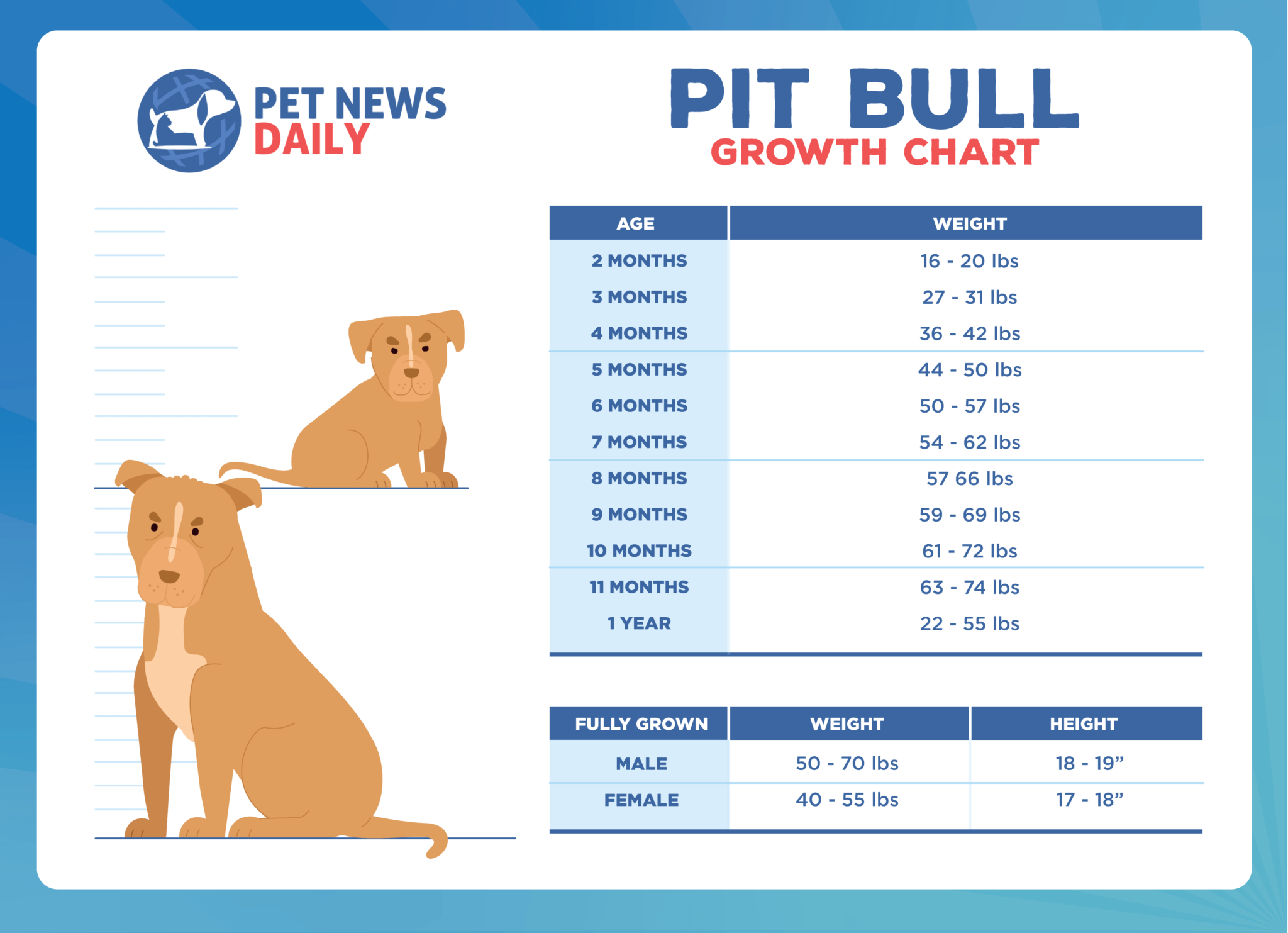
The Pitbull growth chart below displays the healthy growth patterns for a female Pitbull:
| Age | Weight |
| 1 month | 7 pounds |
| 2 months | 17 pounds |
| 3 months | 27 pounds |
| 4 months | 36 pounds |
| 5 months | 44 pounds |
| 6 months | 50 pounds |
| 7 months | 54 pounds |
| 8 months | 58 pounds |
| 9 months | 60 pounds |
| 10 months | 62 pounds |
| 11 months | 63 pounds |
| 12 months | 64 pounds |
Male Pitbull Growth Chart from Puppy to Adult Dog
At an average age of 12 months, a male Pitbull adult weight will typically grow to be around 15.5 inches tall and weigh between 35 – 50 pounds. By adulthood, males will grow to 18 inches tall and up to 75 pounds in adult weight.
Generally, American Pitbull Terrier males have a significant growth period between 3 and 6 months. By then, they will be at around 90% of their adult height and about 70% of their adult weight. By 12 months of age, they will be at their adult height. Still, they will continue to bulk up for another year afterward, depending on their genes and lifestyle.
American Pitbull Terriers are a muscular and medium-sized breed. Their height and weight should align with an athletic canine body type: not too heavy or too light for its height.
The Pitbull puppy weight chart below shows what healthy, appropriate weight and growth look like for Pitbull males, from average puppy weight to a Pitbull’s adult weight.
| Age | Weight |
| 1 month | 9 pounds |
| 2 months | 20 pounds |
| 3 months | 31 pounds |
| 4 months | 42 pounds |
| 5 months | 51 pounds |
| 6 months | 57 pounds |
| 7 months | 63 pounds |
| 8 months | 66 pounds |
| 9 months | 70 pounds |
| 10 months | 72 pounds |
| 11 months | 74 pounds |
| 12 months/1 year | 76 pounds |
Pit Bull Attacks Baby | Is It The Breed or the Environment?
FAQ
How much does a 6 month old Pitbull weigh?
A 6-month-old American Pit Bull terrier typically weighs between 15 and 50 pounds. A 6-month-old American Bully Pit Bull weighs 40-70 lbs. on average. A visit with a veterinarian and a check-up may be required if there are large deviations from this range of the array. 6 month old pitbull weight: How much should a 6 month old pitbull weigh?
How big should a pit bull be at 4 months?
At four months, your male Pit Bull should be between 15-25 pounds, and your female between 10 and 20 pounds. At what age to Pit Bulls become aggressive? Pit Bulls can start developing signs of aggression between the ages of eight months and two years.
How big does a pit bull get?
The size of a pit bull can vary significantly depending on the specific breed or mix, with males generally being larger than females. Males: Typically weigh 35–60 pounds (15–27 kg) and stand 18–21 inches (45–53 cm) tall at the shoulders. One source indicates males can reach up to 75 pounds.
How much does a 6-month-old Pitbull weigh?
Despite the fact that they appear to be relatively similar, they have some substantial distinctions. A 6-month-old American Pit Bull terrier typically weighs between 15 and 50 pounds. A 6-month-old American Bully Pit Bull weighs 40-70 lbs. on average.
What is the average weight of a pit bull puppy?
Pit bull puppies’ height and weight will vary depending on hereditary and environmental variables. A 6-month-old Pit Bull puppy sizes between 9 and 12 inches on average. This is more than half of their adult height. And their weight can be anywhere between 15-35 pounds.
When does a Pitbull puppy grow the fastest?
At 4 months, he will be about half of his adult height. And at 6 months, he will be around 2 thirds of his adult weight. 2 to 6 months is when your Pitbull puppy will grow the fastest. Remember, Pitbull growth charts can only offer a guide to your Pit puppy’s weight, as every dog is different.
How big are Pitbulls at 6 months?
How much bigger will a puppy get after 6 months?
A 6-month-old puppy will grow more, but the amount depends on its breed size: toy and small breeds are near full size, medium breeds are about 66-75% grown, and large/giant breeds are only about 50-60% grown. While their rapid growth phase slows significantly after 6 months, small dogs may finish growing in the next few months, while large dogs will continue to fill out for much longer, often until they are 12-24 months old.
At what age do pit bull heads start growing?
A Pitbull’s head continues to grow and mature until around 12 to 18 months of age, with some growth and filling out happening even later, up to about two years. Growth happens gradually and the head and body may look out of proportion at different stages of puppyhood.
What to expect from a 6 month old pitbull puppy?