
Have you ever wondered why your furry friend chooses to curl up with one family member over another? Or why they suddenly switch sleeping spots? As a dog owner myself, I’ve often found my pup making seemingly random decisions about where—and with whom—to spend those 12-14 hours of daily sleep they need.
Dogs are fascinating creatures with complex social behaviors, especially when it comes to their sleeping habits. Their choices aren’t random at all—they’re based on instinct, comfort, emotional bonds, and even their individual personalities. Let’s dive into the fascinating world of canine sleep preferences and uncover the factors that influence how dogs decide who to sleep with.
The Ancestral Influence: Pack Mentality and Instinct
Dogs descended from wolves, and despite thousands of years of domestication, they still carry some of those ancestral instincts when it comes to sleeping arrangements.
In the wild wolves sleep in packs for several important reasons
- Warmth: Huddling together keeps everyone cozy during cold nights
- Security: Multiple pack members can detect danger more effectively
- Social Bonding: Shared sleeping spaces strengthen relationships within the pack
Even though your pampered pooch doesn’t need to worry about predators or freezing temperatures, these ancient instincts still influence their behavior Your dog might see your family as their “pack,” and their sleeping choices often reflect their perception of the pack dynamics
The Comfort Factor: Physical and Emotional Security
Just like us, dogs crave physical and emotional comfort when they sleep. This plays a huge role in who they choose to snuggle up with.
Physical Comfort
Dogs are drawn to:
- Soft, warm surfaces (like your comfy bed!)
- Stable temperatures (not too hot or cold)
- Accessibility to essentials like water
Emotional Security
Even more important is the emotional security they feel with certain people:
- They often choose people who make them feel safe
- Someone with a calm, reassuring presence is especially appealing
- Dogs with anxiety may seek out the most comforting person
This explains why your dog might have different preferences at different times. If they’re feeling anxious during a thunderstorm, they might seek out the family member who best calms their fears.
The Bond: Attachment and Positive Associations
Perhaps the strongest factor in a dog’s sleeping choice is the bond they share with different people.
Dogs form attachment bonds similar to the relationships between children and parents. They often prefer sleeping with the person they perceive as their primary caregiver—the one who feeds them, walks them, plays with them, and generally meets their needs.
Positive associations also play a huge role. If your dog links you with fun activities, treats, and affection, they’re more likely to want to sleep near you. This is why the family member who spends the most quality time with the dog often becomes their favorite sleeping companion.
Different Sleeping Positions and What They Mean
The way your dog positions themselves when sleeping with you can reveal a lot about your relationship. Here are some common positions and what they might signify:
1. At the Foot of the Bed
If your dog sleeps at the end of your bed, they likely respect your space while still wanting to be close. This position shows they recognize you as the alpha but want to maintain the bond. They’re saying, “I love you, but I know my place.”
2. Right On Top of You
Dogs who insist on sleeping directly on top of their humans usually have strong attachment and dependency. They can’t bear any separation—even during sleep! These pups probably follow you around the house during waking hours too.
3. Spooning
When your dog allows you to spoon them (usually as the little spoon), it demonstrates deep trust. They feel protected by your presence and are comfortable being vulnerable with you.
4. Under the Covers
A dog who burrows under the blankets is showing both a desire for security and closeness. This behavior can be traced back to wild dogs’ den-sleeping habits, combined with wanting to be as close to you as possible.
5. Next to You Like a Human
Dogs who sleep beside you in a similar position to how another person might sleep show a secure attachment. They want to be near you but don’t feel the need to smother you. This indicates a healthy, balanced relationship.
Individual Preferences: Personality and Experiences
Just like people, dogs have unique personalities that influence their sleeping preferences.
Some dogs are naturally more independent and may prefer their own space, even if they’re strongly bonded to their owners. Others are velcro dogs who can’t bear any separation.
Past experiences also shape preferences:
- A dog who experienced trauma might seek extra security
- A rescue dog may take time to feel comfortable sleeping with new owners
- Early life experiences can create lasting sleeping habits
My own dog went through a phase of sleeping under the bed after we moved to a new house. It took several weeks before he felt secure enough to rejoin me on the mattress!
Factors That Influence a Dog’s Sleeping Companion Choice
Here’s a breakdown of the key factors that determine how dogs decide who to sleep with:
| Factor | Description |
|---|---|
| Instinct | Inherited drive to sleep near others for warmth, security, and bonding |
| Comfort | Physical comfort (warmth, softness) and emotional security |
| Attachment | Bond strength with caregivers, especially primary caregivers |
| Positive Associations | Connections between people and positive experiences |
| Social Hierarchy | Established rankings within household |
| Individual Personality | Unique traits ranging from social to independent |
| Past Experiences | Previous interactions that shape preferences |
Common Misinterpretations of Dog Sleeping Behavior
We humans often make mistakes when interpreting our dogs’ sleeping choices. One common error is thinking a dog is “punishing” us by choosing to sleep elsewhere.
In reality, dogs don’t think this way! If your dog suddenly stops sleeping with you, consider:
- Is the room too hot?
- Has your sleep become restless?
- Is another family member offering a more comfortable spot?
- Have there been changes in the household routine?
Your dog isn’t trying to hurt your feelings—they’re simply following their instincts and seeking the most comfortable sleeping arrangement.
How to Encourage Your Dog to Sleep With You (If That’s What You Want)
If you’re hoping to become your dog’s preferred sleeping partner, here are some tips:
- Create positive associations – Be the source of good things like treats, walks, and playtime
- Make your bed inviting – Ensure it’s comfortable and accessible for your dog
- Establish a bedtime routine – Dogs thrive on consistency
- Consider temperature – Make sure your sleeping area isn’t too hot or cold
- Respect their space – Don’t force cuddling if they prefer some distance
Remember that dogs have preferences that may change over time. My dog used to sleep at the foot of the bed when he was younger, but now prefers to curl up right next to my pillow!
When to Be Concerned About Sleeping Habits
While most sleeping preferences are normal, some changes might signal problems:
- Sudden changes in sleeping location might indicate pain or discomfort
- Excessive hiding during sleep could signal anxiety
- Restlessness or inability to settle might suggest a health issue
If you notice dramatic changes in your dog’s sleeping habits, a check-up with the vet might be warranted.
Final Thoughts
Understanding how dogs decide who to sleep with gives us valuable insight into their minds and the special bonds they form with us. Their choices reflect a complex mix of instinct, comfort needs, and emotional connections.
Next time your dog chooses you as their sleeping partner, take it as the compliment it is! They’re essentially saying, “Of all the places I could sleep, I feel safest and most content with you.” And really, isn’t that one of the greatest honors a dog can bestow?
Have you noticed interesting patterns in your dog’s sleeping preferences? I’d love to hear about your experiences in the comments below!
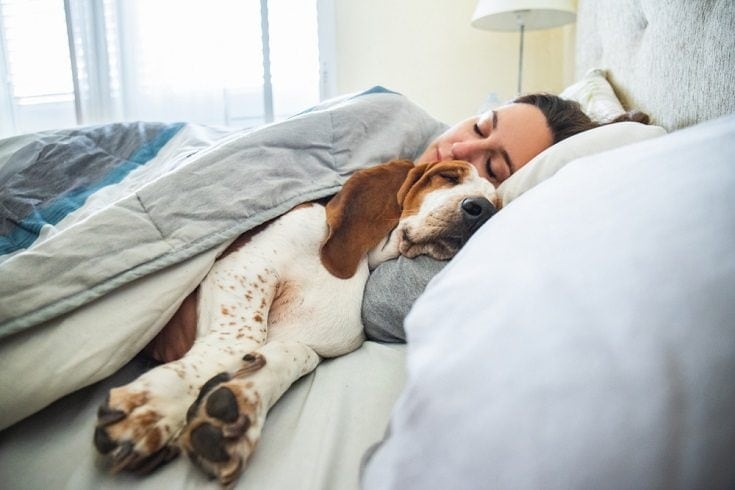
How to stop your dog from sleeping on you?
If you don’t want your dog to sleep on you or your feet, there are some training methods you can implement to discourage the behaviour. First of all, dog parents should observe what is going on just before their dog sleeps on them. Is your dog seeking your attention? Are they expecting a walk or a meal? Do they hear something outside that they feel is a danger or threat? Once you identify what causes your dog to sleep so close to you, you’ll better understand their reasons behind the behaviour.
Then, it’s important to stop encouraging your dog to sleep on you. This includes not giving in to your dog or rewarding their behaviour with any attention. Even negative attention, such as if you scold your dog, can reinforce the undesired behaviour. Instead, you should engage in positive reinforcement training.
In order to train your dog to not sleep on you, you’ll need to provide an alternative. Make sure that your dog has a comfortable dog bed in their own sleeping space, which is warm, cosy and enclosed so that they feel safe to sleep there alone. Whenever your dog sleeps in their bed, you can reward them with praise and treats so they create positive associations with the bed – this will help to encourage the desired behaviour. You could also place something for them to snuggle up to in their sleep area, such as a blanket, pillow or safe soft toy.
Although we want to maintain a loving relationship with our dogs, it’s important to set boundaries so both you and your dog are happy with the arrangement. While it may be difficult to refuse your dog’s cuddles, you’ll need to be consistent to avoid causing your dog confusion. Learn the pros and cons before deciding if you should let your dog sleep with you.
Understanding your dog’s sleep patterns
Humans are monophasic sleepers, which means we are awake during the day and sleep at night, whereas dogs are polyphasic sleepers as they take naps throughout the day. In fact, this may even be to the point that you begin to wonder ‘why does my dog sleep so much?’ Dogs require lots of rest in order to conserve and replenish their energy levels for essential activities. Puppies need even more sleep due to their rapid growth and development, and dog parents may want to follow some tips for puppy sleep.
While dogs have evolved to be the domesticated pets that we love today, there are many instinctive behaviours that derive from their wild ancestors. This includes the pack mentality, and it’s thought that dogs regard their owners and their family as part of their pack. In the wild, dogs would sleep close to their pack mates, and as puppies, your dog would have slept next to its mother and littermates. One of the reasons why dogs sleep on you is because it reinforces their sense of security, provides comfort and warmth, and deepens the social bond between you. And if your dog likes to sleep on your feet, this could be because they are protecting you too by staying at the foot of your bed.
who dogs choose to sleep with #shorts
FAQ
Can a dog sleep with another person?
Sleeping with another person can be cozy, but being able to snuggle up with your dog is great. Like people, dogs have all kinds of sleeping habits. In fact, the way your dog sleeps can say a lot about who they are, other than just being a good boy.
Do dogs sleep a lot?
Yes, dogs do spend a lot of time sleeping. They fall asleep in a similar way to humans, although there are a few differences that make a dog’s sleeping pattern unique. To sleep, a dog will seek a place to lie down and then close their eyes.
Why does my dog think he’s being put to sleep?
What happens most often is that dog owners think their dog knows he’s being put to sleep because they react to the pain caused by their underlying condition. Nervous energy emanating from your dog can also be observed if your dog generally dislikes the vet.
Do dogs know if they are being put to sleep?
Vocalization is often misinterpreted as a sign of the dog knowing that he is being put to sleep when it is nothing more than an involuntary response. All this happens within seconds and your dog is quickly unconscious. While dogs don’t know they’re being put to sleep, it can be argued that they do have a sense of when their last days have arrived.
How do you get a dog to sleep a lot?
A nice long walk gives the dog a chance to investigate their surroundings and leave “messages” for other canines. Then, when you get home and have to head off to work, your dog will be tired enough to sleep for most of the time that you are gone. 2. Teach Your Dog to Use Their Natural Talents
Do dogs have different sleep patterns?
Although the sleep process is similar for dogs and humans, dogs have unique sleep patterns. They have two stages: slow wave sleep and REM sleep, whereas humans have four stages and complete five cycles each night.
Why does my dog lay on my husband but not me?
How does my dog decide where to sleep?
Dogs choose where to sleep based on comfort, security, temperature, and a need to be close to their human “pack”. They are drawn to familiar scents, like their owner’s, and choose sleeping spots where they feel safe and protected. Environmental factors such as temperature and light also influence their choice, leading them to different spots for cooling or warmth.
How do dogs choose which human to sleep with?
… a dog’s preference, including how close the person is to them, whether the person is calm or active, and whether the person provides them with food and waterJul 30, 2025
Why do dogs choose to sleep with one person over another?