
Right now I am working with a miniature Poodle who used to bite if you tried to pick him up. His owners didn’t feel comfortable attaching a leash to his collar for the same reason. At the same time, his groomer had no problems with handling this dog.
That doesn’t surprise me at all. Groomers, as a whole, are at the top of handling skills with vet techs, some shelter workers and more rarely, trainers. It’s not something that is taught formally and requires years to develop the ‘touch’. That being said, this is a small rundown on dealing with aggression that might benefit some of you who are on your path to becoming great handlers.
It is very trendy in modern behavior and training circles to define many different types of aggression. The idea is to classify aggression into sub–types to give you insight about their nature and cure. Some of the sub–groups are: dominance aggression, territorial aggression, food aggression, redirected (sometimes called misdirected) aggression, fear aggression, possessive aggression, predatory aggression and pain aggression.
In the majority of cases, detailed classification of aggression is something you do after the fact. In the world of grooming, I think there are only five major types. These are rarely listed in dog training and behavior circles, but I think you will recognize them.
Have you ever wondered how professional groomers manage to work with dogs that snap, growl, or bite? If you’ve got a furry friend who turns into Cujo at the mere sight of nail clippers, you’re not alone. As someone who’s spent years working with difficult dogs, I can tell you that handling aggressive pups requires special skills that most regular pet owners haven’t developed.
Today I’m gonna break down the professional secrets to handling aggressive dogs during grooming sessions – techniques that have been tested by experts and actually work in real-world situations.
Understanding Why Dogs Get Aggressive During Grooming
Before we dive into the techniques we need to understand what’s causing your dog to act like they’re auditioning for a horror movie when it’s bath time. Dogs don’t just become aggressive out of nowhere – there’s usually a reason behind their behavior.
The Five Types of Aggression Common in Grooming Settings
According to experienced groomer Gary Wilkes, there are five main types of aggression seen during grooming:
- Pain-triggered aggression: “That hurts, I am going to bite you now.”
- Anticipatory aggression: “That hurt the last time I was here, I am going to bite you before you can do it again.”
- Transferred aggression: “Someone else hurt me once, so I will bite you now.”
- General aggression: “I generally bite people, I don’t need a reason.”
- Breed-specific tendencies: Some breeds may be more likely to display aggressive behaviors.
Understanding which type of aggression your dog is displaying helps groomers develop the right approach For example, a dog with pain-triggered aggression needs a different handling technique than one who’s generally aggressive all the time.
Essential Techniques Groomers Use for Aggressive Dogs
1. Creating a Calm Environment
Professional groomers know that the environment plays a huge role in a dog’s behavior. Before even touching the dog, they:
- Minimize loud noises that might startle the dog
- Keep other animals out of sight
- Play calming music (yes, this really works!)
- Ensure the space doesn’t smell like fear or stress from other animals
As one groomer told me, “The battle is half won before you even touch the dog if your space feels safe to them.”
2. Reading Body Language Like a Pro
Experienced groomers are basically dog body language experts. They can spot the warning signs of aggression before a bite happens:
- Raised hackles
- Stiff body posture
- Growling or snarling
- Whale eye (when you can see the whites of their eyes)
- Tucked tail
- Yawning (when not tired)
- Lip licking
Recognizing these signs early allows groomers to adjust their approach before things escalate.
3. Using Proper Restraint Techniques
Groomers employ specific restraint methods that keep both themselves and the dog safe:
- The Proper Hold: Never making direct eye contact with unfamiliar dogs and approaching from the side rather than looming over them from above
- Lamb-Style Lift: Picking up small dogs by placing one arm around the chest and the other around the rump
- Lead Control: Using the lead to pull the dog’s head away in case of emergency
- Quick Muzzle Technique: Creating a temporary muzzle using the lead by wrapping it around the dog’s mouth when necessary
4. Gradual Desensitization
This is perhaps the most important technique for long-term success. Professional groomers don’t just dive in with clippers blazing – they introduce tools gradually:
- Let the dog sniff and investigate grooming tools
- Turn on clippers at a distance first
- Gradually move tools closer as the dog remains calm
- Reward calm behavior with treats or praise
- Build up tolerance over multiple sessions
One groomer I know spends the first session with extremely aggressive dogs just getting them comfortable with being in the grooming area – no actual grooming happens at all!
Special Equipment and Aids Used by Pros
Groomers have access to specialized tools that help manage aggressive dogs:
1. Calming Aids
- Pheromone diffusers like Adaptil that mimic calming dog pheromones
- Calming music specifically designed for anxious dogs
- Anti-anxiety wraps that provide gentle pressure (like a ThunderShirt)
2. Safety Equipment
- Properly fitted muzzles that allow panting but prevent biting
- Grooming loops and restraints designed for safety
- Protective gloves for handling particularly difficult cases
The Muzzle Question: When and How
Many dog owners worry about muzzles, but professional groomers see them as essential safety tools – not punishment. A properly fitted muzzle:
- Allows the dog to pant and sometimes accept treats
- Prevents injury to both groomer and dog
- Is introduced gradually and positively
- Is only used when necessary for safety
As one groomer expert noted, “A muzzle isn’t cruel – what’s cruel is letting a dog’s fear escalate to the point where someone gets hurt or the dog can’t receive necessary care.”
Working With Veterinarians
In some cases, the most humane option for extremely aggressive dogs is light sedation prescribed by a veterinarian. This isn’t the first resort, but in cases where:
- The dog has a history of extreme aggression
- All other calming methods have failed
- The dog’s health is at risk due to lack of grooming
- The stress of grooming without sedation would be worse than the sedation itself
Groomers and vets often work together to create a care plan for these special cases.
Tips for Dog Owners With Aggressive Pups
If your dog struggles with grooming aggression, here’s what you can do to help:
- Be honest with your groomer about your dog’s behavior – hiding it puts everyone at risk
- Practice at home with gentle handling exercises
- Start grooming routines early in your dog’s life
- Consider professional training to address the underlying issues
- Build positive associations with grooming tools at home
Real-World Techniques That Actually Work
Here are some specific handling techniques used by professional groomers that you might not find in basic articles:
The “Touch First” Rule
When approaching an aggressive dog, experienced groomers:
- Place their hand below the dog’s chin – never above the head
- Gently touch the dog’s chest before handling sensitive areas like ears or muzzle
- Start handling a leg high near the elbow and work down, never pulling forward
The Assistant Technique
For particularly difficult procedures like nail trimming:
- One person holds the dog under the chin while draping an arm over the withers
- The assistant can block the dog’s elbow if it tries to pull back
- This allows the groomer to complete necessary tasks quickly and safely
The Break Method
Professional groomers aren’t afraid to:
- Take breaks during sessions when the dog becomes overstimulated
- Allow the dog to rest in a secure area and continue when they’re more relaxed
- Split difficult grooms into multiple shorter sessions
My Experience: A Case Study
I once worked with a miniature poodle who had a terrible reputation for biting during grooming. The owners couldn’t even put a leash on him without getting snapped at! But the groomer had absolutely no issues.
What was the difference? The groomer understood that this particular dog showed anticipatory aggression – he expected pain based on previous experiences. By using gradual desensitization, positive reinforcement, and creating a calm environment, the groomer was able to completely transform this dog’s grooming experience.
When to Consider a Specialist
Not all groomers are equipped to handle severe aggression. Consider finding a groomer who specializes in difficult dogs if your pet:
- Has bitten during grooming in the past
- Shows extreme fear or stress during handling
- Has had traumatic experiences with grooming
- Requires sedation for basic procedures
These specialist groomers often have additional training in behavior modification and handling techniques.
The number one thing that separates successful groomers who can handle aggressive dogs from those who can’t? Patience.
Professional groomers understand that working with difficult dogs isn’t about forcing them through a grooming session – it’s about building trust over time. With the right techniques, most aggressive dogs can learn to tolerate and even enjoy grooming.
Remember, your dog isn’t being “bad” – they’re communicating fear or discomfort in the only way they know how. By partnering with a skilled groomer who understands these techniques, you can help your furry friend have a much more positive experience.
Have you had experiences with an aggressive dog during grooming? What techniques worked for you? I’d love to hear your stories in the comments!
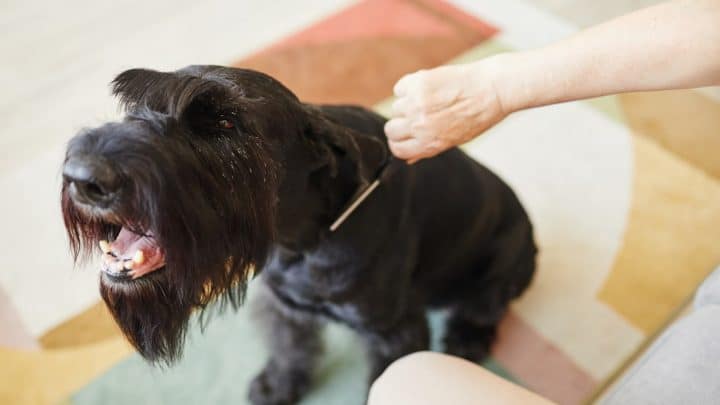
The Five Types of Aggression Commonly Seen in Grooming:
1) “That hurts, I am going to bite you now.” This is the easiest form of aggression to anticipate. You know which procedures cause pain and discomfort. If you can anticipate when the painful part starts, you can make your grip a little firmer, just before the dog goes ballistic. Sometimes a calming hold will get the dog through the pain.
2) “That hurt the last time I was here, I am going to bite you before you can do it again.” If the dog has prior experience he may decide to initiate a bite well in advance of any actual handling. This process may start when the dog comes into the salon. By the time the dog is in the salon, it may be ready to bite anyone who tries to touch or handle it.
3) “Someone else hurt me once, so I will bite you now.” This is a pretty self–explanatory category. Many groomers wear smocks. If a groomer is wearing a smock and the dog thinks smocks = pain, the dog may bite the wrong person. Be aware that your appearance can trigger a bite, even if you have never had bad relations with a particular animal.
4) “I generally bite people, I don’t need a reason.” Some animals have such a long and broad history of violence that they may bite at any given moment—even after typical provocation has failed to trigger a bite. This type of dog may allow you to finish the groom and then bite you on the way out of the salon.
5) “I’m a Chow Chow (Or fill in the blank with any breed you don’t trust).” Every breed of dog has a published breed profile that claims “friendly with kids, good with old people, loyal, devoted, sweet, wonderful, special, easy to train.” Don’t believe it. Some breeds should be considered dangerous until proven otherwise.
Before you apply my rules for anticipating a bite, here are some simple things you can consider. I have only had one real bite in more than 40 years. I’m not bullet proof—that status could change tomorrow. That being said, these are thoughts I use to keep myself safe.
#Matted #Aggressive #dog gets groom while owner holds him agg dog expert myfavoritegroomer.com
FAQ
Can aggressive dogs go to the groomer?
Yes, groomers can refuse to bathe a scared or aggressive dog. Grooming professionals prioritize the safety of both themselves and the dog. If a dog is too fearful or aggressive, a groomer may determine that it is not safe to proceed with the grooming process. In such cases, they may suggest alternatives, such as:
How do groomers handle dogs that bite?
In circumstances where an animal is especially aggressive or fearful, we may recommend sedation during a grooming session. However, most of the time we can manage these types of dogs by doing the things listed above, and taking the following steps: Ensuring the environment is quiet, calm, and peaceful.
How to sedate an aggressive dog for grooming?
Sedatives like trazodone, diazepam (Valium), or clonazepam (Klonopin) may help calm the dog. Dosage should be determined by a veterinarian based on weight and health. Non-pharmaceutical strategies include gradual desensitization and positive reinforcement.
Do groomers know how to deal with aggressive dogs?
Generally, groomers prefer not to work with aggressive dogs, especially when it comes to grooming the face. This situation can create challenges for both the groomer and the dog. If a groomer attempts to groom the face with scissors and the dog reacts aggressively, the liability becomes significant for both parties.