
It starts with a stare, then maybe a whimper, and usually involves big, sad puppy dog eyes. You’ve got a few leftover carrots on your plate, and your dog looks so adorable that you can’t help but share one with him.
While giving your dog occasional, safe “people food” is often fine from a canine nutrition standpoint, the behavior that might come with sharing your food can become a nuisance.
Once a dog understands that what’s on your plate can be his with enough requests, you might find yourself in a constant mealtime beg-fest. A dog who begs for food—or worse, demands it—isn’t fun to be around.
But a begging habit isn’t set in stone. You can convince your dog to stand down at mealtimes—or better yet, prevent the puppy begging behavior from even starting.
Have you ever sat down to enjoy a delicious meal only to find those big puppy eyes staring at you, maybe even a paw on your leg? Yeah, me too It’s one of the most common issues we dog owners face My dog Bruno used to be the king of begging, but I’ve learned some effective techniques to stop this behavior, and I’m excited to share them with you!
Dog begging is something that drives many pet parents crazy, but with some consistency and patience, you can definitely overcome it. In this article, I’ll walk you through everything you need to know about why dogs beg and how to stop it for good.
Why Do Dogs Beg for Food?
Before diving into the solutions, it’s important to understand why our furry friends do this in the first place
Dogs beg for food because, well, they like food! It’s really that simple. Food smells good and tastes great, especially our human food that they don’t normally get. With their powerful sense of smell being about 10,000 to 100,000 times more sensitive than ours, it’s no wonder they’re drawn to what’s on our plates.
The behavior actually has deep historical roots. When dogs were becoming domesticated thousands of years ago, it started with food. Dogs that hung around human camps could scavenge food scraps, which was much easier and safer than hunting. They quickly learned that looking longingly at humans might earn them a piece of meat, and thus began the human-dog relationship we cherish today.
Even though our pets now get regular meals in their bowls, that instinctual drive to seek out food remains Some dogs beg politely from a distance, while others might get pushy—nudging your hand, whining, or even jumping on the table!
7 Effective Ways to Stop Your Dog from Begging
1. Ignore the Dog Completely
This is probably the hardest method, but also one of the most effective. When your dog begs:
- Don’t feed them from the table (duh, but needs saying!)
- Don’t talk to them
- Don’t even look at them
- Don’t pet them
- Don’t say “no” or scold them
Yep, even negative attention is still attention! I know how hard this can be. When Bruno would stare at me with those sad eyes, I wanted to at least acknowledge him. But any form of attention, even saying “no,” can reinforce the behavior.
Remember: Dogs repeat behaviors that get rewarded. If begging gets them nothing—not even a glance—they’ll eventually stop trying.
2. Create Physical Distance
Sometimes, the easiest solution is to create a physical barrier between your dog and the dinner table.
- Put your dog in another room during meals
- Use a baby gate to block access to the dining area
- Place your dog in their crate with a treat during mealtime
- Train your dog to “go to bed” during meals
I used to put Bruno in the living room with a baby gate while we ate dinner. After a couple weeks, he stopped trying to get into the dining room altogether!
3. Give Your Dog Their Own Mealtime
One clever strategy is to feed your dog their own meal at the same time you eat yours. This keeps them busy with their own food and creates a positive association with staying away from your table.
To make this even more effective:
- Use puzzle feeders or snuffle mats to make their meal last longer
- Stuff a Kong toy with their food so they stay occupied
- Place their food in their designated area, away from the table
4. Teach a “Place” Command
This has been a game-changer for many dog owners, including myself! The “place” command teaches your dog to go to a specific spot (like a bed or mat) and stay there until released.
Here’s how to train it:
- Put a dog bed or mat at a distance from your dining area
- Lead your dog to the spot and say “place” or “go to your bed”
- Reward them with treats when they stay on the spot
- Gradually increase the duration they need to stay
- Practice having them go to their place before meals
- Occasionally toss treats to them while they’re in their place during your meal
This teaches them that staying in their spot during mealtime = rewards!
5. Keep Your Table and Kitchen Clean
This might seem obvious, but it’s super important! If your dog finds crumbs or food scraps on or under your table when you’re not around, they’re learning that the table area is a food source.
- Clean your table thoroughly after every meal
- Wipe down counters where food is prepared
- Push in chairs so dogs can’t use them to climb onto the table
- Some dog owners even turn chairs upside down on the table when not in use
I’ve caught Bruno licking the floor under our table after meals, which just reinforced his interest in the area. A good cleaning routine helps break that association.
6. Create Consistency Among Everyone in the Household
This is where many families struggle! You might be doing everything right, but if someone else in your home sneaks the dog food under the table, all your hard work goes out the window.
- Make sure everyone in the family follows the same rules
- Inform guests about your no-feeding policy before meals
- Be especially vigilant with children and visiting relatives who might think it’s cute to share food
- Stay committed to the cause—even one slip-up can set back your progress
7. Use Time-Outs for Persistent Beggars
If your dog is particularly stubborn about begging, time-outs can be effective:
- As soon as your dog starts begging, immediately take them to a boring room (not their crate or bed)
- Leave them there for just a few minutes—this isn’t punishment, just a consequence
- Let them out and if they beg again, repeat the time-out
- Be consistent with this approach
The key is making the connection between begging and being removed from the action. Dogs quickly learn that begging = no more access to the exciting dining area.
What NOT to Do When Stopping Begging Behavior
While trying to stop begging, avoid these common mistakes:
- Don’t yell at your dog. This gives attention, which can actually reinforce begging.
- Don’t push or physically move your dog away repeatedly. This becomes a game.
- Don’t feel guilty! Your dog isn’t starving or deprived—they just want extra treats.
- Don’t give up after a few days. Breaking this habit takes consistent effort.
FAQ About Dogs Begging for Food
How long will it take to stop my dog from begging?
With consistent training, most dogs will significantly reduce begging behavior within 2-3 weeks. However, some stubborn dogs might take longer, especially if the habit has been reinforced for years.
Is it ever OK to give my dog table scraps?
If you want to share human food occasionally, do it by putting it in their bowl after you’ve finished eating and left the table. This prevents them from associating begging with rewards.
My dog whines and barks when I ignore the begging. What should I do?
This is called an “extinction burst”—when behavior initially gets worse before it gets better. Stay strong! If you give in now, you’re teaching your dog that persistent whining works.
Should I use a professional trainer to help with begging?
If your dog’s begging is extreme (jumping on tables, stealing food, showing aggression), a professional trainer can definitely help. Sometimes an objective third party makes all the difference.
A Success Story
When we first got Bruno, he would stare intensely during meals, put his head on our laps, and occasionally jump up to try to reach the table. It was frustrating and made meals stressful.
We started by creating physical distance—putting him in another room during mealtimes. After a week, we transitioned to teaching him the “place” command, having him stay on his bed during meals. We’d occasionally toss him a treat when he stayed calmly on his bed.
The first few days were rough—lots of whining and attempts to leave his bed. But we stayed consistent. Within three weeks, he would automatically go to his bed when we sat down to eat! Now, six months later, he doesn’t even try to beg anymore.
Final Thoughts
Breaking the begging habit requires patience and consistency, but it’s absolutely achievable. Remember that you’re not depriving your dog—you’re teaching them better manners that will make your life together more harmonious.
The key points to remember:
- Never reward begging with food or attention
- Create physical distance during mealtimes
- Be consistent with your training approach
- Get everyone in the household on board
- Don’t give up when progress seems slow
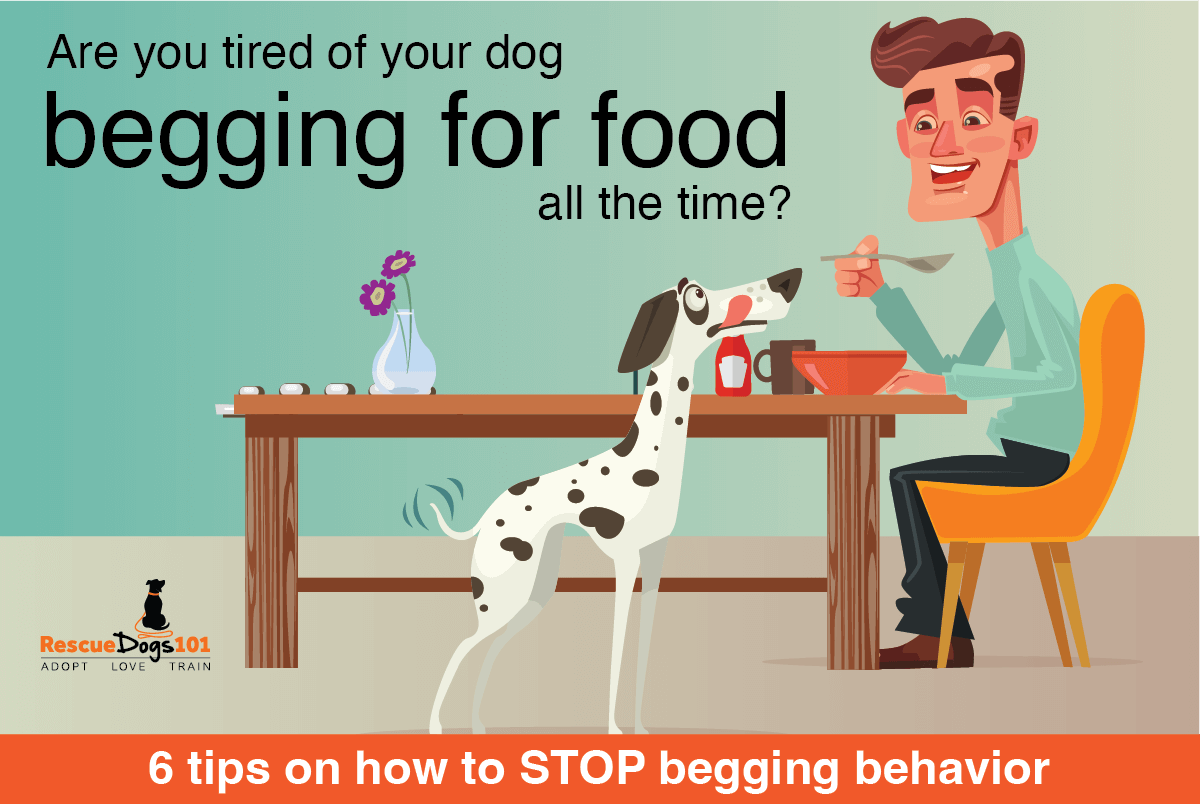
How To Stop a Dog From Begging
If your dog lurks under the table, whines, paws, or barks at you while you eat, there are steps you can take to end these behaviors.
Ignore the Begging
If you choose to ignore your dog, be aware that he might go through what’s known as an “extinction burst,” as he tries to get his formerly successful begging techniques to work. This means your dog will whine louder, paw harder, pace faster, and bark louder because those tricks got him table scraps in the past.
Do not give in to this behavior. If you break down and give your dog food when he escalates his requests, he’ll learn that you’ll give him food if he pushes hard enough. But if you continue to ignore him, he will eventually stop his dog begging behavior.
Because of this, it might be better to teach your dog a replacement behavior or keep him occupied with toys so he doesn’t become stressed, frustrated, and confused.