
Keeping your artificial turf clean—especially when pets are involved—isn’t just about aesthetics. Pet turf maintenance is essential to eliminate odors, ensure pet safety, and extend the life of your synthetic lawn. In this expert guide, we’ll show you how to clean artificial turf for dogs, tackle dog urine and pet waste, and implement a simple turf maintenance routine. Whether you’re a homeowner in Austin or a property manager in Houston, these tips will help you keep your artificial grass looking fresh and clean year-round.
Are you tired of constantly battling muddy paw prints, stubborn pet stains, and that unmistakable doggy odor on your artificial grass? I totally get it! As a proud dog owner with synthetic turf in my backyard, I’ve learned that keeping fake grass clean when you have furry friends isn’t just about aesthetics—it’s essential for their health and your sanity.
Artificial grass offers a brilliant solution for pet owners who want a green, low-maintenance yard without the hassles of natural grass But let’s be real—our four-legged companions can turn even the most pristine synthetic lawn into a smelly mess if we don’t stay on top of cleaning
Don’t worry though! In this comprehensive guide, I’ll walk you through everything you need to know about maintaining your pet-friendly artificial turf From daily quick-cleans to seasonal deep scrubs, I’ve got you covered with practical tips that won’t eat up your precious time or break the bank.
Understanding Your Fake Grass Options for Dogs
Before diving into cleaning methods, it’s helpful to know what type of artificial grass you’re working with, as different materials require slightly different approaches.
Common Types of Artificial Grass for Pets
-
Nylon Grass
- Extremely durable and perfect for high-traffic areas
- Withstands rough play and heavy dog activity
- Excellent for larger breeds or multiple dogs
-
Polypropylene Grass
- More affordable option
- Works well for smaller dogs or areas with light use
- Less durable than nylon but still pet-friendly
-
Polyethylene Grass
- Strikes a balance between softness and durability
- Looks and feels most like natural grass
- Popular choice for families seeking comfort and appearance
Benefits of Artificial Grass for Dog Owners
- Low Maintenance: No mowing, fertilizing, or watering required
- Hygienic Surface: Doesn’t harbor pests like fleas or ticks
- Weather Resistant: No mud or dead patches regardless of weather
- Long-Lasting: With proper care, can last many years even with active pets
Essential Cleaning Supplies for Pet Turf
Let’s get practical! Here’s what you’ll need in your cleaning arsenal:
Must-Have Tools and Products
- Plastic bag or pooper scooper
- Garden hose with spray nozzle
- Plastic or rubber rake (never metal!)
- Soft-bristled broom or brush
- Squeegee (optional but helpful)
- Pet-safe turf detergent
- Enzyme-based odor neutralizer
- Turf deodorizing spray
- Mild dish soap for spot cleaning
Pro tip: Store these supplies together in a dedicated “turf cleaning station” so you’re not hunting for tools when you need them!
Step-by-Step Daily Cleaning Process
The secret to maintaining beautiful artificial grass with dogs is staying consistent with daily maintenance. Here’s my quick routine that takes just minutes:
1. Remove Solid Waste Promptly
This seems obvious, but it’s absolutely crucial! Dog waste left on turf can:
- Create stubborn stains
- Cause unpleasant odors
- Harbor harmful bacteria
- Damage turf fibers over time
I always pick up solid waste immediately using a bag or pooper scooper. It’s the simplest way to prevent bigger problems.
2. Rinse Problem Areas Regularly
For urine spots, a quick rinse with the garden hose works wonders:
- Use cool water, not hot
- Target spots where your dog regularly relieves themselves
- Ensure proper drainage by rinsing thoroughly
- Allow the area to dry completely
I keep my hose accessible and try to rinse these areas at least once daily, especially during hot weather when odors intensify.
Weekly Cleaning Routine for Dog Owners
Once a week, I spend about 20-30 minutes giving my artificial lawn more attention:
1. Remove Debris and Fluff the Fibers
Start by:
- Raking gently to collect leaves, hair, and debris
- Brushing against the grain to lift flattened areas
- Paying extra attention to high-traffic zones
This prevents matting and helps your turf look fresh and natural.
2. Wash with Pet-Safe Cleaners
For a more thorough clean:
- Rinse the entire turf area with water
- Apply a pet-safe turf cleaner diluted according to package directions
- Let it sit for 5-10 minutes (check product instructions)
- Brush gently with a soft-bristled brush in circular motions
- Rinse thoroughly until water runs clear
3. Address Odors with Enzyme Products
Even with regular cleaning, dog urine can create persistent odors. Enzyme-based products are your best friend here:
- Apply directly to problem areas
- Allow to sit for the recommended time
- Rinse thoroughly if directed by product instructions
These special formulas break down the ammonia compounds in urine that cause those stubborn smells.
Deep Cleaning Your Pet Turf (Monthly or Seasonally)
Just like any flooring, artificial grass benefits from occasional deep cleaning sessions. I schedule these about once a month in summer and quarterly in cooler seasons.
The Complete Deep Clean Process
-
Clear All Debris
- Remove all toys, furniture, and loose items
- Rake thoroughly to collect hair, leaves, and debris
- Use a leaf blower on low setting to remove fine particles (optional)
-
Pre-Rinse the Entire Area
- Hose down the complete turf area
- Use moderate pressure to dislodge dirt
- Pay special attention to drainage paths
-
Apply Cleaning Solution
- Mix a pet-safe turf cleaner according to directions
- Apply evenly across the surface
- Use a soft brush for gentle agitation
- Let sit for recommended time (usually 5-15 minutes)
-
Scrub Problem Areas
- For stubborn spots, mix one part mild dish soap with one part water
- Scrub gently in circular motions
- Work the solution into the fibers without damaging them
-
Rinse Thoroughly
- Ensure ALL cleaning products are completely rinsed away
- Residue can irritate your dog’s paws and skin
- Continue rinsing until water runs clear
-
Apply Deodorizer
- Use a commercial turf deodorizer or natural option like white vinegar (diluted 1:10 with water)
- Apply evenly to neutralize any remaining odors
- Focus on areas your dog uses frequently
-
Dry Completely
- Use a squeegee to remove excess water
- Allow natural air-drying before heavy use
- Keep pets off until completely dry if possible
Dealing with Stubborn Stains and Odors
Even with regular maintenance, you’ll occasionally face challenging situations. Here’s how I handle them:
Stubborn Urine Odors
If normal cleaning isn’t cutting it:
- Create a solution of equal parts white vinegar and water
- Apply to affected areas and let sit for 10-15 minutes
- Rinse thoroughly
- Apply enzymatic cleaner specifically designed for pet urine
- Allow to dry completely
Food and Other Organic Stains
For those times when your pup decides to bury treats or brings random treasures to the turf:
- Remove any solid material carefully
- Blot (don’t rub!) any fresh stains
- Apply mild soapy water and gently scrub
- Rinse thoroughly
- Repeat if necessary
Dealing with Chewing Damage
Some dogs can’t resist the temptation to dig or chew turf. If this happens:
- Repair small areas with adhesive specifically for artificial grass
- Discourage the behavior through training and deterrents
- Consider installing a designated digging area elsewhere in your yard
Seasonal Maintenance Tips
Different seasons present unique challenges for maintaining pet turf:
Spring Cleaning
After winter, give your turf extra attention:
- Check for drainage issues from winter debris
- Look for any damage that needs repair
- Apply a pet-safe disinfectant to eliminate any bacteria buildup
- Consider professional cleaning services if it’s been several years
Summer Care
Hot weather intensifies odors and can make turf hot:
- Increase rinsing frequency when temperatures rise
- Consider occasional cooling by hosing down turf on very hot days
- Watch for signs of heat stress in your pets when playing on turf
Fall Maintenance
As leaves fall:
- Remove debris more frequently
- Check drainage systems for blockages
- Consider a final deep clean before winter
Winter Upkeep
Even in cold months:
- Continue to remove waste promptly
- Brush off snow rather than using harsh chemicals
- Avoid salt or ice-melting products that could damage turf
Establishing a Practical Cleaning Schedule
Consistency is key! Here’s a sample schedule that works for me with my two active dogs:
| Frequency | Task | Approximate Time |
|---|---|---|
| Daily | Remove waste, quick spot rinse | 5 minutes |
| Weekly | Rake debris, brush fibers, rinse problem areas | 15-20 minutes |
| Monthly | Complete cleaning with detergent and deodorizer | 30-45 minutes |
| Seasonally | Deep clean, inspect for damage, clean drainage | 1-2 hours |
Adjust based on:
- Number and size of dogs
- Size of your turf area
- Local climate conditions
- Your dog’s habits and health
Professional vs. DIY Cleaning
While most maintenance can be handled yourself, sometimes professional help is valuable:
When to Call the Pros
Consider professional cleaning services when:
- You notice persistent odors despite regular cleaning
- Drainage issues develop
- Turf is showing signs of premature wear
- It’s been several years since installation
- You’re preparing to sell your home
Professional services typically use specialized equipment and stronger (but safe) cleaning solutions that can revitalize older turf.
My Final Thoughts on Cleaning Fake Grass for Dogs
After years of maintaining artificial grass with dogs, I’ve learned that consistency trumps intensity. Five minutes of daily attention prevents hours of deep cleaning later.
Remember that clean turf isn’t just about appearances—it’s about creating a healthy environment for your furry friends. Dogs are sensitive to chemicals and bacteria, so keeping their play area clean is an important part of responsible pet ownership.
With the right tools and routine, artificial grass can provide years of enjoyment for both you and your dogs. The initial investment in quality products and regular maintenance pays off with a beautiful, functional yard that stays green year-round without the headaches of natural grass.
Frequently Asked Questions
Q: Is artificial grass really safe for dogs?
Yes! When properly maintained and cleaned with non-toxic products, artificial grass is completely safe for pets. In fact, it eliminates many hazards found in natural lawns like toxic fertilizers, pesticides, and muddy areas that can harbor parasites.
Q: How often should I replace the infill in my pet turf?
This depends on usage, but generally, inspect your infill annually and top it up as needed. Some modern pet turf systems don’t require traditional infill at all, using alternative drainage systems instead.
Q: Can I use bleach to clean pet stains from artificial grass?
No! Bleach and other harsh chemicals can damage turf fibers, backing, and infill. They’re also potentially harmful to your pets. Stick with pet-safe cleaners designed specifically for synthetic turf.
Q: My artificial grass still smells after cleaning. What am I doing wrong?
You might not be addressing the bacteria deep in the turf system. Try an enzyme-based cleaner specifically formulated for pet urine, ensure proper drainage, and consider a professional deep clean if the problem persists.
Q: How do I prevent my dog from digging in the artificial grass?
Provide alternative digging areas, use positive reinforcement training, and ensure your dog gets plenty of exercise and mental stimulation. Some owners have success with specific deterrent sprays designed for this purpose.
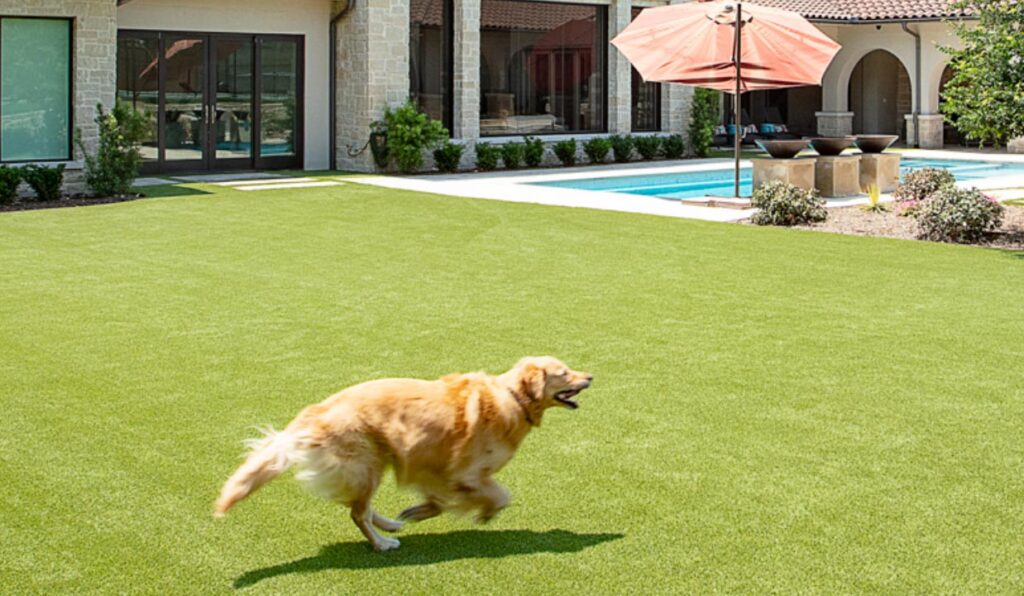
By following these guidelines, you’ll keep your artificial grass looking great and smelling fresh, even with your furry friends enjoying it daily. Your dogs will thank you with happy zoomies across their clean, green playground!
How to Clean Turf for Pets FAQs
No, when diluted with water (1:1), vinegar is safe for synthetic turf. Avoid using it too frequently as overuse may dry out the turf fibers.
Pet Health and Safety
Your dogs play, roll, and rest on the lawn. A dirty turf surface may expose them to harmful bacteria or residues from improper cleaners. By using pet-safe turf cleaner options and proper rinsing, you maintain a safe space for them to enjoy.
Neglecting regular cleaning can degrade the artificial turf fibers and infill, leading to matting, discoloration, and drainage issues. Maintaining a clean and odor-free lawn ensures your turf remains vibrant and durable for years.