
Ever since I adopted my first dog Mia, I have always trimmed my dog’s nails. This is due mostly to lazinesss: I just don’t want to have to drive my dog to the vet or groomers every time they need a nail trim. Plus, I want this routine procedure to be as stress-free as possible, especially since it’s such an important part of my dogs’ physical health. And, if I’m being totally honest here, I just don’t really trust another person to do it.
Trimming your dog’s nails at home definitely has its perks, including saving you time and money, but it’s not always an easy task and many dog moms don’t feel comfortable doing it. However, having the right tools makes it significantly easier and less scary!
*Disclosure: This post contains affiliate links. This means that I may earn a small commission, at no additional cost to you, if you make a purchase. Thank you for supporting my blog! I only recommend products I use myself, and all opinions expressed here are my own. Read my full disclosure here.
As a dog mom who’s been trimming my pups’ nails for years, I’ve spent countless hours wrestling with both nail grinders and clippers. Trust me when I say that choosing between these tools isn’t always straightforward! Each has its pros and cons, and what works brilliantly for one doggo might be a disaster for another.
I remember when my Lab mix Bella absolutely refused to let me near her with clippers but sat perfectly still for the grinder. Meanwhile, my anxious Chihuahua Max runs for the hills at the sound of the grinder but tolerates clippers with minimal drama. So are nail grinders actually better than clippers? Let’s dig into this nail-biting question (pun totally intended).
The Nail Trimming Dilemma
Keeping your dog’s nails trimmed isn’t just about aesthetics—it’s crucial for their health and comfort. Long nails can:
- Cause pain by pushing back into the nail bed
- Affect your dog’s posture and gait
- Lead to arthritis and joint issues over time
- Split or break, causing injuries
- Get caught on fabrics and carpeting
But choosing the right tool for the job depends on understanding what each option offers
Dog Nail Grinders: The Lowdown
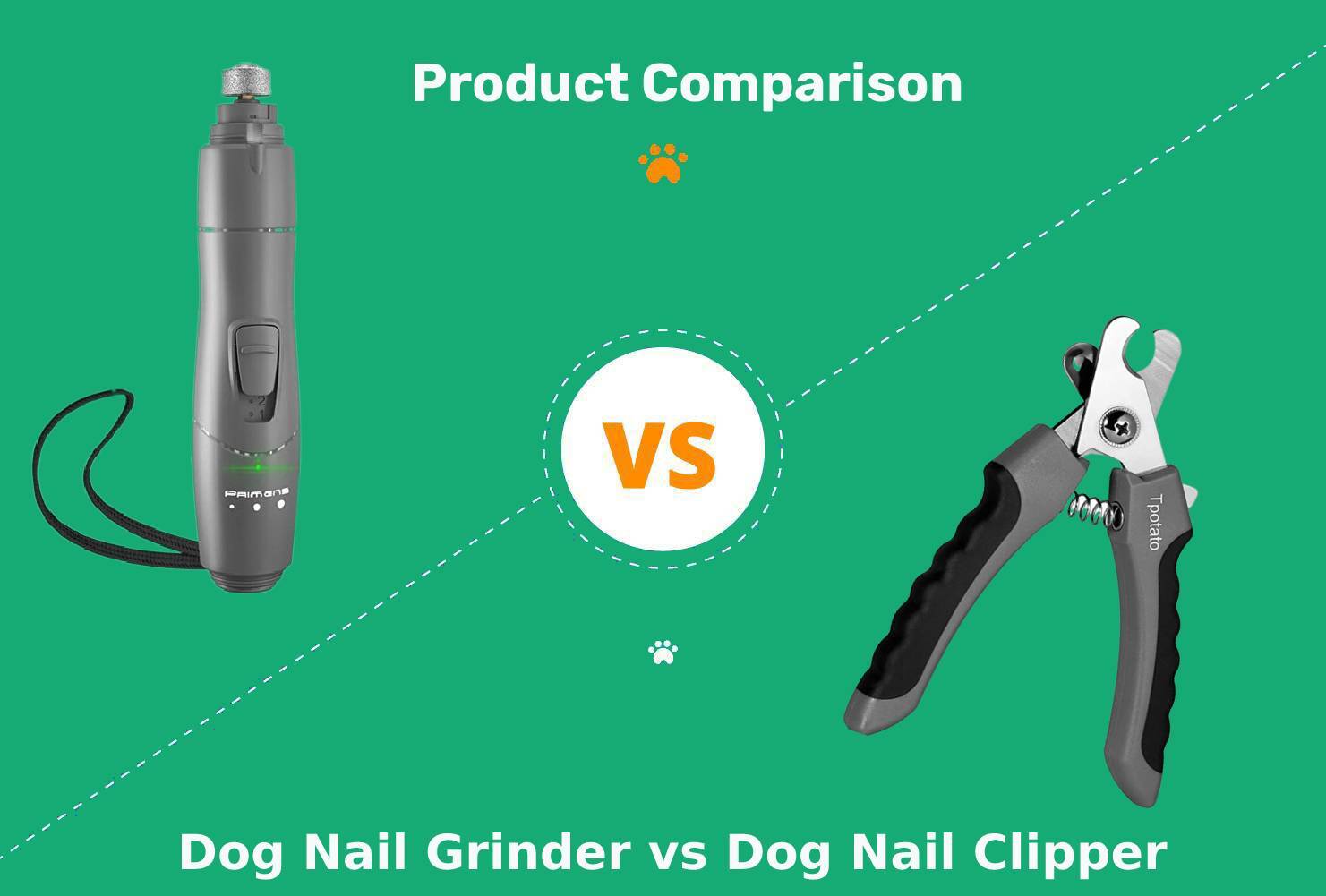
A nail grinder (or dremel) is essentially an electric file that gradually wears down your dog’s nails. These devices use a rotating head with a sandpaper-like surface to gently remove layers of the nail.
Grinder Pros
Safety First The biggest advantage of grinders is the reduced risk of hitting the quick—that sensitive part of the nail with blood vessels and nerves Since you’re filing gradually, you can approach the quick more cautiously.
Smooth Finish I love how grinders leave no sharp edges With clippers, I often find myself filing rough edges anyway, so a grinder eliminates that extra step
Better for Thick Nails: For dogs with thick nails (I’m looking at you, larger breeds), grinders can be more effective than trying to muscle through with clippers.
More Control: You can more precisely shape the nail and get closer to the quick without cutting it.
Grinder Cons
Noisy Business: The buzzing sound scares many dogs. My border collie took weeks to accept the weird vibrating monster touching her paws.
Time-Consuming: Filing takes longer than clipping—there’s no way around it. For wiggly dogs, this longer process can be challenging.
Heat Generation: The friction creates heat, which can make your dog uncomfortable if you stay on one nail too long.
Dust: Nail dust gets EVERYWHERE. I’ve learned to do this outside or put a towel down unless I want to vacuum immediately after.
Dog Nail Clippers: Traditional but Effective
Nail clippers come in two main types: guillotine and scissor-style. They cut the nail rather than filing it down.
Clipper Pros
Quick and Efficient: Clipping is fast—one snip and you’re done with that nail. Great for dogs who hate grooming time.
Silent Operation: No motor means no scary noise to freak out noise-sensitive pups.
No Batteries Required: Always ready to go without charging or batteries dying mid-trim.
Better for Long Nails: If your dog’s nails are seriously overgrown, clippers make that initial cut-back much faster than grinding away for ages.
Clipper Cons
Risk of Quicking: The biggest downside is the risk of cutting too short and hitting the quick, which is painful and causes bleeding. This happened with my black-nailed dog once, and I still feel terrible about it!
Learning Curve: It takes practice to get comfortable with proper cutting angles (45 degrees under the nail).
Can Cause Splitting: Especially with older dogs, clippers can sometimes split or crack the nail.
Rough Edges: Clippers leave edges that sometimes need filing anyway.
My Real-World Experience
I’ve found that having both tools is actually the ideal setup. Here’s my typical nail maintenance routine:
- Use clippers for the initial trim if nails are long
- Follow up with the grinder to smooth edges and fine-tune length
- Rely on the grinder alone for regular maintenance trims
The tools complement each other perfectly. On days when my dogs are feeling impatient, I might just use clippers to get the job done quickly. For more thorough grooming sessions, I’ll take the time with the grinder.
Which Dogs Prefer Which Tool?
In my experience (and from talking with countless dog owners at the park), certain dogs tend to prefer certain tools:
Dogs that often prefer grinders:
- Dogs traumatized by being “quicked” with clippers in the past
- Larger breeds with thick nails
- More laid-back dogs who don’t mind sitting still longer
- Dogs that aren’t noise-sensitive
Dogs that often prefer clippers:
- Noise-sensitive or anxious dogs
- Very wiggly pups who can’t sit still long
- Small dogs with thin nails
- Dogs sensitive to vibration
Tips for Using Nail Grinders
If you decide to try a grinder, here are some tricks I’ve learned:
-
Desensitize gradually – Turn it on near your dog (not touching them) during treats and playtime for several days before attempting to use it.
-
Use the lowest setting – Start with the lowest speed to minimize noise and vibration.
-
Take breaks – Don’t try to do all paws at once. I usually do one paw per day with treats in between each nail.
-
Be conscious of heat – Only touch the grinder to the nail for a few seconds at a time to prevent heat buildup.
-
Try different positions – Some dogs prefer lying on their side, while others do better sitting or standing.
Tips for Using Nail Clippers
For successful clipping:
-
Use good lighting – You need to clearly see what you’re doing, especially with dark nails.
-
Clip at a 45-degree angle – This helps avoid the quick.
-
Take small snips – Better to take off a little at a time than too much at once.
-
Keep styptic powder handy – Accidents happen! This stops bleeding if you hit the quick.
-
Watch for the pulp – With clear nails, stop when you see the pink. With black nails, look for a dark circle appearing in the cut surface.
Making Your Decision
When deciding which tool is right for your furry friend, consider:
- Your dog’s temperament – Anxious? Wiggly? Patient?
- Nail color and thickness – Black nails are trickier with clippers
- Your own comfort level – Some humans prefer one tool over the other
- Time available – Grinders take longer but might be safer
There’s no universal “better” option—it really depends on your specific situation.
My Personal Recommendation
After years of nail-trimming adventures, I’ve come to a conclusion: having both tools available is ideal, but if I had to pick just one, I’d probably lean toward a grinder for most dogs.
Why? The reduced risk of pain and trauma seems worth the extra time investment. Plus, with regular maintenance, grinding sessions become shorter anyway.
But I’m not throwing away my clippers! They’re essential for those initial trims when nails get too long, and they’re my backup for days when the battery dies on my grinder or when my dogs just aren’t in the mood for the noise.
The Best of Both Worlds
Many experienced dog parents like me end up using a hybrid approach:
- Clip the very tips with clippers (staying well away from the quick)
- Smooth and further shorten with the grinder
- Use the grinder for weekly maintenance
This combination gives you the speed of clippers with the safety and finish of a grinder.
Final Thoughts
Are nail grinders better than clippers? It depends on your dog, your skill level, and your specific situation. Both tools have their place in a complete dog grooming kit.
The most important thing isn’t which tool you use—it’s that you’re regularly maintaining your dog’s nails for their health and comfort. And whatever tool you choose, pair it with lots of praise, treats, and patience to make nail trims a positive experience for everyone involved.
What works best for your furry friend? Sometimes it takes experimenting to find out. But with patience and the right approach, you can master at-home nail care regardless of which tool you choose!
Tools to Trim Your Dog’s Nails
Essentially there are two types of tools you can use to trim your dog’s nails:
- A dremmel or nail grinder
- Clippers (which come in two types, guillotine and scissor)
- Styptic powder (halts bleeding if you clip the quick, a soft cuticle that contains the blood vessel and nerves that run through your dog’s nail)
Both grinders and clippers are an important part of your tool kit when it comes to grooming your dog, because they each serve slightly different purposes. That said, if you can only select one or the other, read on to learn more about the pros and cons of a dog nail grinder vs clippers.
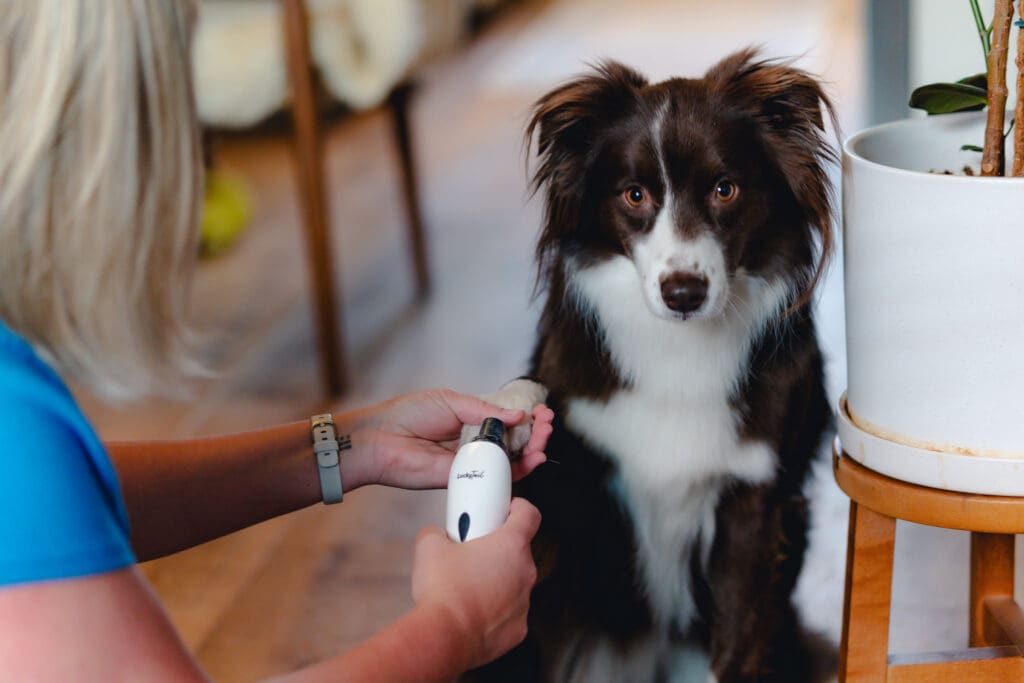
A dog nail grinder is a dremmel that you use to file your dog’s nails down. It’s generally considered easier and safer to use, as you don’t run the risk of clipping the quick like you do with dog nail clippers. On the flipside, it can be more challenging to desensitize your dog to the grinder due to noise, vibrations, and just the length of time it takes to file a nails.
Benefits of a nail grinder for dogs:
- Safer to use (less likely to clip the quick).
- No risk of splintering the nail or creating rough edges that can catch on things.
- Easier to “shape” the nail.
Cons of a nail grinder for dogs:
- Takes longer to use
- Dogs may not like the noise/vibrations
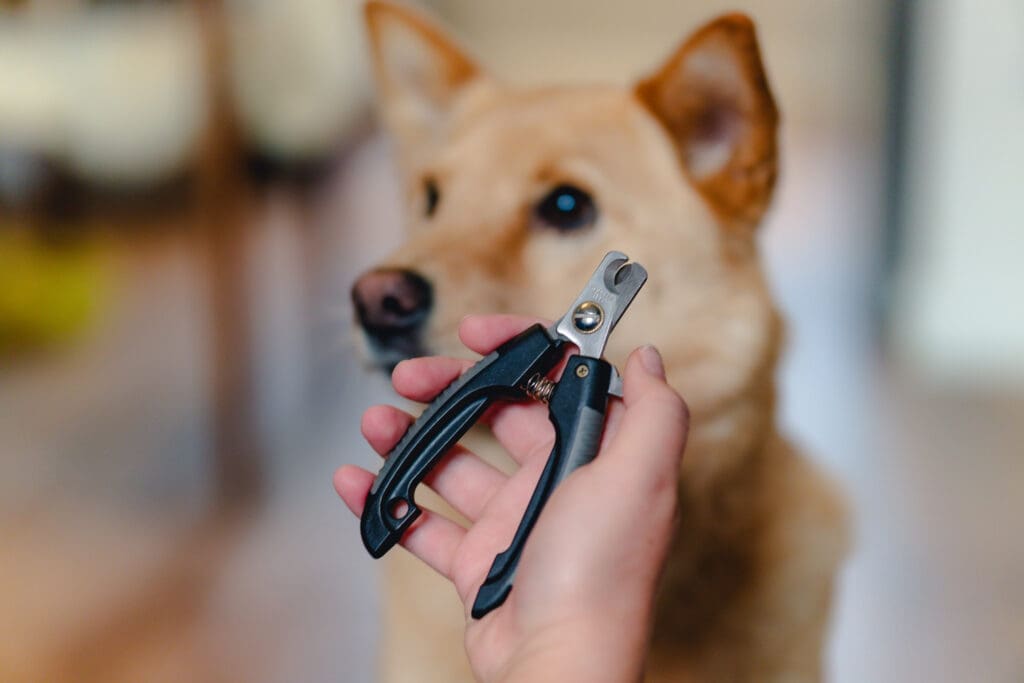
Dog nail clippers come in two styles: guillotine, which slices up-and-down (like a, well, guillotine), and scissor, which slices sideways (like, well, scissors). Clippers are quick and efficent to use, as long as you know what you are doing. It’s important to clip a nail underneath at a 45 degree angle, and it is really important not to cut the nail too short. Clipping the quick is very painful for your dog (think about what it feels like to trim a nail too short), and it causes a lot of bleeding.
Pros of nail clippers for dogs:
- Quick
- More efficient for long nails
Cons of nail clippers for dogs:
- Steeper learning curve to use
- Higher risk of clipping the quick
Nail Grinders for Dogs vs Nail Clippers for Dogs
I already mentioned that both nail grinders and nail clippers have a place in my toolkit. I like to use dog nail clippers (these are the ones I use) for a first pass, especially if I haven’t trimmed my dog’s nails in awhile or if my dogs are more restless. The clippers enable me to trim to the right length a lot quicker than a grinder, which is helpful if your dog doesn’t want to sit still for very long (some days be like that).
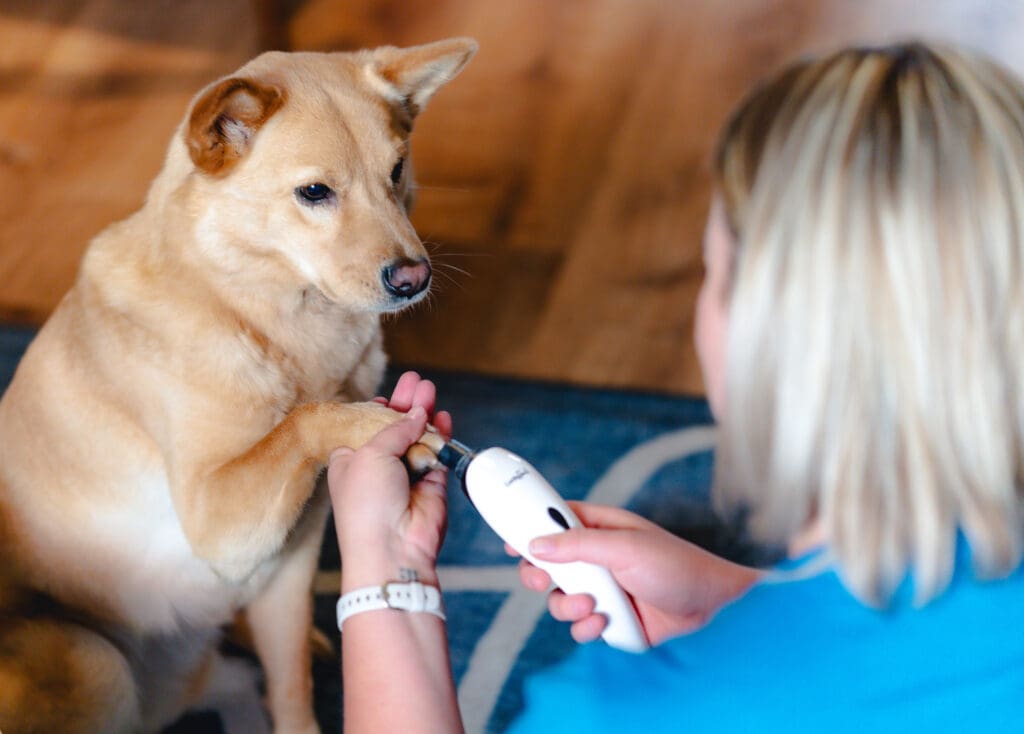
However, I also like to come in with the dog nail grinder to smooth over any rough edges and “fine-tune” the length. I am always ultra-conservative on how much nail I clip off, and the grinder is a great way to shave a little more without worrying so much about the quick. I also use the grinder for more frequent “maintenance” trims. Recently, I tried this nail grinder from LuckyTail, and I really love it. It works quickly, but the motor is a lot quieter than other nail grinders. It’s also ergonomic and easy to handle, AND it’s rechargable (yay for not running out of batteries right when you need it).
Another reason I like to keep both dog nail clippers and a nail grinder on hand is because sometimes, for whatever reason, my dogs will tolerate one much better than the other. Although most of the time they are fine with the grinder, especially the Luckytail, every now and then they just don’t want to tolerate it. On those days, having clippers to get the job done quickly and efficiently is key.
Dog Nail Clippers vs. Nail Grinder (Pros & Cons)
FAQ
How to choose a Dog Nail Grinder?
When choosing a dog nail grinder, consider its sound level for your dog’s comfort. Gradually introduce your dog to the sound until they are accustomed to it. Although it’s easier to cut the quick with clippers, it can still be done with grinders. If the loud noises cause excessive anxiety, your dog might be better off with clippers.
Is a nail grinder better than a clipper?
Grinders are quicker than filing and leave a smoother nail than clippers. However, they are louder than clippers and dogs may not like the vibrating sensation. You can use human nail clippers on young puppies’ nails if you feel confident.
Can a dog’s nails be cut with a clipper?
Yes, you can cut a dog’s nails with a clipper. However, it might be easier to cut the quick with a grinder. Make sure you don’t grind your dog’s nails too short. If you prefer the smooth look given by grinders, you can still use a clipper to cut the nail and a grinder to smooth the nail.
Are Dog Nail clippers quiet?
» Fast and Quiet. Scissor- and guillotine-style dog nail clippers are exceptionally quiet when you compare them with the buzzing of nail grinders. That is why some dogs are less anxious about clippers than grinders, where the latter can scare them with the buzzing sound.
Are Dog Nail clippers cheaper than nail grinders?
Dog nail clippers are usually much cheaper than nail grinders. The final price of clippers will vary depending on the quality and brand, but none of them will be more expensive than grinders. In most cases, cheap clippers are not a good choice – they aren’t sharp enough and may even hurt your dog.
Are guillotine nail clippers good for dogs?
Scissor- and guillotine-style dog nail clippers are exceptionally quiet when you compare them with the buzzing of nail grinders. That is why some dogs are less anxious about clippers than grinders, where the latter can scare them with the buzzing sound. Clipping a dog’s nails is also very quick and lasts only a couple of seconds. » Affordable.
Is it better to clip or grind dog’s nails?
What is the best tool to cut dog nails?
A widely recommended dog nail clipper is the Millers Forge Stainless Steel Dog Nail Clipper. Another top choice is the Safari Professional Nail Trimmer. For dogs that are sensitive to traditional clippers or if you want to smooth out rough edges after clipping, the Dremel Nail Grinding Kit is a great alternative.
Do dog nail grinders actually work?
YES, A grinding tool can give a smoother finish to the nail than the clipper and works well on thick nails. When working with dogs that have black nails, there is less chance of hitting the quick because owners feel that they have more control in the trimming process .
Is nail grinding painful for dogs?
Nail grinders do not inherently hurt dogs, but pain can occur if the grinder’s friction creates heat, if the operator hits the quick (the sensitive part of the nail with blood vessels and nerves), or if the dog is stressed by the noise, vibration, or unfamiliar sensation. Using a quality grinder, exposing the dog to it gradually with positive reinforcement, and moving the grinder constantly to avoid heat are crucial to prevent pain and ensure a comfortable experience.