
Small dogs can be a lot of fun. They make great companions and travel buddies, and are easy to exercise and clean up after. So, if small is good, wouldn’t smaller be even better? Not so fast.
Despite their popularity, purchasing a “teacup” puppy supports unethical breeding practices and results in teacup dogs that can have some truly intense health problems.
Ever looked at those itty-bitty pups that fit in a coffee cup and thought, “I need one in my life”? I get it – they’re adorable! But as someone who’s researched these tiny pooches extensively, I gotta ask the tough question: are micro teacup dogs healthy? The short answer? Not usually. Let me break down why these pocket-sized pups often face serious health challenges and what you should know before bringing one home.
What Exactly Are Micro Teacup Dogs?
First things first – “teacup” isn’t an official dog breed classification It’s a marketing term used by breeders to describe extremely small dogs, typically weighing under 4 pounds when fully grown These tiny pups are usually bred from already small breeds like
- Yorkshire Terriers
- Chihuahuas
- Pomeranians
- Maltese
- Toy Poodles
- Shih Tzus
- Pugs
While standard Yorkies might weigh 4-7 pounds and Chihuahuas 3-6 pounds, teacup versions can weigh significantly less. Some breeders even mix these small breeds to create “designer” teacup puppies like Pomchis (Pomeranian-Chihuahua) or Maltipoos (Maltese-Poodle).
The Concerning Breeding Practices
Here’s where things get problematic. To create dogs this tiny, breeders often use methods that prioritize size over health:
-
Breeding runts with runts They’ll specifically breed the smallest puppies from different litters which are often the least healthy.
-
Inbreeding: Some unethical breeders use close relatives to maintain the small size, concentrating genetic problems.
-
Malnutrition to stunt growth: In the most disturbing cases, some breeders deliberately underfeed puppies or pregnant mothers to keep the dogs smaller.
As one vet tech with 20+ years of experience put it: “Unscrupulous breeders prioritize size and appearance over health.” Reputable breeders aim for healthy dogs that meet breed standards – not dogs that are unnaturally small.
Health Problems Common in Micro Teacup Dogs
I wish I could say these tiny pups were just small versions of regular dogs, but the reality is they often face numerous health challenges:
Severe Hypoglycemia
Teacup puppies struggle to maintain normal blood sugar levels due to their tiny size. This can lead to:
- Mental dullness
- Weakness
- Muscle tremors
- Seizures
- Even death in severe cases
Some owners of teacup puppies report needing to feed them every 2 hours (yes, even overnight!) until they’re a year old to prevent dangerous drops in blood sugar.
Fragile Bones & Physical Injuries
These dogs literally have bird-like bones that break easily. Even jumping off a couch can result in fractures. Their small size also makes them vulnerable to:
- Being stepped on
- Getting crushed under furniture
- Falls from minimal heights
- Injuries during normal play
Hydrocephalus
That dome-shaped head many teacup dogs have? It’s often related to hydrocephalus (water on the brain), which can cause:
- Blindness
- Seizures
- Behavioral changes
- Neurological problems
Liver Shunts
Abnormal blood vessels prevent blood from entering the liver properly, leading to:
- Behavioral abnormalities
- Poor growth
- Digestive issues
- Seizures after eating
Dental Problems
Their tiny mouths simply don’t have enough room for normal teeth, resulting in:
- Crowded teeth
- Retained baby teeth
- Severe dental disease at young ages
- Difficulty eating
Heart & Respiratory Issues
Many teacup dogs develop heart problems like degenerative mitral valve disease or have malformed tracheas that collapse easily.
Difficulty Regulating Body Temperature
Their tiny bodies lose heat rapidly, making them susceptible to hypothermia even in mildly cool environments.
Real-World Challenges of Owning a Teacup Dog
The problems don’t end with health issues. Owning such a tiny dog presents practical challenges:
Medication Difficulties
Most dog medications are formulated for dogs weighing at least 5 pounds. Teacup dogs often need:
- Custom-compounded medications ($$$$)
- Off-label use of existing meds (risky)
- Extremely precise dosing (easy to overdose)
Anesthesia Risks
Safely anesthetizing a 2-pound dog for even routine procedures like dental cleanings or spaying/neutering is incredibly challenging. Everything from:
- IV catheter placement
- Temperature regulation during surgery
- Drug dosing
- Recovery monitoring
becomes much more complicated and risky.
Quick Deterioration When Sick
When teacup dogs get sick, they deteriorate FAST. Their tiny bodies have no reserves to fight illness, and they can go from seemingly fine to critical condition in hours.
Should You Get a Teacup Dog?
I’m not gonna tell you what to do, but I will share what the experts say:
“Purchasing a teacup puppy supports unethical breeding practices and results in teacup dogs that can have some truly intense health problems.” – PetMD
“I’m a veterinary technician with over 20 years of clinical experience… I just don’t have the heart to recommend them.” – Jenna Stregowski, RVT
If you’re absolutely set on having a small dog, consider these healthier alternatives:
-
Adopt a naturally small dog that meets breed standards (like a standard Chihuahua or Yorkie)
-
Look for the runt of a litter from a reputable breeder – still small but bred ethically
-
Check shelters and rescues for small adult dogs who need homes
-
Research toy breeds that are naturally small but bred to healthy standards
The Cost Factor
Let’s talk money, because teacup dogs aren’t just costly to your heart when they get sick – they’re expensive for your wallet too.
While a teacup puppy might cost $1,000-$5,000 upfront (sometimes more!), the real costs come later:
- Frequent vet visits for ongoing health issues
- Specialty diets to manage hypoglycemia and other conditions
- Emergency care (which happens more often with these fragile pups)
- Custom medications that must be specially formulated
One teacup dog owner I know spent over $8,000 in the first year just on medical care – more than four times what she paid for the dog!
The Ethical Question
There’s also an ethical dimension here. When we purchase dogs bred primarily for extreme smallness rather than health, we’re essentially saying: “I value cuteness over this animal’s wellbeing.”
These dogs didn’t ask to be bred this way. They often live shorter lives with more health problems and pain than their standard-sized counterparts. As one vet I interviewed put it: “It’s like breeding humans to be the size of dolls and then wondering why they have health problems.”
What If You Already Have a Teacup Dog?
If you already have one of these tiny pups, don’t panic! Here’s what you can do to give them the best life possible:
-
Find a vet experienced with toy breeds – not all vets are comfortable treating such small animals
-
Feed them frequently – small, high-quality meals 4-6 times daily
-
Keep them warm – sweaters aren’t just fashion statements for these dogs; they’re necessities
-
Dog-proof your home extensively – more thoroughly than you would for a standard-sized dog
-
Learn canine CPR and first aid – you’ll be the first responder if something goes wrong
-
Consider pet insurance – it might save you thousands in the long run
Final Thoughts
I know these tiny dogs are heart-meltingly cute. I’ve definitely stopped to “awww” at photos of them myself! But after researching this topic extensively and talking with veterinary professionals, I’ve learned that what seems adorable can often mask serious suffering.
The kindest thing we can do as dog lovers is to support ethical breeding practices that prioritize health over extreme physical traits. Standard toy breeds are already plenty small – a 6-pound Yorkie or Chihuahua is still a tiny companion that can give you all the cuteness of a small dog without the ethical concerns and health problems.
What do you think? Have you had experience with teacup dogs? I’d love to hear your thoughts in the comments!
FAQs About Micro Teacup Dogs
How long do teacup dogs live?
While standard small breeds often live 12-15 years, teacup versions typically have shorter lifespans of 7-12 years due to health complications.
Are there any healthy teacup dogs?
While some individuals may avoid major health issues, as a group, they’re significantly more prone to health problems than standard-sized dogs of the same breeds.
Why are teacup dogs so expensive?
Their high price tags come from supply and demand – people want them despite the health risks, and they’re difficult to breed (many don’t survive to adulthood).
Can teacup dogs have puppies?
Most shouldn’t be bred. Pregnancy is extremely dangerous for females this small, with high mortality rates for both mother and puppies.
Do teacup dogs need special food?
Yes, they often require specially formulated high-calorie foods and more frequent feeding schedules to prevent hypoglycemia.
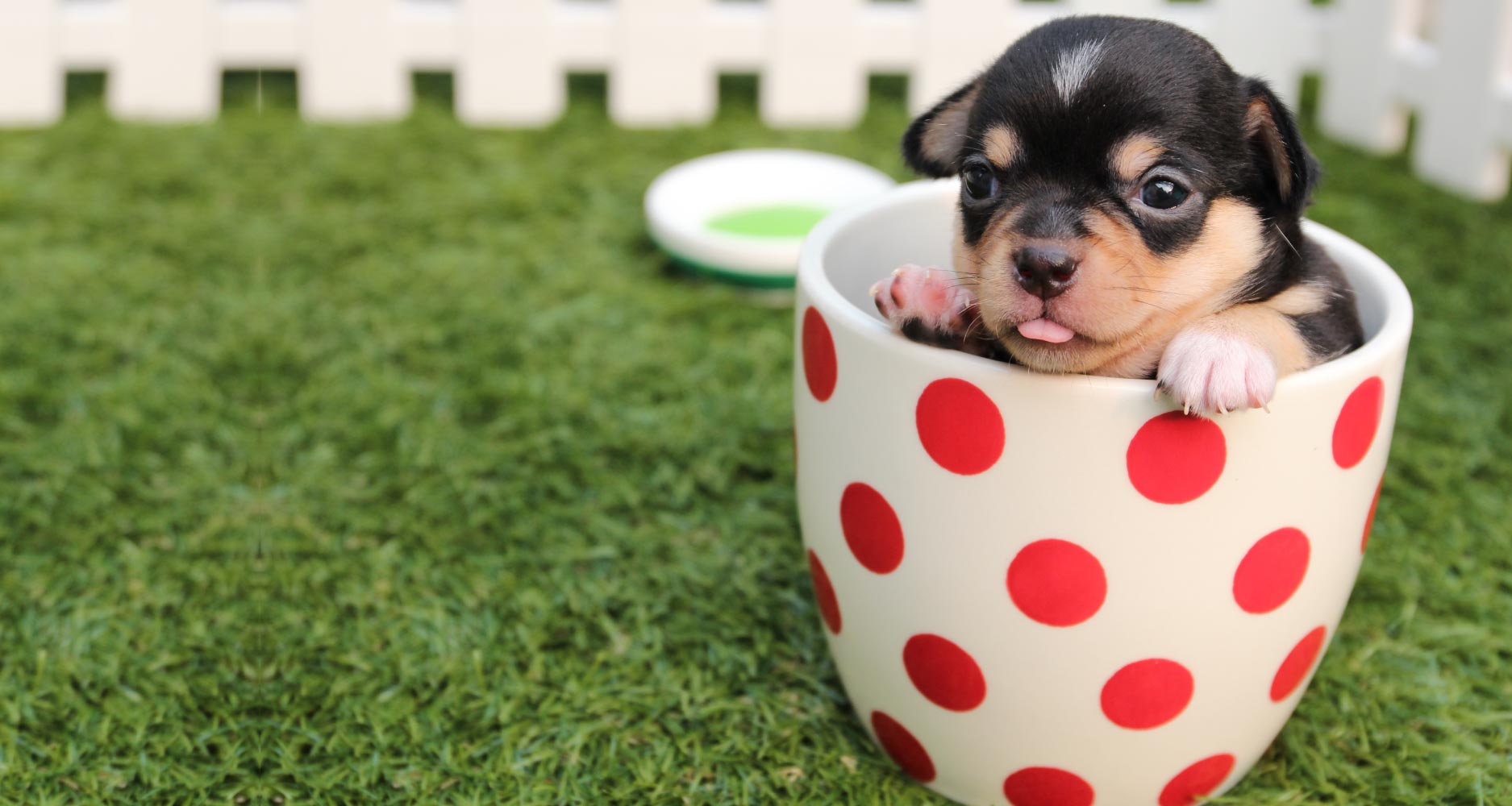
Teacup Dog Health Problems
Many of these health problems are found in small breed, not just teacup, dogs. Unfortunately, research is still ongoing into whether they occur more frequently the tinier a dog is bred to be, but the chances for these health problems are elevated during poor breeding practices.
Teacup puppies are prone to developing dangerously low blood sugar levels (hypoglycemia), which can lead to mental dullness, weakness, muscle tremors, seizures, and death. To help prevent hypoglycemia, pet parents may need to feed their teacup puppies every two hours (yes, even overnight!) until they are 1 year old.
That “cute” dome-like head that many teacup dogs have can be related to a serious congenital anomaly called hydrocephalus (water on the brain). Extra pressure within the skull damages the brain, leading to blindness, behavioral changes, and other neurologic problems. Surgery may be necessary to create a path for fluid to drain away from the brain.
Portosystemic (liver) shunts are abnormal blood vessels that prevent blood from entering the liver. Common clinical signs include:
- Behavioral abnormalities and seizures that get worse after eating
- Poor growth
- Vomiting
- Diarrhea
- An accumulation of fluid within the abdomen
Most liver shunts in teacup puppies and dogs are caused by numerous tiny vessels that can’t be closed surgically. Medical management may improve symptoms but won’t cure these types of liver shunts.
Teacup dogs have a tiny mouth, so their teeth typically do not grow in normally. This can lead to crowding and retained baby teeth, both of which encourage plaque and tartar buildup and increase a dog’s risk of gingivitis, periodontal disease, and other dental problems.
Teacup dogs are at a higher-than-average risk of developing collapsing trachea. This is when the muscular portion of the windpipe weakens over time and sags, narrowing the passageway for air and leading to a cough that sounds a little like a goose honk. Medications and sometimes surgery are necessary to keep dogs with this condition comfortable.
Degenerative mitral valve disease (DMVD) is very common in teacup dogs. Symptoms tend to develop in middle or older age as the dog’s mitral valve (the valve that separates the left atrium and left ventricle in the heart) thickens, weakens, and doesn’t work well anymore.
Dogs with DMVD generally have a heart murmur and can develop coughing, trouble breathing, an inability to exercise, weakness, and congestive heart failure. Medications to improve heart function will often help a dog’s symptoms but won’t cure the underlying problem.
Some types of orthopedic diseases, such as luxating patella and Legg-Calvé-Perthes disease, are common in teacup dogs. Surgery becomes necessary when pain-relieving and anti-inflammatory medications, physical therapy, and other treatments fail to keep a dog comfortable.
Problems With Breeding Teacup Dogs
A dog breed’s ideal weight range is important to understand. Reputable breeders try to produce dogs that adhere as closely as possible to their breed standard. They pick the best dogs to take part in their breeding programs and make partner matches that have the greatest chance of producing puppies that are healthy and likely to succeed in the show ring.
Breeders of teacup dogs, on the other hand, are laser-focused on one thing: size. Other concerns, including the dog’s health, fall by the wayside as they simply breed the smallest females to the smallest males so they can sell tiny puppies for high prices. This makes it easy for significant health problems to be passed down from parent to puppy.