
So, why do dogs magically become quieter when wearing a harness? Well, it’s not quite magic, but rather the result of increased comfort and control. Harnesses distribute pressure more evenly across the body, reducing stress and discomfort that can lead to excessive pulling or vocalization. In addition, the wrap around the dog’s body of the dog harness adds a sense of security that can make some dogs feel more relaxed and less reactive to external stimuli.
Have you ever noticed your furry friend suddenly chilling out when you put their harness on? You’re not alone! Many dog owners have observed this fascinating behavior change and wondered – does a harness actually calm a dog? As someone who’s gone through countless walks with my own anxious pup, I’ve definitely wondered about this myself.
In this article, I’ll dive deep into why dogs often become more relaxed when wearing a harness, the science behind this calming effect, and how you can use this knowledge to help your own four-legged companion feel more secure.
The Calming Effect: It’s Not Your Imagination
Many pet parents have noticed their previously hyperactive dog suddenly transform into a mellower version of themselves once a harness goes on. This isn’t just coincidence – there’s actually some solid reasoning behind this behavior change.
According to research the majority of dogs do experience a calming effect when wearing a properly fitted harness. But why exactly does this happen?
Why Does a Harness Calm My Dog?
1. The Power of Gentle Pressure
One of the main reasons harnesses can calm dogs is through the application of gentle, consistent pressure across their body This principle works similarly to
- Swaddling a baby
- Using a weighted blanket for people with anxiety
- The calming effect of a tight hug
When a harness distributes pressure evenly across your dog’s chest and torso, it activates various pressure receptors in your dog’s body. These receptors send signals to the brain that trigger the release of endorphins – your dog’s natural feel-good chemicals! This physical sensation can significantly reduce stress and increase relaxation.
2. Security and Comfort: Creating a Safe Zone
For many dogs, especially those on the anxious side, a harness provides a sense of security. The snug fit around their body mimics the feeling of being held or embraced, creating what I like to call a “portable safe zone” for your pup.
As one dog behavior specialist explained, “A harness wraps securely around a dog’s body, providing a gentle, constant embrace. This cozy sensation creates a sense of security, similar to a hug from a loved one.”
3. Association with Positive Experiences
Your dog might calm down when wearing a harness simply because they associate it with something positive! If your dog loves going for walks (and let’s face it, most dogs do!), they’ll quickly connect the harness with this enjoyable activity.
This positive association can trigger a calm, happy state as your dog anticipates the fun that’s about to happen. Some dogs might even see the harness as a signal that they’re about to receive treats or rewards if that’s been part of their training experience.
4. Better Control Without Discomfort
For dogs that tend to pull on leashes, traditional collars can cause significant discomfort around the neck. This physical discomfort can lead to stress and anxiety during walks.
A harness distributes pressure more evenly across the chest and shoulders instead of concentrating it on the sensitive neck area. When your dog feels more physically comfortable, they’re naturally calmer.
Thundershirt Comparison: Similar Principles at Work
If you’re familiar with Thundershirts (those wrap-around garments designed to calm anxious dogs during storms or fireworks), you might notice that harnesses work on similar principles. Both provide:
- Gentle, consistent pressure
- A snug fit around the torso
- A feeling of security and protection
While harnesses aren’t specifically designed as anxiety tools like Thundershirts are, they can produce comparable calming effects for many dogs, especially those with mild anxiety or excitability issues.
Not All Dogs React the Same Way
It’s important to note that while many dogs feel calmer in a harness, not all dogs will have this reaction. Some factors that might influence your dog’s response include:
- Their individual personality and temperament
- Previous experiences with harnesses (positive or negative)
- How well the harness fits
- The specific design of the harness
Some dogs might actually become more excited when they see a harness because they strongly associate it with walks. Others might initially feel uncomfortable if they’re not used to wearing one.
Choosing the Right Harness for Maximum Calming Effect
If you’re hoping to take advantage of the potential calming benefits of a harness, choosing the right style and fit is crucial. Here’s what to look for:
| Feature | Why It Matters |
|---|---|
| Proper size | Too tight causes discomfort; too loose won’t provide the beneficial pressure |
| Quality materials | Soft, breathable fabrics prevent irritation |
| Even pressure distribution | Spreads the calming effect across the body |
| Adjustable straps | Allows for customized fit as your dog grows or changes weight |
| Padded chest piece | Extra comfort in a high-pressure area |
I personally recommend Y-shaped or H-shaped harnesses for the best calming effect, as they tend to distribute pressure more evenly than other styles.
How to Help Your Dog Accept a Harness
For some dogs, especially those who haven’t worn a harness before, there might be an adjustment period. Here’s how I helped my own dog get comfortable with his harness:
- Introduce gradually – Let your dog sniff and explore the harness before trying to put it on
- Use positive reinforcement – Treats, praise, and play sessions while introducing the harness
- Practice makes perfect – Put the harness on for short periods at first, gradually increasing time
- Associate with fun – Initially use the harness just before enjoyable activities
- Proper adjustment – Make sure it’s snug but not tight (you should be able to fit two fingers between the harness and your dog)
Beyond the Harness: Other Ways to Keep Your Dog Calm
While a harness can be a great tool for promoting calmness, it works best as part of a comprehensive approach to your dog’s wellbeing. Consider combining harness use with:
- Regular exercise appropriate for your dog’s breed and energy level
- Consistent training using positive reinforcement
- Enrichment activities to keep their mind engaged
- A predictable daily routine
- Calming supplements (if recommended by your vet)
Common Questions Dog Owners Ask
Will a harness help my anxious dog on walks?
Yes! Many dogs with mild to moderate anxiety can benefit from wearing a harness during walks. The even pressure distribution and increased sense of security can help reduce anxiety symptoms and make walks more enjoyable for both of you.
Why does my dog behave better with a harness on?
Your dog might behave better because:
- They feel more secure and less anxious
- The harness gives you better control without causing discomfort
- They understand their role better when wearing a harness
- The gentle pressure has a naturally calming effect
Can I leave the harness on my dog all day?
While harnesses are generally safe, it’s not recommended to leave one on 24/7. Extended wear can cause:
- Skin irritation or chafing
- Hair matting or loss
- Potential pressure sores
- Overheating in warm weather
It’s best to put the harness on for walks and other outings, then remove it when your dog is relaxing at home.
My dog gets more excited with a harness – what’s wrong?
Nothing’s wrong! Some dogs simply associate harnesses strongly with walks and get excited rather than calm. This is especially common in high-energy breeds or young dogs. You might need to work on calm behavior before walks using training techniques rather than relying solely on the harness for a calming effect.
My Personal Experience
When I first got my rescue dog Jake, he was super anxious on walks – pulling, barking at everything, and generally stressed out. Switching from a collar to a padded harness made a HUGE difference in his behavior! Within a few walks, he was noticeably calmer and more focused on enjoying our time together rather than reacting to every little thing.
I’ve found that putting his harness on about 5 minutes before we actually go for a walk gives him time to transition mentally into “walk mode” and helps keep his excitement levels manageable. It’s like his little security blanket!
Final Thoughts: Harnesses as Calming Tools
So, does a harness calm a dog? For many dogs, absolutely yes! The combination of gentle pressure, increased security, positive associations, and improved physical comfort can create a significantly calming effect.
While not a cure-all for serious anxiety issues, a well-fitted harness can be an effective tool in your kit for helping your dog feel more secure and relaxed, both during walks and in other potentially stressful situations.
Have you noticed your dog calming down when wearing a harness? I’d love to hear about your experiences in the comments below!
Remember, every dog is unique, and what works for one might not work for another. Always observe your individual dog’s response and consult with a veterinarian or certified dog trainer if you have concerns about anxiety or behavior issues.
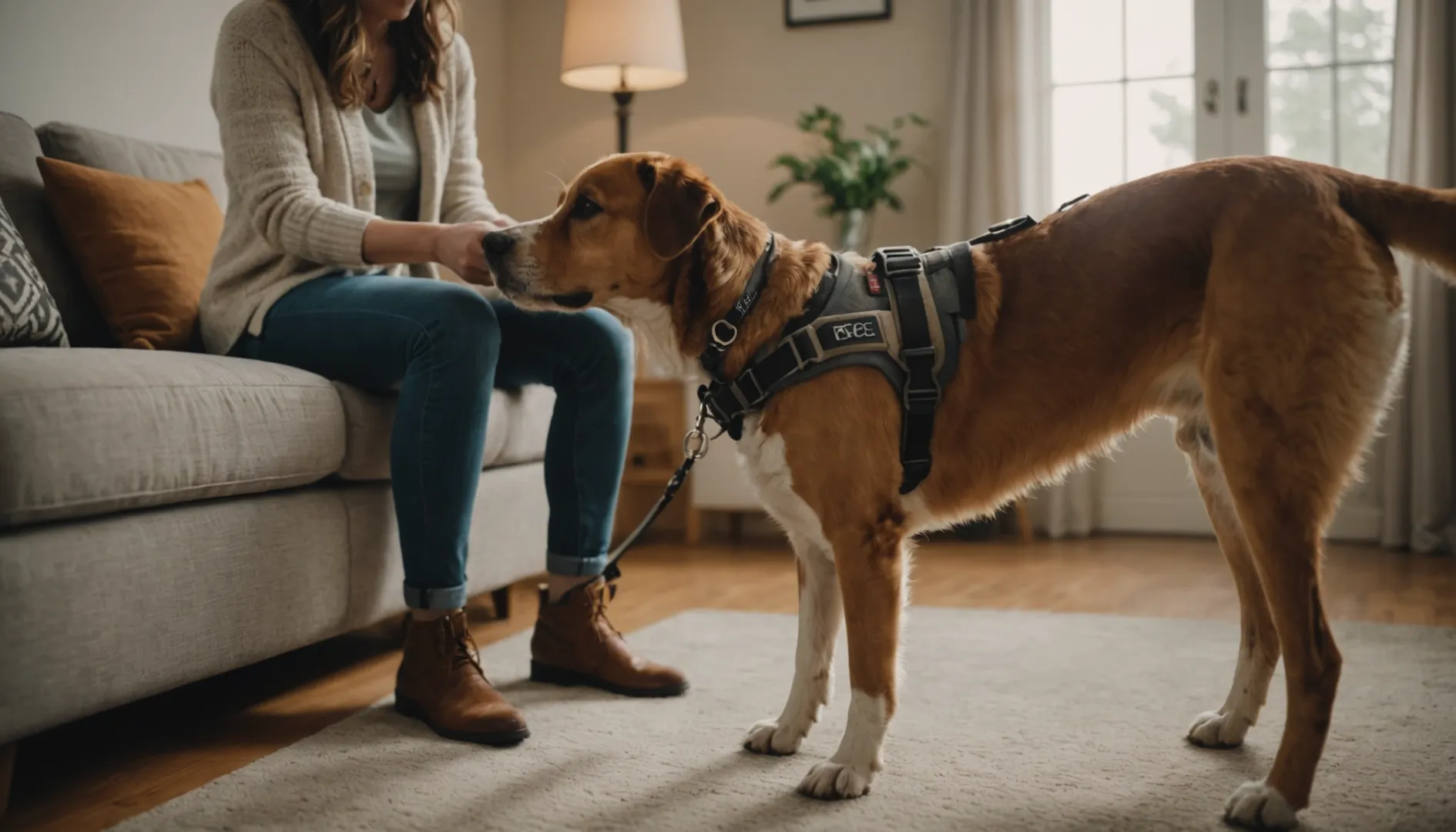
Which One Dog Harnesses Quiet Dogs?
QQPETS Front-clip harnesses, where the leash attaches to the front of the chest, can discourage pulling by redirecting the dog’s attention towards the handler. Additionally, harnesses with padding and adjustable straps provide comfort and minimize discomfort, promoting a quieter walking experience.
Why Dogs Are Quieter After Using a Dog Harness
- Reduced Anxiety: Harnesses can make dogs feel secure and comfortable, lessening anxiety and stress during walks, which can lead to quieter behavior.
- Less Discomfort: Since harnesses prevent the discomfort of pulling against a collar, dogs may not feel the need to react as much, resulting in calmer behavior.
- Improved Behavior Through Training: Harnesses aid in effective training to mitigate pulling and unruly behavior, contributing to a quieter and more manageable dog.