
AKC is a participant in affiliate advertising programs designed to provide a means for sites to earn advertising fees by advertising and linking to akc.org. If you purchase a product through this article, we may receive a portion of the sale.
On warm days spent outdoors, it’s not uncommon to catch your dog lapping up a bit of pool water. But is it safe for dogs to drink pool water? Here’s what to know if you find your pup consuming chlorine.
Is Your Pup’s Pool Habit More Dangerous Than You Think?
As the summer heat cranks up, many of us head to the pool with our four-legged friends Nothing beats watching your dog splash around and have fun in the water! But if you’ve ever caught your furry buddy taking big gulps from the pool, you might have wondered can dogs die from drinking pool water?
I’ve been there too. My Lab mix Bailey loves nothing more than swimming on hot days, and she inevitably drinks some pool water during her aquatic adventures. It’s had me worried enough to do some serious research into this topic.
The good news? In most cases, a small amount of pool water won’t harm your dog. But there are definitely risks you should know about – from mild tummy troubles to more serious conditions that could potentially be life-threatening.
Let’s dive into everything you need to know about dogs and pool water safety!
The Truth About Dogs Drinking Pool Water
First things first: drinking small amounts of properly chlorinated pool water is generally safe for dogs. Most swimming pools maintain chlorine at a level that’s low enough to not cause immediate harm if your dog takes a few laps.
However, this doesn’t mean it’s something you should encourage. There are several potential issues that can arise:
Chlorine Concerns
Chlorine is the most common chemical used to keep pools clean and free from bacteria. It contains sodium hypochlorite, which at high concentrations can be harmful.
- Diluted chlorine (what’s in your pool) is generally safe in small amounts
- Concentrated chlorine (tablets, liquid chlorine) is extremely dangerous and potentially fatal if ingested
If your pool’s chlorine levels are properly balanced, a few sips probably won’t hurt your dog. But excessive drinking can lead to problems.
Water Intoxication Risk
One of the more serious concerns isn’t actually about chlorine at all – it’s about the quantity of water consumed.
Water intoxication (also called hyponatremia) happens when a dog drinks too much water too quickly. This dilutes the sodium in their bloodstream to dangerous levels. Though rare, this condition can be fatal if not treated quickly.
Signs of water intoxication include:
- Lethargy or loss of coordination
- Bloating
- Vomiting
- Glazed eyes
- Dilated pupils
- Pale gums
- Excessive drooling
- Seizures (in severe cases)
Gastrointestinal Issues
The most common problem from drinking pool water is simple digestive upset. The chlorine can irritate your dog’s stomach, leading to:
- Vomiting (sometimes with blood if severe)
- Diarrhea
- Reduced appetite
- Excessive drooling
So Can Dogs Actually Die From Drinking Pool Water?
The direct answer is: yes, but it’s very rare when talking about properly maintained pools.
Death from drinking pool water would typically occur in these scenarios:
- Water intoxication – When a dog drinks excessive amounts very quickly
- Ingestion of concentrated pool chemicals – If your dog somehow got access to undiluted chlorine tablets or liquid
- Severely imbalanced pool water – Pools with extremely high chlorine levels
- Untreated pool water issues – Pools with algae, parasites or harmful bacteria due to inadequate chlorine
The most dangerous scenario is definitely the ingestion of concentrated pool chemicals. Chlorine tablets contain high concentrations of sodium hypochlorite, which is corrosive and can cause severe damage to a dog’s digestive tract if ingested.
My Dog Drank Pool Water – What Should I Do?
If you catch your dog taking a few laps from the pool, don’t panic! Here’s what to do:
For Small Amounts of Pool Water:
- Redirect your dog’s attention
- Offer fresh, clean water instead
- Monitor them for the next 24 hours for any signs of illness
When to Call the Vet:
Contact your veterinarian immediately if your dog shows any of these symptoms after drinking pool water:
- Repeated vomiting or diarrhea (especially if contains blood)
- Refusal to eat for more than 24 hours
- Lethargy or weakness
- Difficulty breathing
- Signs of dehydration
- Unusual behavior changes
If you suspect your dog has ingested concentrated pool chemicals or is showing signs of water intoxication, this is an emergency situation. Don’t wait – call your veterinarian or the Pet Poison Helpline (855-764-7661) right away.
Beyond Chlorine: Other Pool Water Concerns
While chlorine gets most of the attention, there are other potential risks in pool water:
Bromine Pools
Some pools use bromine instead of chlorine. According to the American Kennel Club, bromine is actually safer for pets overall, though more expensive.
Salt Water Pools
Salt water pools still contain chlorine (they just produce it differently), so the risks are similar. However, the salt content is much lower than ocean water, so salt toxicity is rarely a concern.
Algae and Bacteria
Untreated or poorly maintained pools can contain harmful algae, parasites, or bacteria. These can cause serious illness in dogs who drink the water.
Blue-green algae is particularly dangerous and has been known to kill dogs who swim in and swallow contaminated water. This is more common in natural bodies of water but can occur in neglected pools as well.
Preventing Your Dog from Drinking Pool Water
We know prevention is better than cure! Here are some tips to keep your pup from developing a pool-drinking habit:
- Always provide fresh water – Keep a bowl of clean, fresh water near the pool area
- Use a pet water fountain – Some dogs prefer moving water, which might be why they’re attracted to the pool
- Training – Teach basic commands to redirect your dog when they start drinking from the pool
- Supervised swimming only – Never leave your dog unattended around the pool
- Take breaks – Regular rest periods away from the pool can prevent excessive drinking
- Store pool chemicals securely – Keep all chlorine products locked away where your dog cannot access them
Comparing Pool Water to Other Water Hazards
To put things in perspective, let’s compare pool water to other water sources your dog might encounter:
| Water Source | Risk Level | Main Concerns |
|---|---|---|
| Properly maintained pool | Low to Moderate | Mild GI upset, water intoxication (rare) |
| Ocean/salt water | Moderate to High | Salt toxicity, which can be fatal |
| Lakes/ponds | Moderate to High | Blue-green algae, parasites, bacteria |
| Puddles/standing water | High | Leptospirosis, parasites, chemicals from runoff |
Ocean water is actually more immediately dangerous than pool water. Even a few mouthfuls of salt water can cause saltwater poisoning, which can lead to severe dehydration, brain damage, and even death.
The Final Verdict
So, can dogs die from drinking pool water? The answer is technically yes, but with proper pool maintenance and supervision, the risk is very low. Most cases result in nothing more than a mild tummy upset.
The real dangers come from:
- Drinking excessive amounts (water intoxication)
- Accessing concentrated pool chemicals
- Swimming in poorly maintained pools
I’ve learned that the key is balance – allowing Bailey to enjoy her swim time while making sure she has plenty of fresh water available and taking regular breaks. After all, summer fun should be safe fun!
Key Takeaways to Keep Your Dog Safe
To wrap things up, here are the most important points to remember:
- Small amounts of properly chlorinated pool water are generally safe
- Always provide fresh drinking water nearby
- Never leave your dog unsupervised around a pool
- Store pool chemicals securely out of reach
- Know the signs of water intoxication and when to seek veterinary care
- Consider alternatives like bromine if you’re concerned about chlorine
- Keep your pool properly maintained with balanced chemical levels
By following these guidelines, you and your four-legged friend can enjoy many splash-tastic summer days together without worry!
Remember, when in doubt, always consult with your veterinarian about any concerns you have regarding your dog’s health and safety around water. They can provide personalized advice based on your dog’s specific needs and health status.
Have you ever had to deal with a pool-drinking pup? Share your experiences in the comments below!
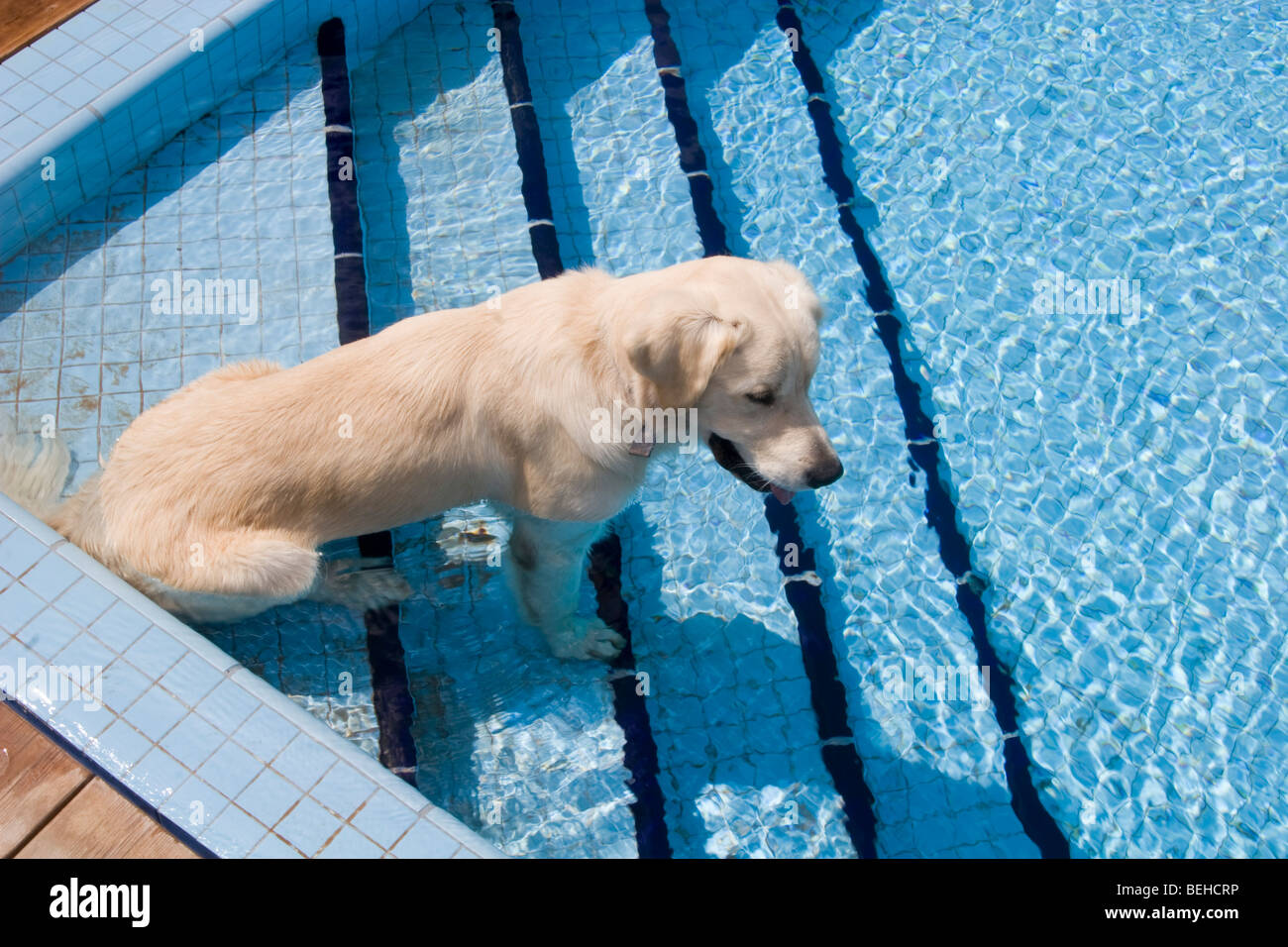
Is Pool Water Safe for Dogs to Drink?
If your dog drinks a small amount of pool water, don’t panic. Chances are your pup will be perfectly fine, especially if your pool’s chlorine levels are at a safe balance. Most swimming pools have a low chlorine level and therefore the water in them won’t usually be harmful to dogs in small amounts.
That said, anything in excess can be a problem. If your dog drinks too much chlorinated water, this can cause irritation, which may lead to vomiting and esophagus erosion.

You may think the less chlorine, the better, right? Think again. Pool water can be dangerous if the chlorine levels are too high or too low. Untreated pool water can contain algae, parasites, and other bacteria. If you find you need to do a chemical shock to rebalance the pool, make sure to keep your dog away until the balance is safe.
One alternative to chlorine is bromine, which is more expensive but safer overall for pets.
The biggest toxic concerns are with chlorine tablets themselves. Make sure to store these in a safe place where your dog cannot access them.
How to Stop Dogs Drinking Pool Water
If you find your dog drinking swimming pool water frequently, here are steps to take.
Your DOG DRINK Water from THE POOL? (What you should know)
FAQ
Are swimming pools bad for dogs?
Most swimming pools have a low chlorine level and therefore the water in them won’t usually be harmful to dogs in small amounts. That said, anything in excess can be a problem. If your dog drinks too much chlorinated water, this can cause irritation, which may lead to vomiting and esophagus erosion.
What happens if a dog drinks pool water?
If your dog drinks pool water and stops eating, or has vomiting and diarrhea, contact your vet or the Pet Poison Helpline for more guidance. To keep dogs safe during pool time, always supervise them, provide fresh drinking water, and store chlorine products and pool toys out of reach. Is Chlorine Safe for Dogs?
Can a dog drink from a swimming pool?
The bottom line is that you should not let your dogs drink directly from swimming pools, beaches, ponds, or lakes. If you suspect your dog has had a drink from toxic water, rinse them off, give them plenty of fresh water, call your vet, and monitor them for any changes.
Can a dog eat untreated pool water?
Untreated pool water can contain algae, parasites, and other bacteria. If you find you need to do a chemical shock to rebalance the pool, make sure to keep your dog away until the balance is safe. One alternative to chlorine is bromine, which is more expensive but safer overall for pets.
Can dogs swim in chlorine?
Chlorine contains an active ingredient called sodium hypochlorite, which is used to clean and disinfect household surfaces and pool water. Chlorine in treated swimming pools is generally safe for dogs to splash and swim in. This is because the chlorine has been diluted to a safe concentration and pH level.
What happens if a dog drinks too much chlorine?
That said, anything in excess can be a problem. If your dog drinks too much chlorinated water, this can cause irritation, which may lead to vomiting and esophagus erosion. You may think the less chlorine, the better, right?
Can dogs get sick from drinking pool water?
What to do if your dog swallows pool water?
There’s no need to panic if your dog drinks a little bit of pool water. Just put a stop to it and make sure to provide fresh water nearby.Jun 30, 2022
What happens if a dog drinks pool water with shock in it?
… chemicals (algicide, pool shock and chlorine tablets) are extremely corrosive, and if ingested will cause severe ulcers in the mouth, throat and esophagusJul 6, 2022