
No animal lover likes to see an animal experiencing pain and suffering, least of all that animals owner. If your beloved dog cant get around well due to a significant leg injury, you need to know whether that injury constitutes a sprain or a fracture — and how to react by pursuing the proper evaluation, treatment, and post-treatment care for each scenario.
However, you might not be able to tell one type of injury from the other at a glance. With that in mind, lets take a closer look at leg sprains and broken legs in dogs.
Have you ever seen your furry friend limping around the house and wondered if they’ve seriously injured themselves? As a dog owner, it’s one of those heart-stopping moments when you suspect your pup might have a broken leg. The question that immediately comes to mind is often: can a dog walk on a broken leg?
The short answer is yes sometimes dogs can walk on a broken leg, but they shouldn’t. Just because they can doesn’t mean they should and it definitely doesn’t mean you should let them.
I’ve had my fair share of doggy emergencies, and I’m here to share everything you need to know about identifying and handling a potential broken leg in your canine companion.
Can Dogs Actually Walk With a Broken Leg?
Surprisingly, yes Dogs can sometimes walk on a broken leg depending on the severity of the fracture This is something many pet owners don’t realize until they’re faced with the situation.
According to veterinary experts, the ability to walk doesn’t rule out a fracture. Dogs are incredibly resilient creatures and will often try to continue their normal activities despite being in pain. They might limp heavily or avoid putting full weight on the affected limb, but many will still attempt to move around.
As the folks at Petcube point out, “If your dog has a broken bone, it’s not likely they will put any weight on the affected limb Depending on the severity of the break and the amount of pain your dog is in, they can still get around, but they will most undoubtedly limp and avoid using the affected limb”
5 Clear Signs Your Dog Has a Broken Leg
It’s not always easy to tell if your dog’s leg is broken or just sprained. Here are the tell-tale signs to watch for:
-
Limping or Refusing to Put Weight on the Leg: This is often the first sign pet owners notice. Your dog might hold the affected limb up completely or touch it to the ground very gingerly.
-
Swelling and Unusual Angle: A broken dog leg may appear swollen or bent at an odd angle. If the leg looks misaligned compared to the other legs, this could indicate a fracture.
-
Vocalization Due to Pain: Your normally quiet pup might suddenly start whining, howling, or whimpering when they move or when the injured area is touched.
-
Behavioral Changes: Dogs in pain often show changes in behavior like aggression (even in normally placid dogs), isolation, or loss of appetite.
-
Visible Bone (Open Fracture): In severe cases, you might actually see bone protruding through the skin. This is an emergency situation requiring immediate veterinary attention!
Marc from DoggySaurus explains, “The most obvious sign of a severely broken leg in a dog is called an open fracture. Particularly unpleasant, open fractures are characterized by the skin splitting open and the bone protruding from the leg.”
Different Types of Broken Bones in Dogs
Not all fractures are created equal. Understanding the type of break can help you better comprehend what your dog is experiencing:
Closed vs. Open Fractures
- Closed fractures: The bone is broken but hasn’t broken through the skin
- Open fractures: The bone has broken through the skin, creating an open wound
Complete vs. Incomplete Fractures
- Complete fractures: The bone is completely broken into two or more pieces
- Incomplete fractures: The bone is cracked but not completely separated
Other Classification Types
- Transverse fractures: Bone broken straight across
- Oblique fractures: Bone broken diagonally
- Comminuted fractures: Bone broken into three or more pieces
- Salter-Harris fractures: Fractures involving the growth plate (common in puppies)
- Articular fractures: Fractures involving a joint
What to Do If Your Dog Breaks a Leg
If you suspect your dog has broken their leg, staying calm is crucial. I know it’s difficult (I’ve been there!), but panicking won’t help your furry friend.
Immediate Steps:
-
Restrict Movement: Keep your dog as still as possible to prevent further injury.
-
Don’t Try DIY Treatment: Never attempt to set the bone yourself or give human pain medications, which can be toxic to dogs.
-
Contact Your Vet ASAP: Call your vet immediately for guidance. As Petcube emphasizes, “The first and most important thing you must do when you suspect your dog has a broken bone is to remain calm… The second thing you need to do if you suspect your dog has a broken bone is to seek veterinary care immediately.”
-
Careful Transportation: When moving your dog to the vet, support the injured limb properly. Use pillows or bulky blankets to stabilize the leg during transport.
-
Apply Ice (If Possible): If your dog tolerates it and you can’t get to a vet immediately, apply an ice pack wrapped in a towel to the area for 10-15 minutes to reduce swelling.
How Vets Diagnose and Treat Broken Legs
When you arrive at the vet, they’ll likely follow this process:
Diagnosis
- Physical examination
- X-rays (possibly under sedation)
- Sometimes consultation with a specialist radiologist
Treatment Options
Treatment depends on the severity and location of the fracture:
-
Medication: Pain management is essential. Your vet will likely prescribe pain medications and anti-inflammatories.
-
Immobilization: The broken bone must be kept stable to heal properly. This might involve:
- Splints or casts for certain fractures
- Surgery with pins, plates, or screws for more complex breaks
- External fixation (a cage-like structure) for some difficult fractures
-
Rest and Recovery: Regardless of treatment method, your dog will need restricted activity during healing.
Jenna Stregowski from The Spruce Pets notes, “Regardless of the treatment method, the dog will need to rest and recover for weeks to months. During this time, the dog should not be permitted to run or jump, no matter how good they feel.”
Healing Time for a Dog’s Broken Leg
The million-dollar question: how long till Fido is back to normal? Well, it varies:
- Puppies: Typically heal faster, often within 2-4 weeks due to their abundance of bone-building cells
- Adult dogs: Usually take about 8-12 weeks to heal
- Senior dogs: May take longer, sometimes 12+ weeks
The type of fracture also affects healing time. Simple fractures heal faster than complex ones, and closed fractures typically heal more quickly than open ones.
Can I Afford Treatment? What If I Can’t?
Let’s be real – treating a broken leg isn’t cheap. Costs can range from several hundred to several thousand dollars depending on the complexity of the break and required treatment.
If you’re facing financial constraints, consider these options:
- Talk to your vet about payment plans
- Contact animal welfare organizations or shelters that offer financial assistance
- Look into CareCredit or similar veterinary financing options
- Check if you qualify for assistance from charities that help with vet bills
- Consider crowdfunding through sites like GoFundMe
As the folks at Petcube suggest: “If you cannot afford treatment for your dog’s broken bone, all is not lost. There are a few things you can do: Chat with your regular vet – they may be able to work out a payment plan; Reach out to clinics and shelters that may also be able to offer payment assistance; Contact charities and rescue organizations – they may be able to provide some financial assistance.”
Recovery: Helping Your Dog Heal
Once treatment begins, your job as a pet parent is to help your dog recover:
- Follow medication schedules exactly as prescribed
- Restrict activity – no running, jumping, or playing
- Keep the cast/splint clean and dry if applicable
- Use a sling or harness to help your dog go potty if needed
- Provide comfortable bedding in an easily accessible spot
- Attend all follow-up appointments to monitor healing progress
Prevention: Keeping Your Dog Safe
While accidents happen, there are ways to reduce the risk of broken legs:
- Keep your dog leashed in unfamiliar or dangerous areas
- Fence your yard securely to prevent escapes
- Use ramps for older dogs getting in/out of vehicles
- Remove hazards like holes in your yard
- Maintain a healthy weight to reduce stress on bones
- Provide proper nutrition for bone health
Final Thoughts
So, can a dog walk on a broken leg? Yes, they might try to, but they absolutely shouldn’t be allowed to. A broken leg is painful and walking on it can cause further damage, complicate healing, and lead to long-term problems.
If you suspect your dog has broken their leg, don’t wait to see if it gets better on its own. Get them to a vet right away. Your quick action could mean the difference between a straightforward recovery and long-term complications.
I’ve seen firsthand how resilient our furry friends can be, but they rely on us to make the right decisions for their health. Be their advocate and get them the help they need!
Have you ever dealt with a dog’s broken leg? What was your experience like? I’d love to hear your stories in the comments below!
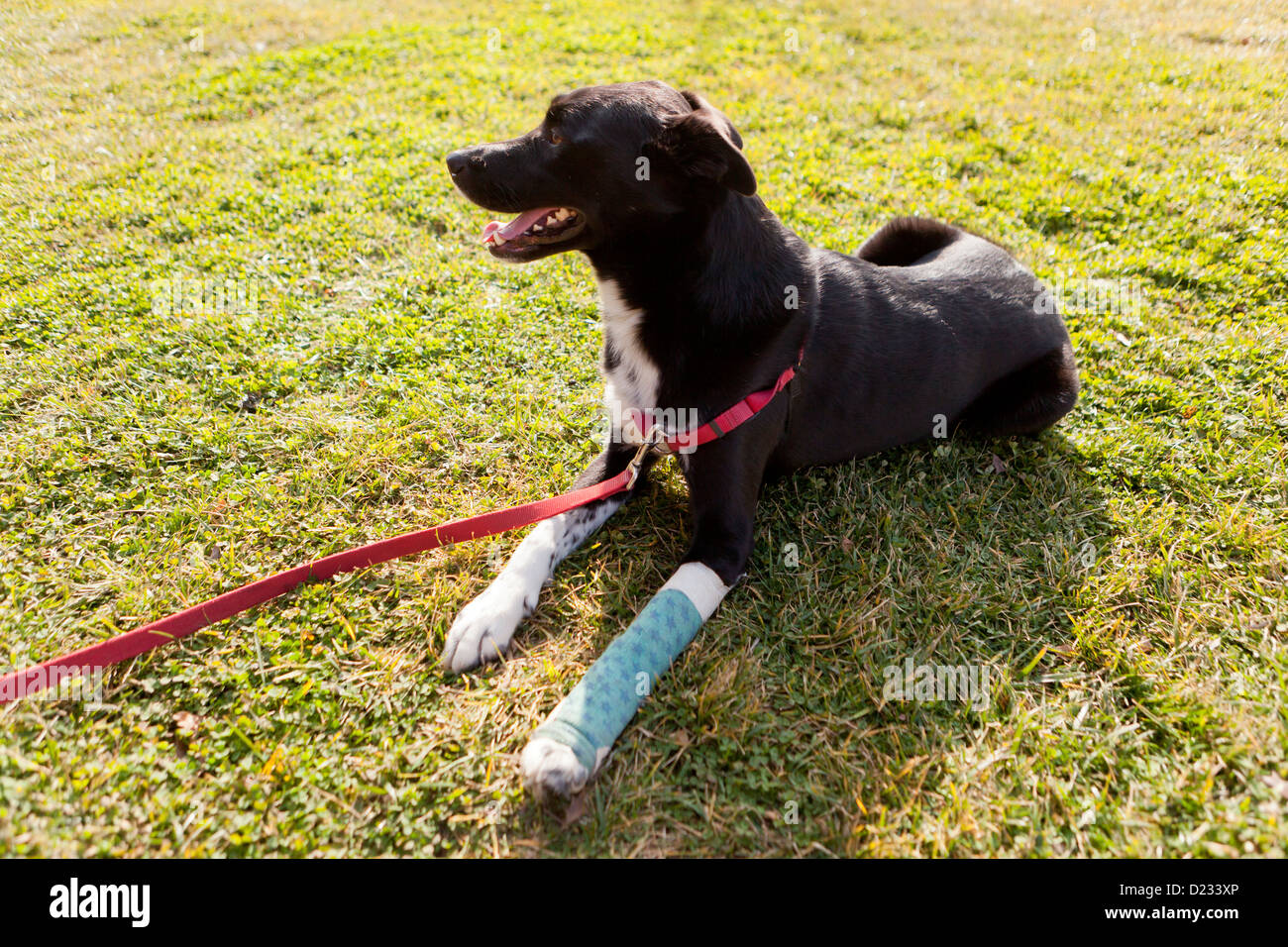
What Happens in a Dog Leg Sprain or Fracture?
Sprains and fractures may produce many of the same immediate symptoms and pose the same basic challenges to your dogs comfort and mobility. However, a fracture involves a crack, split, or break in a bone, while a sprain involves damage to ligaments, tough bands of tissue with limited flexibility that connect one bone to another bone.
For instance, the knee joint in a dogs leg contains cruciate ligaments that attach the tibia (lower leg bone) to the femur (upper leg bone). When these ligaments get severely overextended or suffer a direct injury, they can rupture or tear. This problem is called a sprain.
Its important to recognize the difference between a sprain and a strain. Strains involve torn or irritated soft tissues as well, but they occur in muscles and tendons, not ligaments. Since both injuries produce similar symptoms, youll need to take your dog to the veterinarian to get an accurate diagnosis of one or the other.
A fracture can occur in any of the long bones of a dogs leg, varying in their forms and degrees of severity. The two main categories of fracture are incomplete and complete.
An incomplete fracture extends only partway through the bone; a complete fracture breaks the bone into two or more pieces. Complete fractures can also take a few different forms. An oblique fracture goes through the bone at a diagonal angle, while a transverse fracture goes straight through at a perpendicular angle. A comminuted fracture breaks the bone into more than two pieces.
Fractures can be closed or open. A closed fracture will occur completely beneath the skin; an open fracture will involve an open wound.
What Are the Symptoms of a Broken Leg in Dogs?Different types of leg fractures in dogs may produce different symptoms, although all of them will likely cause discomfort and mobility problems. The following symptoms typically occur when a dog breaks a leg.
If your dog has a sprained leg, your veterinarian may recommend a combination of rest and first aid measures. Start with ice packs to reduce the swelling and pain, and then switch to heat packs after the first day to keep the surrounding muscles relaxed. Medications can help reduce pain and swelling in a sprained leg.
A more serious sprain such as a ruptured cruciate ligament may require surgery, especially in larger dogs who must bear more weight on their legs. But whether your dog undergoes surgery or not, it may need to rest the injured leg for several weeks.
Dog Health : How to Know if a Dog Broke Its Paw
FAQ
How to tell if a dog broke its leg?
Will a dog walk on a sprained leg?
… with a broken leg will not be able to put weight on that leg, while a dog with a sprained leg may still be able to bear weight and walk relatively normallyAug 1, 2025
Can a dog’s broken leg heal on its own?
A dog’s broken leg can’t be safely left to heal on its own because the bone may set incorrectly, leading to long-term problems like deformities, pain, and loss of function. While bones naturally have healing processes, proper veterinary treatment is essential to ensure the bone aligns correctly, which often involves surgery, casting, or splinting, followed by restricted activity and physical therapy.
Is my dog’s leg dislocated or broken?