
Humans have been brewing and drinking alcohol for centuries. The oldest known archeological evidence dates the practice of beer brewing by ancient humans starting about 13,000 years ago.
Similarly, the domestication of dogs is estimated to have occurred 15,000–40,000 years ago. In short: Dogs, humans, and beer have been together for a long time.
However, while humans should always drink alcohol responsibly, dogs should not be allowed to drink alcohol of any kind, as this could lead to alcohol poisoning.
Have you ever been enjoying a beer on the couch when your furry friend gives you those pleading puppy eyes? Maybe you’ve wondered if sharing just a tiny sip would hurt. Well I’ve got some important news for you – alcohol and dogs definitely don’t mix! As a pet parent myself I’ve researched this topic thoroughly to help keep your four-legged family members safe.
The Dangerous Reality of Dogs and Alcohol
Let’s cut straight to the chase – alcohol is toxic to dogs Even small amounts can cause serious health problems, and larger amounts could potentially be fatal. While us humans might enjoy unwinding with a drink, our canine companions simply aren’t built to process alcohol the same way we are.
According to veterinary experts, dogs are much more sensitive to alcohol than humans. Their smaller body size, different metabolism, and inability to process ethanol efficiently makes them especially vulnerable to alcohol poisoning.
What Happens When Dogs Drink Alcohol?
When a dog consumes alcohol, it’s rapidly absorbed into their bloodstream through their gastrointestinal tract and then metabolized by the liver. The ethanol in alcoholic beverages can easily cross into your dog’s brain, disrupting the normal balance of neurotransmitters. This disruption decreases neurological functions, including:
- Breathing (respiration)
- Movement (locomotion)
- Coordination
- Central nervous system function
Symptoms typically appear within 15 minutes to 2 hours after ingestion. The severity depends on your dog’s size, the amount consumed, and the type of alcohol.
Warning Signs Your Dog Has Consumed Alcohol
If your pup has gotten into some booze, watch out for these symptoms:
- Depression or lethargy
- Lack of coordination (ataxia)
- Drooling
- Vomiting or retching
- Weakness
- Collapse
- Decreased respiratory rate (breathing more slowly than usual)
- Hypoglycemia (low blood sugar)
- Hypotension (low blood pressure)
- Hypothermia (low body temperature)
- Seizures
- Coma (in severe cases)
Types of Alcohol and Their Danger to Dogs
All types of alcohol are dangerous for dogs, but some alcoholic beverages pose an even greater risk. Here’s why:
Beer
Despite having lower alcohol content (typically 2.5-6% ethanol), beer can still harm your dog. The hops in beer can be particularly toxic to dogs and may cause additional problems beyond alcohol poisoning.
Wine
With 10-20% ethanol content, wine poses a significant risk. Plus, grapes are toxic to dogs, creating a double danger with grape-based wines.
Hard Liquor
Spirits like vodka, whiskey, rum and tequila contain 40-50% ethanol and are extremely dangerous even in small amounts.
Flavored or Mixed Drinks
These can be particularly problematic as dogs may be more attracted to sweet, fruit-based cocktails, punches, ciders, and seltzers. Some mixed drinks might contain xylitol (an artificial sweetener), which is highly toxic to dogs.
The Myth of Dog Beer
You might’ve seen products marketed as “dog beer” in pet stores or online. Let me clarify – these aren’t alcoholic! Real dog beer is alcohol-free and typically contains ingredients like:
- Water
- Bone broth
- Vegetables (carrots, corn, sweet potatoes)
- Fruits
- Oats or barley
- Dog-safe herbs and nuts
These beverages are designed to let your pup “join in” when you’re having a drink, but they contain zero alcohol. Even these should be given in moderation as treats, not as meal replacements.
How Much Alcohol is Too Much for Dogs?
When it comes to our furry friends, there’s no “safe” amount of alcohol. According to veterinary toxicology data, the published oral lethal dose in dogs is 5.5 to 7.9 g/kg of 100% ethanol. But don’t let that number fool you – problems can start at much lower doses.
The risks vary significantly based on:
- Your dog’s size and weight (smaller dogs are affected by less alcohol)
- The concentration of alcohol consumed
- Your dog’s overall health
- Individual sensitivity
To put this in perspective, what might seem like a tiny amount to you could be dangerous for your dog. That’s why it’s never worth the risk.
The Rising Trend of Alcohol Poisoning in Dogs
Unfortunately, cases of alcohol poisoning in dogs have been increasing in recent years. There are several concerning trends contributing to this:
- Social Media Influence: Videos showing dogs “drinking” alcohol for entertainment value can normalize this dangerous behavior.
- Misconceptions: Some pet owners mistakenly believe small amounts of alcohol won’t harm their dog.
- Increased Opportunities for Exposure: With more social gatherings in homes, the chances of accidental ingestion have risen.
What To Do If Your Dog Drinks Alcohol
If you suspect your dog has consumed alcohol, time is of the essence. Here’s what you should do:
- Don’t panic, but act quickly
- Contact your veterinarian or emergency clinic immediately
- Call the Pet Poison Helpline (1-855-764-7661) – they provide 24/7 guidance
- DO NOT induce vomiting unless directed by a veterinarian
- Try to determine:
- What type of alcohol was consumed
- How much was consumed
- When it was consumed
- Your dog’s weight
The sooner your dog receives treatment, the better their chances of recovery. Treatment typically includes blood work, monitoring vital signs, temperature regulation, and supportive care.
Prevention is Better Than Treatment
As responsible pet parents, we need to take steps to prevent our furry friends from accessing alcohol in the first place:
- Keep all alcoholic beverages well out of reach
- Clean up spills immediately – dogs are notoriously quick at lapping up anything on the floor
- Inform guests not to give your dog alcohol – what seems funny after a few drinks can be deadly for your pet
- Consider crating or confining your dog during parties where alcohol is being served
- Dispose of alcoholic drink containers properly
- Be careful with food containing alcohol (like rum cake or cooking with wine)
Interesting Facts About Dogs and Alcohol
Did you know?
- Dogs and alcohol have coexisted for thousands of years – evidence of beer brewing dates back 13,000 years, while dog domestication occurred 15,000-40,000 years ago!
- Some dogs might be attracted to the sweet smell of certain alcoholic beverages
- Dogs who regularly receive table scraps may be more likely to try alcohol since they’re used to eating “human food”
- Unlike humans, dogs do not develop tolerance to alcohol
- The liver is the primary organ that processes alcohol in both humans and dogs
Common Questions About Dogs and Alcohol
Can dogs drink beer?
No, dogs should never consume beer or any alcoholic beverage meant for humans.
Why do some dogs seem interested in alcohol?
Some dogs might be attracted to sweet-smelling alcoholic beverages or might simply want whatever their humans are consuming.
Are there safe alternatives if I want to “drink” with my dog?
Yes! Try dog-safe “beers” that contain no alcohol, or simply give your dog a special treat while you enjoy your beverage.
Can alcohol be used as a training aid?
Absolutely not. This is dangerous and ineffective. Stick to positive reinforcement with appropriate dog treats.
Can a dog recover from alcohol poisoning?
Yes, with prompt veterinary attention, many dogs can recover from alcohol poisoning. However, severe cases can result in permanent damage or death.
The Bottom Line on Dogs and Alcohol
I hope I’ve made it crystal clear – alcohol and dogs don’t mix! Even small amounts can be harmful, and there’s simply no reason to risk your pup’s health. Keep those cocktails, beers, wines, and spirits for yourself, and give your dog appropriate treats designed specifically for them.
Remember, we’re responsible for keeping our furry friends safe. They trust us completely, and it’s up to us to protect them from dangers they don’t understand.
Have you ever had a close call with your dog and alcohol? Or do you have questions about other potentially toxic substances? Drop a comment below – I’d love to hear from you!
Stay safe, and keep those pups healthy!
Do Dogs Like Beer?
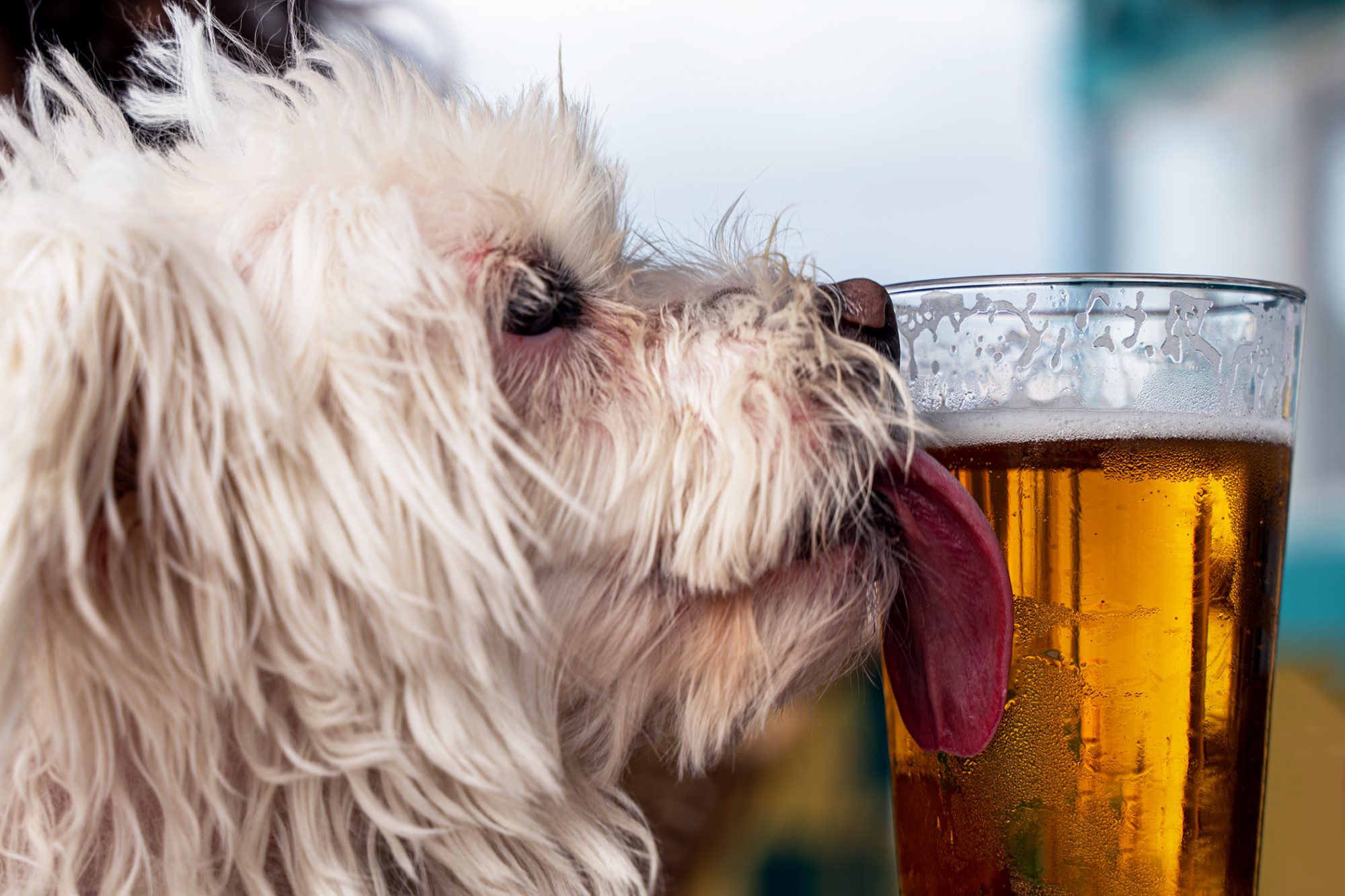
Whether or not dogs actually like beer or are interested in the smell is debatable.
Some believe dogs are attracted to beer thanks to its sweet taste. Another thought is that dogs like beer due to the underlying aromas masked by ethanol, including the smell of hops or malt.
Dogs who routinely receive table scraps as treats may be more interested in beer and other alcoholic beverages, because they want whatever their human family members are enjoying.
Can Dogs Drink Beer FAQs
Signs of alcohol poisoning in dogs may include lethargy, your dog appearing wobbly or shaky when walking, seizures, GI upset, and/or a lower respiratory rate. If your dog shows any of these signs, contact a vet or the Pet Poison Helpline immediately.