
Your dog used to race you to the door. Now they’d rather stay curled up on the couch until noon. Sound familiar? When the days get short and cold, lots of people feel a little down. So it’s natural to wonder if your pup feels it too. Here’s the quick answer, what’s really going on, and how to help.
Can Dogs Have Seasonal Depression? The Short Answer
No. There’s no scientific evidence that dogs get seasonal affective disorder (SAD) the way people do. But many dogs do get the “winter blues.” They sleep more, play less, and seem bored. That usually comes from less exercise, cold weather, and picking up on your mood. If your dog stops eating or seems truly lethargic, see your vet.
That’s the short version. The longer one is actually pretty good news.
Vets haven’t found a dog version of SAD, and there’s no test that can diagnose it. What they do see is a dog whose days just got a lot more boring. Fewer walks. Fewer smells. More hours staring out the window.
And boredom? That’s something you can fix. Usually all it takes is a few small changes to your daily routine.
Signs of Winter Blues in Dogs
Common Winter Behavior Changes
Not sure if your dog has a case of the winter blahs? Watch for these symptoms of winter blues, from mild to more noticeable:
- Sleeping more than usual: longer naps and slower mornings.
- Less excitement about walks: no more happy dancing when you grab the leash.
- Acting bored and uninterested: toys that used to be favorites just sit there.
- Restless energy indoors: pacing, chewing, or getting into trouble.
Try this: Keep a simple 7-day log. A week of notes makes it much easier to spot a real change. It also gives your vet useful info if you need a visit.
| Day | Hours asleep (rough guess) | Meals finished? | Walk + play time | Mood notes |
|---|---|---|---|---|
| Mon | ||||
| Tue | ||||
| … |
Winter Blues vs. True Canine Depression
So, do dogs get depressed at all? They can, but it looks different from the winter blahs. Real depression in dogs usually follows a specific event, like the loss of a companion or a move to a new home.
| Winter blues | Canine depression | |
|---|---|---|
| What sets it off | Cold, dark, boring days | A big life change or loss |
| When it shows up | Around the same time each year | After the event |
| Bounce-back | Perks up fast once the fun starts | Needs more coaxing to join in |
| Eating | Normal | Usually still eats and drinks |
Notice that appetite stays normal in both columns. That’s a useful clue: if your dog stops eating, think “health problem” before you think “mood.”
What Causes Winter Blues in Dogs?
Vets say the winter blues are best thought of as boredom or cabin fever, not true depression. Here are the usual suspects, from most common to least:
- Cold weather means less exercise. Icy sidewalks and biting wind cut walks short. Less mental stimulation and physical exercise leads to a bored, sluggish dog. And the less a dog moves, the less they feel like moving.
- Fewer new experiences. Summer is full of new smells, swims, and dog friends. Winter is… the living room. Same toys, same view, every single day.
- Shorter days and clock changes. Fewer hours of daylight shrink the window for outdoor fun. Daylight saving time can scramble routines, too. Your dog doesn’t know the clocks moved. They just know dinner is “late” and walks now happen in the dark.
- Your mood rubs off. Dogs can read their owners’ emotions. If you’re feeling low and staying in, your dog will probably follow your lead.
Is It Winter Blues or a Medical Problem?
This is the most important part of the whole article. Vets at PetMD put it simply: unless there’s an obvious trigger, it’s “better to assume that your pet is sick rather than depressed.” Many health problems look a lot like the winter blues at first.
Health Conditions That Can Look Like Winter Blues
If your dog’s slump doesn’t lift, ask your vet about these:
| Condition | What you might notice | Why it’s easy to confuse |
|---|---|---|
| Hypothyroidism (underactive thyroid) | Tiredness, weight gain, seeking warm spots | Looks just like “winter laziness” |
| Arthritis | Stiffness, slow to get up, skipping stairs | Cold weather can make sore joints feel worse |
| Pain (dental, back, belly) | Quiet, hiding, less playful | Pain often looks like sadness |
| Canine cognitive dysfunction (older dogs) | Changes in sleep, confusion, less interest in people | Easy to blame on short days |
| Weight gain | Slower, tires quickly | Less activity plus the same food adds up fast |
None of these are the winter blues, and every one deserves a vet’s attention.
Red Flags: When to Call Your Vet
Call your vet if you notice any of these. They’re listed from “book a visit” to “call today”:
- Behavior changes that don’t improve after you add more exercise and play
- Eating less or skipping meals (loss of appetite)
- Being truly lethargic: hard to get up, no interest in anything
- Signs of pain: limping, crying out, hiding, or not wanting to be touched
Your vet will likely start with a full exam and may suggest blood work. That’s the fastest way to rule out an underlying medical issue and put your mind at ease.
How to Help a Dog With Winter Blues
Ready to beat the winter blahs? Start with the easy wins at the top. Then add more ideas as needed.
Keep Daily Exercise Going in Cold Weather
The best fix is to maintain regular exercise, even when it’s chilly.
- Swap one long walk for two or three shorter ones.
- Head out during the warmest part of the day.
- Try dog boots if salt or ice hurts their paws.
- Add a coat for small or short-haired dogs.
If it’s truly too icy to walk safely, skip it and play inside instead.
Let in More Natural Sunlight
Open the curtains and blinds during the day. Let your dog nap in a sunny spot near (but not right against) a window. AKC’s chief vet also suggests getting outside together for some sunlight whenever you can. Weekend daylight walks count!
Keep Feeding and Walk Routines Consistent
Dogs love knowing what comes next. Keep meals, walks, and bedtime at the same times every day. When the clocks change, shift the schedule by 10 to 15 minutes a day over a few days. That way, your dog barely notices the switch.
Add Indoor Brain Games
A tired brain makes for a calm, happy dog. Try these:
- Food puzzles: make your dog work a little for their snacks.
- Scent work: hide treats around the house and let that nose go to work.
- An indoor agility course: couch cushions to hop over, a broom across two boxes to jump.
- New tricks: “spin,” “high five,” or “go to your bed.”
Just count treats as part of your dog’s daily food so the extra snacks don’t add pounds.
Plan Social Time: Daycare and Play Dates
Lots of dogs are social butterflies. Doggy daycare once or twice a week can burn energy fast. You can also set up play dates with a friend’s dog or sign up for an obedience class. New faces and new places beat cabin fever every time.
Adjust Food Portions to Lower Activity
A less active dog may need a little less food to avoid weight gain. Stick with a well-balanced diet and ask your vet before you change portions. Don’t add supplements on your own, either. Some, like extra vitamin D, can actually be harmful to dogs.
Why Dogs Don’t Get SAD the Way Humans Do
So why do experts say dogs don’t get SAD? It comes down to what science can, and can’t, measure.
How SAD Works in People: Sunlight, Serotonin, Melatonin
In humans, SAD is a type of depression with a seasonal pattern. Scientists think a decreased amount of sunlight in fall and winter throws off the body clock. That can lower serotonin, a brain chemical that helps steady your mood. It can also raise melatonin, the hormone that makes you sleepy. The result is feeling tired and low. It’s more common in places far from the equator, where winter days are short.
What the Sled Dog Melatonin Study Does (and Doesn’t) Show
Do dogs have the same body chemistry? Partly. Dogs have a pineal gland too, and it makes melatonin. One study of sled dogs found higher melatonin levels in winter than in summer.
- What it shows: Dogs’ bodies do respond to the change in seasons.
- What it doesn’t show: Whether those dogs felt sad. Extra melatonin might explain extra naps, but sleepy isn’t the same as depressed.
Here’s a fun twist. AKC’s chief vet points out there are no known reports of far-north sled dogs being hit hardest. His guess? They stay busy and active all winter long.
Why Vets Can’t Diagnose SAD in Dogs
No study has looked at SAD in dogs specifically. Dr. Jerry Klein, Chief Veterinary Officer at the AKC, says “there is no way to objectively measure or diagnose this condition in dogs.”
A UK survey by the People’s Dispensary for Sick Animals found that many owners felt their pets seemed down in winter. But surveys rely on what owners think they see. And owners might be picking up on their own winter mood. That’s why vets treat dog SAD as a “maybe” and focus instead on the things they can check: health, exercise, and boredom.
So clinical SAD isn’t a dog diagnosis. But owners still ask about lamps, supplements, and other seasons. Here are quick answers.
More Questions About Dogs and Seasonal Moods
Can a Light Therapy Lamp Help a Dog?
Probably not. No research shows that light therapy for dogs works. Some lamps are very bright, and your dog can’t tell you if the glare bothers them. Plain daylight is the better bet. Open the blinds, walk at midday, and ask your vet before buying any gadget.
Should You Give Your Dog Melatonin or Vitamin D in Winter?
Not on your own. A dog on a well-balanced diet already gets the vitamins they need. Excessive vitamin D is toxic to dogs and can damage the kidneys. Vets sometimes use melatonin for sleep or anxiety, but the product and amount depend on your dog. That’s always your vet’s call.
Can Dogs Get the “Summer Blues” Too?
Sort of. Hot days can shut down outdoor fun just like icy ones. Pavement burns paws, and heatstroke is a real danger. A bored, sleepy dog in July is often the same story as the winter blues: too little exercise. The fix is the same, too. Walk early or late, and play brain games inside.
What Is Cabin Fever in Dogs?
Cabin fever is the restless, bored feeling a dog gets after too many days stuck inside. It’s not an illness. It’s a busy brain with nothing to do. Watch for pacing, whining, chewing, or bedtime zoomies. A long sniff walk or a food puzzle usually helps fast.
Which Dogs Struggle Most in Winter?
From most to least likely to struggle:
- Short-haired dogs, like Greyhounds
- Small dogs, who lose body heat quickly
- Senior dogs with stiff joints
- High-energy dogs stuck indoors, like Border Collies
Northern breeds like Huskies, on the other hand, often love the snow.
Indoor Pets vs. Working Dogs: Who Feels Winter More?
Usually the indoor pets. Sled dogs live in bitter cold, but they stay busy pulling and running all winter. A family dog’s day can shrink to the couch and a quick potty break. The difference isn’t the cold. It’s how much the dog gets to move and think.
Seasonal Depression or Seasonal Boredom? The Bottom Line
Dogs don’t get seasonal depression the way people do. They get seasonal boredom. Rule out health problems first. Then add walks, sunlight, and brain games, and your dog will be back to their happy self long before spring.
Do Dogs Experience Seasonal Affective Disorder?
In humans, it’s thought that SAD results from the decreased amount of sunlight in the fall and winter. This can disrupt a person’s internal clock, lower our levels of serotonin (a brain chemical that regulates mood), and increase melatonin (a brain chemical released by the pineal gland that affects sleep). A study of sled dogs showed that the dogs’ melatonin levels were higher in the winter than in the summer, so perhaps dogs are susceptible to SAD, too.
However, there has yet to be a single study looking specifically at seasonal affective disorder in dogs. Dr. Jerry Klein, Chief Veterinary Officer for the AKC, explains, “At this time, there is no scientific evidence that dogs get seasonal affective disorder (SAD) as described in humans, though dogs also have pineal glands in their brain. The pineal gland produces melatonin, a serotonin-derived hormone that modulates sleep patterns. In humans, some people produce higher amounts of melatonin than usual in winter months, so it may be conceivable that dogs have some changes in mood. But there is no way to objectively measure or diagnose this condition in dogs.”
Dr. Klein also expects that if dogs do suffer from SAD, it would be more common in northern climates with shorter days. “In humans, SAD is described more for people living in northern parts of the world rather than sunnier, warmer climates,” he says. “One would therefore think that dogs living in the far northern climates, such as the sled working dogs would be the most affected, but no known reports or study confirms this. Perhaps because they are physically active and mentally involved.”
What Could Cause a Dog to Get the Winter Blues?
Although there has been a lack of extensive research in this area, a survey carried out in the United Kingdom by the People’s Dispensary for Sick Animals found that many owners felt their pets become more depressed during the darker winter months. The dogs seemed to sleep more and were less active. Dr. Klein points out, “Like all surveys, it was subjective and relied on the owner’s perceptions of their pets. So, it was anecdotal rather than scientific.”
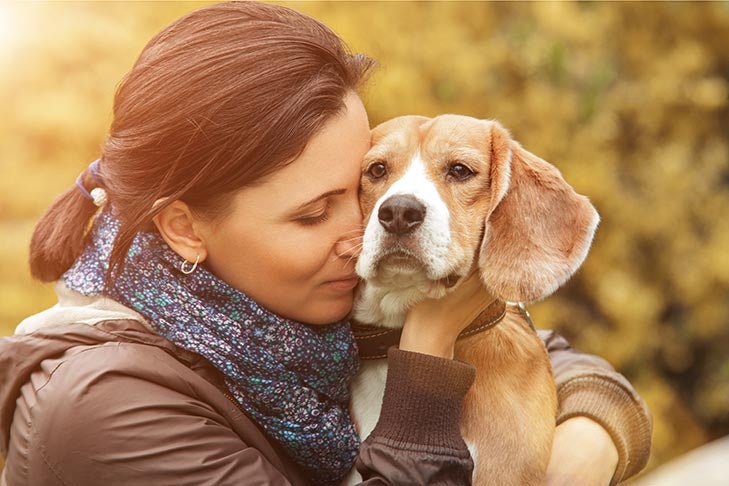
Of course, there are many explanations for the survey results. People could be projecting their own winter blues onto their pets. A recent study showed that dogs can recognize their owner’s moods and distinguish between positive and negative emotions. So, if their owner is feeling down or experiencing SAD, it’s not a stretch to imagine that could impact the dog’s own emotional state. Or perhaps owners provide their pets with less mental stimulation and physical exercise in the winter.
It’s hard to know if your dog is responding to your mood, reacting to your actions, or suffering from their own emotional problems. There could even be an underlying issue with their physical health. Therefore, Dr. Klein suggests you don’t diagnose your dog with SAD on your own. “There is no scientific evidence that dogs suffer from seasonal affective disorder. If a dog seems lethargic or off their feed, it is best to have them checked by a veterinarian to make sure there is not an underlying medical issue.”
Can Dogs Get Seasonal Depression (S.A.D.)? ️ Unveiling the Truth!
FAQs About Dogs and Seasonal Depression
Can dogs take supplements for winter blues?
Always consult your vet before giving supplements. While humans might benefit from vitamin D or omega-3 supplements, dogs being fed a well-balanced diet already receive the proper minerals and vitamins. Dr. Klein warns that “giving excessive vitamin D can be toxic to dogs, potentially causing fatal kidney damage.”
Do certain dog breeds handle winter better than others?
Absolutely! Northern breeds like Huskies and Malamutes often thrive in winter, while short-haired breeds may struggle more with the cold. Adjust your winter strategies based on your dog’s breed, coat type, size, and age.
Could my dog’s winter behavior change be something more serious?
Yes. If your dog shows significant changes in appetite, energy, or behavior, consult your veterinarian. What looks like winter blues could actually be an underlying health issue that needs attention.
How can I tell if my dog is actually depressed or just bored?
True depression in dogs is usually triggered by a specific event like losing a companion or moving homes. These dogs may still eat and drink but need more coaxing to engage in activities. Bored dogs typically perk up quickly once engaged in an interesting activity.
Should I change my dog’s diet during winter months?
Most dogs don’t need dietary changes unless their activity level changes dramatically. If your dog is getting significantly less exercise, you might need to slightly reduce portions to prevent weight gain. Always consult your veterinarian before making dietary changes.