
Fleas are a pain (literally) – a nightmare that all dog owners face at some point.
Lots of people turn to chemical spot on treatments to combat the problems. The bigger issues is, these treatments often do more harm than good.
If you’re thinking about using Frontline Plus, a topical pharmaceutical used to kill fleas and ticks, on your own dog, you’re going to want to read this first.
Frontline is one of the most popular flea and tick treatments for dogs, but many pet owners worry about potential side effects If you’ve ever wondered “can Frontline make dogs sick?”, you’re not alone While Frontline is generally considered safe, it can cause adverse reactions in some dogs. Let’s dive into what you need to know about Frontline and how it might affect your furry friend.
What is Frontline and How Does it Work?
Frontline is a topical flea and tick treatment that contains fipronil and S-methoprene as active ingredients. These chemicals work by disrupting the nervous system of fleas and ticks, ultimately killing them. The medication is applied between your dog’s shoulder blades, where they can’t lick it off and it spreads through the skin’s oil glands to protect your dog.
Common Side Effects of Frontline
Side effects with any of the topical Frontline® products are uncommon but may include itching, redness, or irritation at the site of application. If any signs of skin irritation occur, bathe your pet with mild soap and large amounts of water. Rarely, additional side effects may include: Drooling.
While most dogs tolerate Frontline well, some may experience mild reactions. Here are the most common side effects:
- Skin irritation at the application site – This might include redness, itching, or temporary hair loss
- Itching or scratching – Particularly around the application area, usually within 24-48 hours after use
- Temporary hair loss – In rare cases, some dogs might experience hair loss at the application site
These side effects are typically mild and resolve on their own within a few days. If the irritation persists for longer than a week, it’s a good idea to consult your vet.
More Serious Side Effects to Watch For
Although rare, some dogs may experience more severe reactions to Frontline. These include
- Vomiting or diarrhea – Especially if your dog manages to lick the treatment
- Lethargy or weakness – Unusual tiredness or lack of energy
- Seizures – Extremely rare but requires immediate veterinary attention
- Excessive drooling or salivation – Can indicate that your dog has ingested some of the product
If your dog shows any of these symptoms after applying Frontline, contact your veterinarian immediately.
Factors That Increase Risk of Side Effects
Not all dogs react the same way to Frontline. Several factors can increase the likelihood of your dog experiencing side effects:
1. Age and Size
Puppies under 8 weeks old and dogs weighing less than 5 pounds shouldn’t use Frontline. They’re more sensitive to the chemicals due to their smaller size and developing systems.
2. Health Conditions
Dogs with pre-existing health issues like epilepsy, neurological disorders, or liver problems may be more susceptible to side effects.
3. Allergies
If your dog has sensitive skin or a history of allergic reactions to medications, they might be more likely to react to Frontline.
4. Incorrect Application
Applying too much product or allowing your dog to lick the treatment area can increase the risk of side effects.
How to Minimize the Risk of Side Effects
To keep your dog safe while using Frontline, follow these tips:
-
Apply correctly – Make sure the product is applied directly to the skin, not just on the fur, between your dog’s shoulder blades.
-
Use the right dosage – Always use the appropriate formulation for your dog’s weight.
-
Prevent licking – Don’t let your dog lick the application site. Consider using a cone if necessary for the first few hours.
-
Avoid bathing – Don’t bathe your dog for at least 48 hours before and after application to ensure the treatment works effectively.
-
Monitor closely – Watch your dog for the first 24-48 hours after applying Frontline to catch any signs of a reaction early.
What to Do If Your Dog Has a Reaction
If you notice any side effects after applying Frontline, here’s what to do:
-
For mild skin irritation: Clean the area with mild soap and water. Monitor to make sure it improves.
-
For vomiting or diarrhea: Keep your dog hydrated and contact your vet if symptoms persist for more than 24 hours.
-
For severe reactions like seizures or difficulty breathing: Take your dog to an emergency vet immediately.
Your vet might recommend discontinuing Frontline and trying an alternative flea and tick treatment that better suits your dog.
Is Frontline Safe for All Dogs?
Frontline is generally safe for most dogs, but there are some exceptions:
- Very young puppies (under 8 weeks)
- Very small dogs (under 5 pounds)
- Dogs with certain health conditions
- Dogs with a history of reactions to topical medications
Always consult with your vet before using Frontline if your dog falls into any of these categories.
Alternatives to Frontline
If you’re concerned about Frontline making your dog sick, there are alternatives available:
Oral Flea and Tick Medications
Pills like NexGard or Bravecto work from the inside out and may be less likely to cause skin irritation.
Natural Alternatives
Some pet owners prefer natural options like essential oils or diatomaceous earth. These may be less effective but also less likely to cause chemical reactions.
Environmental Control
Regular vacuuming, washing bedding, and treating your yard can help control fleas and ticks without applying chemicals to your pet.
Real Dog Owner Experiences
I’ve talked with many dog owners who’ve had different experiences with Frontline. Sarah, who owns a Labrador, has used Frontline for years without any issues. On the other hand, Mike noticed his Border Collie became lethargic and had some skin irritation after the first application, so he switched to an oral medication.
We find that most dogs tolerate Frontline well, but it’s important to monitor your individual pet’s reaction and be prepared to try alternatives if needed.
FAQs About Frontline and Dog Health
Can I bathe my dog after applying Frontline?
Wait at least 48 hours after application before bathing your dog to ensure the product has fully absorbed.
Is Frontline safe for pregnant or nursing dogs?
Frontline is generally considered safe for pregnant and lactating dogs, but it’s always best to check with your vet first.
What should I do if my dog accidentally ingests Frontline?
If your dog licks the application site or ingests the product, monitor for symptoms like excessive drooling, vomiting, or lethargy. Contact your vet if you notice any concerning symptoms.
Can I use Frontline with other medications?
Always consult your vet before using Frontline alongside other medications, especially other flea and tick treatments.
How often should I apply Frontline?
Frontline should be applied once a month. Using it more frequently can increase the risk of side effects.
Conclusion
So, can Frontline make dogs sick? The short answer is yes, it can, but serious reactions are rare. Most dogs tolerate the treatment well, experiencing either no side effects or only mild skin irritation.
The key to safely using Frontline is to apply it correctly, monitor your dog for any reactions, and consult with your veterinarian if you have concerns. Remember that every dog is different, and what works well for one might not be the best option for another.
If your dog has had a negative reaction to Frontline in the past, don’t worry – there are plenty of alternative flea and tick prevention methods available. Your vet can help you find the option that works best for your furry friend’s specific needs.
The most important thing is to keep your dog protected from fleas and ticks, which can cause serious health problems if left untreated. With proper precautions, you can minimize the risk of side effects while keeping your dog safe from parasites.
Typical Frontline Plus Cases And The Impacts
A five-year old Golden Retriever is brought to the veterinarian with ear and eye discharge three weeks after receiving a dose of Frontline Plus. The symptoms go away within a month.
When the dose of Frontline is repeated, the dog develops an ear infection that improves after about six months, but never goes away. The dog dies from liver cancer two years later.
This is a typical story about Frontline Plus that led Dr Jennifer Ramelmeier to change the way she looked at the treatment. Ramelmeier stopped using it after seeing a connection between its use and cases like this.
Dr Ramelmeier says the owners would often complain when their animals developed an oily and sticky coat soon after applying the product.
“The first response of the body when the patient develops a toxic load is to discharge from the body via the eyes, the ears, the skin and through loose stool … these discharges make a great medium for bacterial and yeast growth (which live naturally on your dog’s body)”
Dr Christina Chambreau is another vet from Maryland who has seen similar cases and has a similar attitude towards the product.
She told the story of a friend’s cat who had received Frontline Plus two or three hours earlier and went missing while she was visiting. They found him under a bench “looking like a puddle,” Dr Chambreau said. On examining the cat, she found him to be very lethargic and when he started to walk, he had a very uncoordinated gait.
Dr Chambreau advises her patients to avoid using Frontline. She’s only recommended it on three occasions in her 30 years of practice. She has strong concerns over its toxicity to the pet and she has confidence in the efficacy of alternative methods.
She’s found that after she treats an animal for any type of problem, particularly behavioral or neurological, if the owners apply Frontline or other similar pesticide products, the symptoms that she’s treated come back.
Despite the cases that are well known, some conventional vets disagree with concerns over the safety of Frontline.
“There is no evidence to suggest that Frontline causes cancer or other serious diseases,” says Dr Deborah Lichtenberg, a vet from Massachusetts. With regard to allergic reactions, “most of these reactions are mild and don’t require treatment” she added.
Dr Lichtenberg warns that by choosing to use more natural protection against ticks or fleas, your dog will get more ticks and be at a greater risk for developing tick-borne illness. Tick-borne illnesses are Lyme Disease, Ehrlichia, anaplasmosis, Rocky Mountain spotted fever or babesiosis.
The main active ingredient in Frontline Plus, fipronil, was developed between 1985 and 1987 by Rhone Paulenc AG as a broad-use insecticide. It was introduced into the market in 1993.
Since then, it has been integrated into a wide variety of products including “pesticide products, granular products for grass, gel baits, spot-on pet care products, liquid termite control products, and products for agriculture,” the National Pesticide Information Center (NPIC) says.
Frontline Plus is produced and owned by Merial, the animal subsidiary of Sanofi, a multinational pharmaceutical company. Frontline Plus also contains S-methoprene, a compound that has been in use since 1977 that stops juvenile insects from turning into adults.
Merial also produces Heartgard to prevent heartworm, NexGard, a chewable flea and tick poison that was released in 2013, and a series of vaccines for cats.
Altogether, Sanofi reported a net profit on these products of $706 million in 2015.
Frontline Plus is used monthly on dogs and cats. If you have a rabbit or other pet, note that Frontline is highly toxic to rabbits and Frontline is labeled “Do Not Use On Rabbits. Do Not Use On Other Animals.”
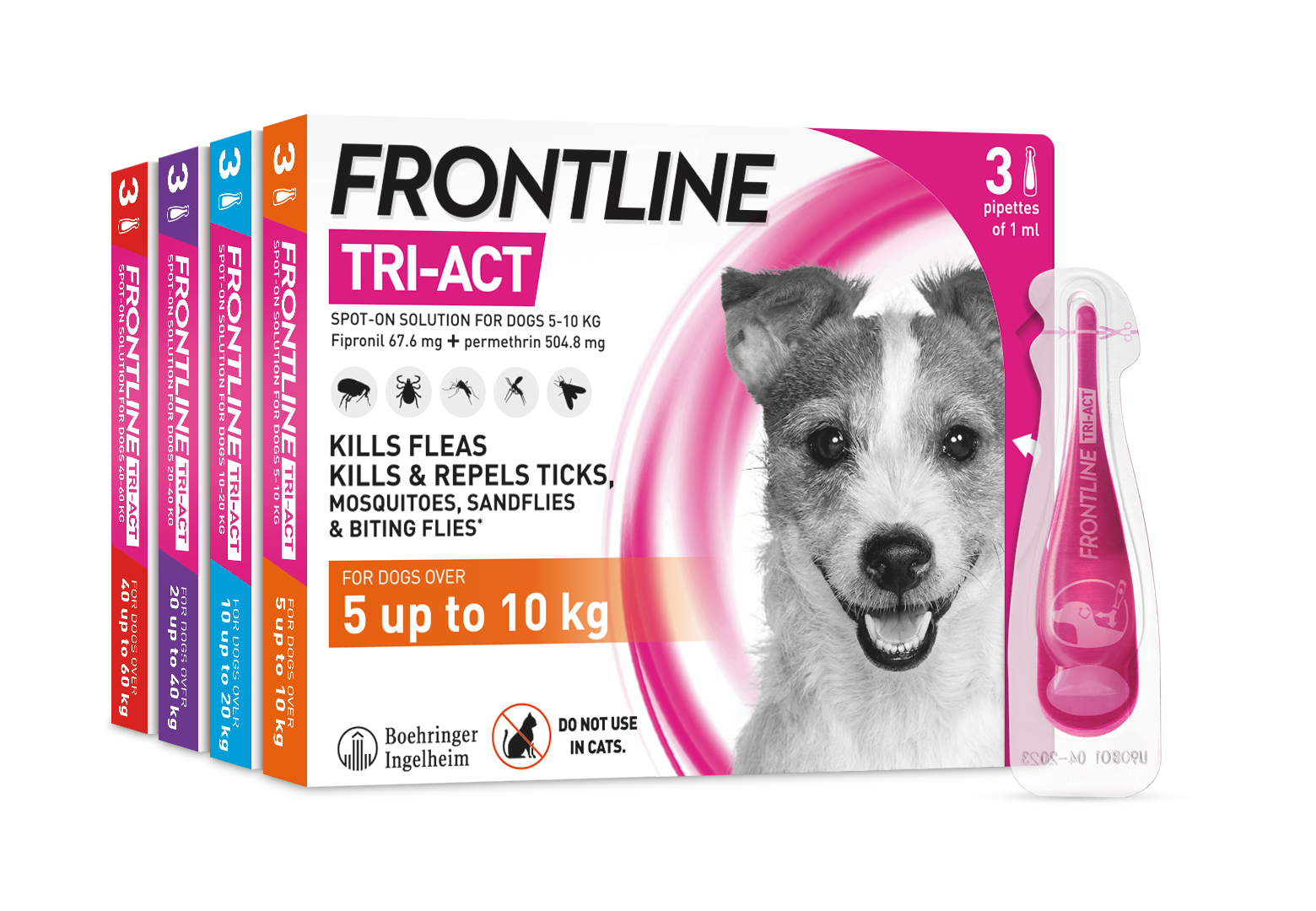
It’s applied by breaking open the plastic vial and dispensing the oily liquid between the animal’s shoulder blades. The idea is that the animal won’t be able to reach back and ingest the liquid, but at the same time, the liquid will spread over the body and be absorbed into the oil glands of the skin where it is gradually released.
There are many concerns about possible side effects, the most common being skin reactions like hair loss, itching, and redness, and neurological issues like uncoordinated movement and lethargy. However, these side effects are not addressed anywhere on the US website for Frontline.
The New Zealand and United Kingdom websites do address safety concerns on their Q&A pages.
“Frontline Plus has a long established and wide margin of safety and your cat should be fine,” was the response from the New Zealand website to an owner who was concerned about whether her pet would see problems from her inadvertent over-application of Frontline.
When asked about side effects, the UK website’s response was, “side effects could occur but these tend to be mild and temporary in the majority of cases.”
[Related] Are oral flea and tick meds any better? Read about the dangers here.
Research by the Environmental Protection Agency (EPA)
The EPA’s Pesticide Division has found that fipronil enters the body and into the fat, organs, urine and feces of dogs.
Research by the EPA in 2009 examined incident data for spot-on pesticides used on dogs, including fipronil products for dogs and cats. The report on Frontline Plus for Dogs shows that of a total of 2469 incidents, they classified:
- 1,872 (76%) as minor
- 51 (21%) as moderate
- 47 (2%) as major
- 39 (<2%) were deaths
2%) >
The EPA found that most of the reactions involved systemic, application site, digestive, neurological and behavioral disorders. The most common clinical signs were:
- pruritus (itching)
- dermatitis
- sores
- erythema (reddening of the skin)
- irritation
- alopecia (hair loss)
- hair changes at the application site
Other commonly reported clinical signs were lethargy and vomiting (possibly from ingestion).
There were also symptoms reported from exposure to fipronil by humans, including nausea, vomiting and headache.
The EPA’s study also covered many other spot-on pesticides for dogs, and while some incidents were classified as minor, it’s important to note there were major incidents and deaths associated with every product.
Of the Frontline Plus ingredients, fipronil is the most dangerous. Fipronil acts by disrupting the central nervous system (CNS), which contains the brain and the spinal cord. It also blocks a receptor, GABA, which has a similar form in mammals, and a receptor called GluCl, which doesn’t exist in humans.
Fipronil inhibits the insect GABA receptor much more effectively than the human receptor, making it more toxic to insects than mammals. The net effect is over-excitation of the CNS, which causes the death of the insect.
Although fipronil is more active on insects than mammals, there’s a difference between the activity of a manufactured chemical and the activity of that chemical’s metabolite – meaning what the chemical turns into inside the body.
This is where the danger to pets arises.
In the bodies of dogs and other mammals, fipronil primarily converts into fipronil-sulfone.
According to the NPIC, fipronil-sulfone is twenty times more active on the mammalian receptor than on the insect receptor and is six times more effective on the mammalian receptor than fipronil.
This means that fipronil-sulfone is many times more toxic to mammals than fipronil itself.
This increased toxicity to mammals includes humans – so your child can absorb the chemical when she cuddles with your dog who’s been treated with Frontline.
A review of Frontline Plus side effects and the safety literature on fipronil was done on behalf of the Australian Pesticides and Veterinary Medicines Authority (APVMA).
The review said that despite the increased toxicity of fipronil-sulfone, it’s unlikely there would be any adverse effects because there is a rate of passage of less than 5% fipronil through the skin. This suggests the metabolite isn’t concentrated enough to cause problems.
However, the studies on fipronil’s rate of passage through the skin only look at animals with healthy skin. The reviewers commented that further research might find fipronil is absorbed at higher levels through damaged or unhealthy skin.
Even so, the review concluded that fipronil-containing products are generally safe to use with correction application. This is because the NOAEL (no observed adverse effect level), which was calculated from a daily oral dosage of fipronil, was much higher than would normally be used on a biweekly or monthly basis.
The article states “Individual variation in response to fipronil is to be expected.” It warns that adverse reactions should be a sign to stop using it.
Also, it advises care when applying it to damaged skin. Finally, it emphasizes the importance of following the label on the products, especially in using the correct drug for cats or dogs, and to use the correct dosage.