
Staffordshire Bull Terriers, often simply referred to as Staffies, are a breed known for their loyalty, strength, and tenacity. Many prospective dog owners consider them as potential guard dogs due to their intimidating appearance and protective instincts. In this article, we will delve into the question of whether a Staffordshire Bull Terrier is a good guard dog. We will examine their temperament, physical attributes, and training potential to help you make an informed decision if you are considering a Staffie for guard dog duties.
When looking for a four-legged protector for your home, Staffordshire Bull Terriers (or “Staffies” as they’re affectionately known) might catch your eye. With their muscular build and somewhat intimidating appearance, many potential dog owners wonder if these dogs would make excellent guardians. But appearances can be deceiving, and there’s more to being a guard dog than just looking tough.
I’ve spent years observing different dog breeds, and Staffies have always fascinated me with their unique blend of strength and sweetness. Let’s dive into whether these lovable pups truly make good guard dogs or if their talents lie elsewhere.
The Staffy Personality: Not What You Might Expect
If you’ve never met a Staffy before, you might be surprised by their actual temperament. Despite their strong, powerful appearance, Staffies are known for being:
- Incredibly friendly to strangers
- Affectionate and loving
- Often called “nanny dogs” due to their gentleness with children
- More likely to greet an intruder with tail wags than growls
As one Staffy owner mentioned, “I met three Staffies with their owner last week in a coffee shop. They had never met me before, yet their tails were going nineteen to the dozen, and they were giving out licks as though we had been friends for years.”
This friendly nature is actually the main reason why Staffies don’t excel as guard dogs They simply love people too much!
Watchdogs vs. Guard Dogs: Understanding the Difference
Before we completely dismiss Staffies as protectors, we need to understand the difference between watchdogs and guard dogs:
Watchdogs alert their owners to unusual activity or strangers by barking but don’t typically take action
Guard dogs not only alert but are also trained to protect by intimidating or even physically stopping intruders,
Staffies actually make excellent watchdogs. They will bark to alert you when someone approaches your home or when they sense something unusual. However, once the stranger gets close enough for the Staffy to interact with them, all bets are off—the barking will likely stop, and the belly rubs will begin!
The Protective Instinct: Will a Staffy Protect Its Owner?
Despite not being ideal guard dogs, Staffies do have strong protective instincts toward their family members. Most experts agree that a Staffy would likely come to their owner’s defense if they perceived a real threat.
If someone were actively threatening you while you were walking your Staffy, the dog would very likely try to protect you. As one source noted, “It would take a foolish person to attack or threaten an owner if they happen to be walking their Staffy.”
So while they might not guard your property from strangers, they are likely to protect you personally if they sense you’re in danger.
Physical Attributes: Looking the Part
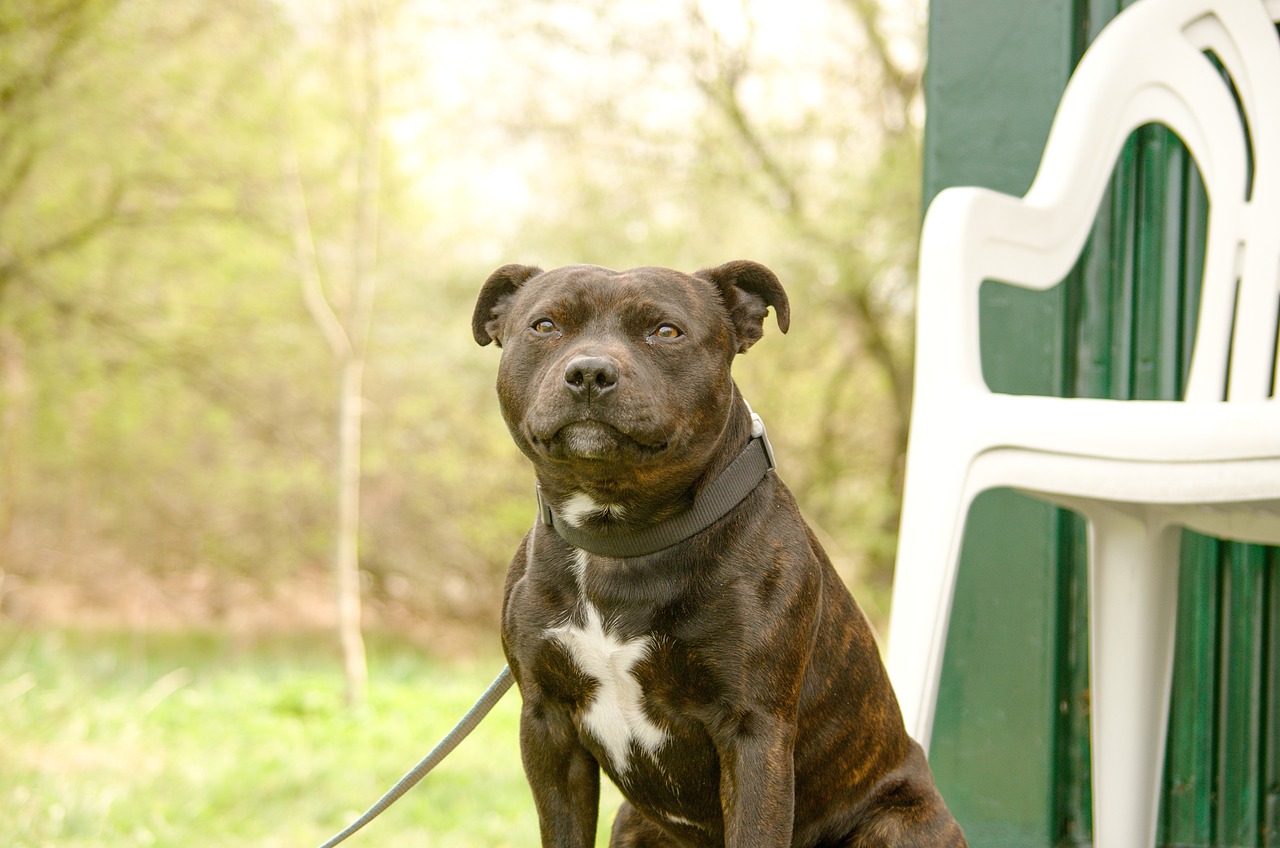
Let’s be honest—Staffies certainly look the part of a guard dog:
- Muscular, compact build
- Strong jaw and powerful bite force
- Confident stance
- Alert expression
This appearance alone can be enough to deter some potential intruders. Someone who doesn’t know that Staffies are actually love bugs might think twice before approaching your home if they spot one through the window!
Training Potential: Can You Train a Staffy to Be a Guard Dog?
Staffordshire Bull Terriers are intelligent dogs with good training potential. They’re typically eager to please their owners and can learn commands quickly when properly motivated (usually with treats and praise).
However, training against a dog’s natural temperament is challenging and potentially problematic. Since Staffies naturally love people, training them to be suspicious of or aggressive toward strangers goes against their inherent nature.
Professional trainers generally don’t recommend trying to turn a naturally friendly breed into a guard dog. This kind of training can create confusion for the dog and potentially lead to unpredictable behavior.
What Staffies Excel At Instead
While guard duty might not be their forte, Staffies have plenty of other amazing qualities:
Family Companions
Staffies form incredibly strong bonds with their families and are known for their loyalty, affection, and patience with children.
Physical Activities
With their athletic build, Staffies excel at:
- High-intensity sports
- Agility training
- Long walks and hikes
- Play sessions that channel their energy
Low-Maintenance Care
Their short coat requires minimal grooming, making them relatively easy to care for physically.
Training (Other Than Guard Work)
Staffies generally respond well to positive reinforcement training and can learn a variety of commands and tricks.
Potential Challenges of Staffy Ownership
Every breed has its challenges, and Staffies are no exception. Potential owners should be aware of:
- Dog-to-dog aggression: While they typically love people, some Staffies can be challenging with other dogs if not properly socialized.
- Stubbornness: They can have a stubborn streak that requires patience during training.
- Separation anxiety: They form such strong bonds with their families that they don’t do well when left alone for long periods.
- Destructive chewing: Their powerful jaws can do a number on furniture if they’re bored or anxious.
- Digging habits: Many Staffies enjoy digging, which can be problematic for garden enthusiasts!
Are Staffies Good First Dogs?
For the right owner, a Staffy can absolutely be a good first dog, though they do better with experienced owners who understand stubborn dogs and have the time and patience to train them properly.
First-time dog owners considering a Staffy should be prepared to:
- Invest time in proper training and socialization
- Provide plenty of exercise
- Spend quality time with their dog (Staffies don’t like being alone)
- Be consistent with rules and boundaries
The Bottom Line: Watchdogs, Not Guard Dogs
So, are Staffordshire Bull Terriers good guard dogs? The straightforward answer is no. They make much better watchdogs than guard dogs.
If you’re specifically looking for a guard dog, there are far better choices than a Staffy. However, if you want a loyal companion who will alert you to visitors and potential dangers while still being friendly and loving to everyone they meet, a Staffy might be perfect for you.
A Staffy will protect you with their presence and their bark, but don’t expect them to keep strangers at bay—they’re much more likely to welcome visitors with enthusiasm than suspicion!
Frequently Asked Questions About Staffies as Guard Dogs
Q: Will my Staffy protect me if I’m in danger?
A: Yes, most Staffies have strong protective instincts toward their family members and would likely intervene if they perceived you were in danger.
Q: Can I train my Staffy to be more guard-oriented?
A: While basic obedience and alertness can be trained, trying to make a naturally people-loving dog suspicious of strangers can create confusion and stress for the dog. It’s generally not recommended.
Q: Do Staffies get along with other pets in the home?
A: Staffies raised with other pets typically get along well with them. However, some Staffies can be challenging with other dogs, particularly those of the same sex, so careful introduction and supervision are important.
Q: Are there legal restrictions on owning Staffies?
A: Some regions have breed-specific legislation that may affect Staffy ownership, so it’s essential to check local laws before bringing one home.
Q: How much exercise does a Staffy need?
A: Staffies are energetic dogs that require at least 1-2 hours of exercise daily, including walks and playtime.
In conclusion, if you’re looking for a loving, loyal companion who will alert you to potential dangers while still being friendly to visitors, a Staffy could be perfect. But if you need a serious guard dog who will keep strangers away, you might want to consider other breeds better suited to that specific role.
Remember, the best guard dog is often one that’s well-trained, properly socialized, and understands the difference between normal situations and genuine threats—regardless of breed.
The Staffordshire Bull Terrier’s Temperament
Staffordshire Bull Terriers have a reputation for being loyal and loving companions to their families. They are known for their affectionate nature and are often referred to as “nanny dogs” for their gentleness with children. However, their temperament can vary from one individual to another.
- Loyalty and Protective Instincts Staffordshire Bull Terriers are inherently protective of their families. Their loyalty runs deep, and they will often go to great lengths to defend their loved ones if they sense a threat. This protective instinct makes them potential candidates for guarding roles.
- Socialization and Aggression It’s important to note that a well-socialized Staffordshire Bull Terrier is less likely to display aggressive behavior. Early socialization and proper training are crucial to ensure that they remain friendly and well-adjusted dogs. Without proper socialization, any dog, including Staffies, can exhibit aggression when confronted with unfamiliar situations or individuals.
Physical Attributes of the Staffordshire Bull Terrier
A Staffordshire Bull Terrier’s physical characteristics contribute significantly to its potential as a guard dog.
- Compact and Muscular Build Staffordshire Bull Terriers are muscular and compact dogs. Their strong build gives them an imposing appearance that can deter potential intruders. Their presence alone can be a deterrent, as they are often seen as formidable dogs.
- Strong Bite Force One notable physical attribute of the Staffordshire Bull Terrier is their strong bite force. They have powerful jaws, which can be an advantage when it comes to deterring intruders. However, this strength also requires responsible ownership and training to ensure they use it appropriately.